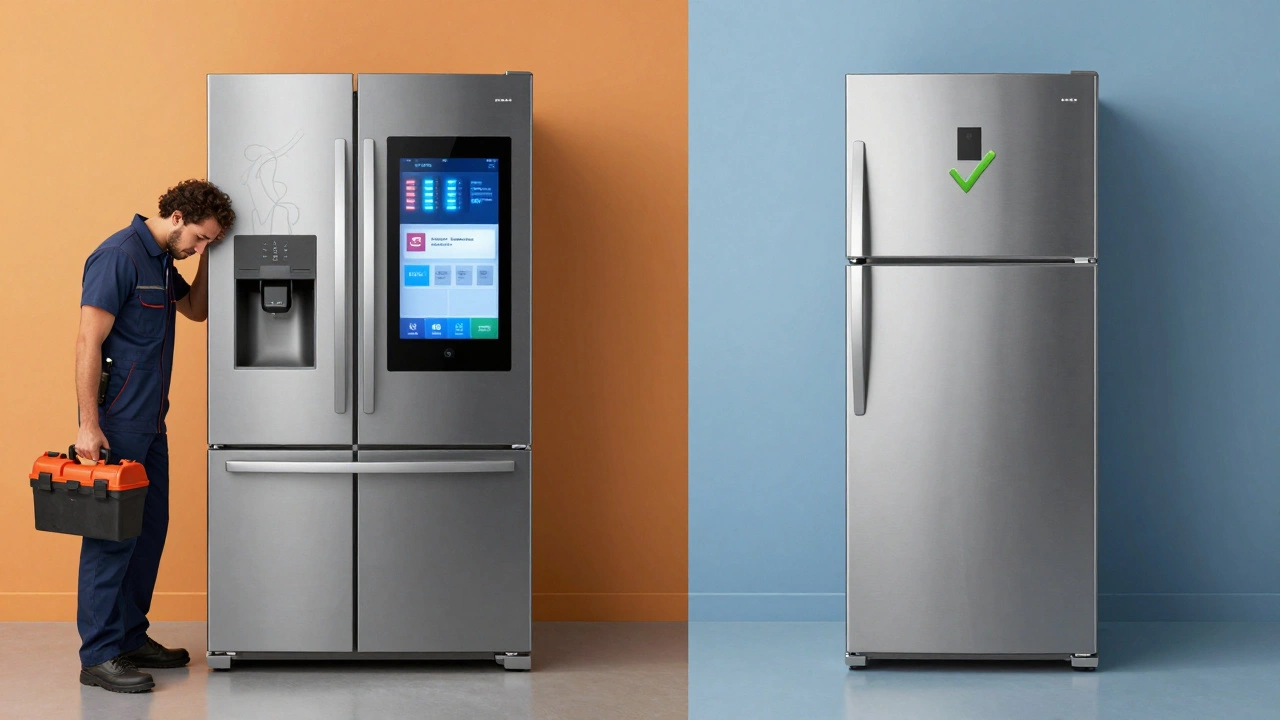
Refrigerator Reliability & Risk Estimator
Configure your ideal refrigerator to see its estimated reliability score.
Analysis Result
- Failure Probability (5yr): --%
- Repair Complexity: --
- Est. Lifespan: -- Years
You just spent a small fortune on a new kitchen centerpiece, and within two years, the compressor is making noises like a dying tractor. It’s frustrating, expensive, and honestly, it shouldn’t happen. When you ask what brand of refrigerator has the least problems, you aren't looking for marketing fluff. You want the machine that sits in your corner, keeps your milk cold, and stays out of your way for fifteen years.
Reliability isn't about which brand has the slickest touchscreen or the most LED lighting. It is about mechanical simplicity, build quality, and how often technicians see these units on their trucks. Based on long-term failure data from major consumer studies and repair technician logs, a clear hierarchy emerges. Some brands are built to last; others are built to be replaced.
The Gold Standard: Brands That Rarely Break
If you prioritize longevity over flashy features, the list of reliable brands is surprisingly short. These manufacturers focus on proven mechanics rather than experimental designs.
Samsung has had its share of headlines regarding ice maker failures in older models, but their recent lineup has stabilized significantly. However, when we talk about absolute lowest problem rates, LG Electronics and Whirlpool Corporation subsidiaries often take the top spots for standard models.
Let's look at the heavy hitters known for durability:
- GE Appliances (General Electric): Owned by Haier now, GE continues to produce straightforward, robust units. Their side-by-side and French door models have some of the lowest reported failure rates for compressors and cooling systems. They use common parts, meaning if something does break, it’s easy and cheap to fix.
- Whirlpool: As one of the largest appliance makers in North America, Whirlpool benefits from massive economies of scale. Their basic top-freezer and bottom-freezer models are workhorses. They don’t win design awards, but they rarely end up on a repair technician’s schedule.
- Frigidaire: Often overlooked, Frigidaire produces incredibly consistent appliances. Their simple controls and lack of complex electronics reduce the points of failure. A Frigidaire fridge is like a Toyota Corolla of the appliance world-boring, but it runs forever.
Why do these brands perform better? It comes down to component sourcing. They use standardized compressors and evaporator fans that have been tested for decades. There is no "new and improved" plastic hinge that cracks after six months. Just solid steel and copper coils doing what they were designed to do.
The High-End Contenders: Is Premium Worth the Risk?
When you move into the luxury segment, the rules change slightly. You pay more for aesthetics, smart features, and specialized cooling zones. But does higher price equal fewer problems? Not always.
| Brand | Primary Strength | Common Failure Points | Repair Complexity |
|---|---|---|---|
| Sub-Zero | Dual refrigeration systems | Electronic control boards | High (Specialized service needed) |
| Viking | Customizable interiors | Door seals and hinges | Medium |
| Bosch | Under-counter integration | Ice makers (if equipped) | Low to Medium |
| Miele | Build quality and finish | Rare; mostly sensor issues | High (Parts cost) |
Sub-Zero is a premium brand famous for its dual-compressor system, which separates fresh food and freezer cooling to prevent odor transfer. While mechanically superior in preserving food quality, the complexity means there are more things that can go wrong electronically. However, Sub-Zero units often last 20+ years because the core mechanical components are industrial-grade.
Bosch has gained a reputation for reliability, particularly with their under-counter and counter-depth models. By avoiding large, integrated ice makers in many of their lines, they eliminate the #1 source of fridge repairs. If you buy a Bosch without an ice maker, you are buying one of the most reliable appliances on the market.
Brands to Approach With Caution
Not every brand creates headaches, but some patterns emerge in repair shops. These aren't necessarily "bad" brands-they make great products-but they have higher statistical probabilities of requiring service within the first five years.
KitchenAid makes beautiful, retro-styled fridges that look amazing in open kitchens. However, their complex door-in-door mechanisms and extensive use of electronic touch panels introduce vulnerabilities. Water leaks from ice dispensers and faulty display boards are common complaints among technicians.
Samsung has made significant strides since the infamous "exploding fridge" recalls of the early 2010s. Their current models are generally safe and functional. However, Samsung’s proprietary parts ecosystem can be tricky. If a specific sensor fails, you might wait weeks for a part that isn't stocked locally. Additionally, their smart home connectivity features can sometimes glitch, causing false error codes that scare owners unnecessarily.
The issue with these brands isn't usually the compressor failing. It’s the peripheral technology-the water filters, the ice choppers, the digital displays-that breaks. This is why the simplest fridge is often the most reliable.
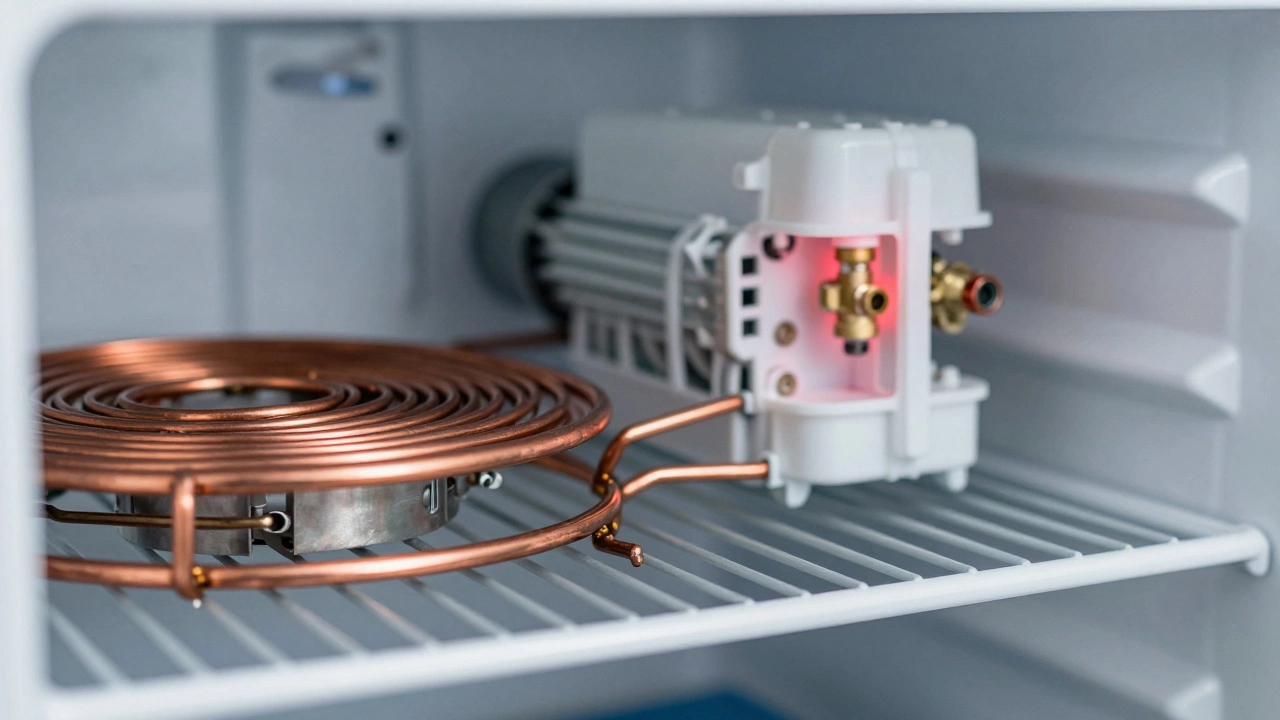
The Ice Maker Paradox: The #1 Cause of Repairs
If you want to know the single biggest factor in refrigerator reliability, it’s not the brand name on the front. It’s whether the unit has an automatic ice maker.
Data from consumer reports and repair associations consistently shows that fridges with internal ice makers fail at nearly double the rate of those without. Here is why:
- Water Line Freezing: In colder climates, the water line inside the freezer can freeze, blocking flow and triggering errors.
- Motor Burnout: The auger motor that pushes ice cubes into the bin works hard. Over time, ice jams cause the motor to strain and burn out.
- Valve Leaks: The water inlet valve is a solenoid that opens and closes thousands of times. Eventually, the seal degrades, leading to slow leaks that damage the floor underneath.
If your priority is zero problems, consider a model without an ice maker. Use a separate countertop ice maker or keep ice trays in the freezer. This simple choice eliminates the majority of repair calls for refrigerator brands across the board.
How Design Impacts Longevity
Beyond the brand logo, the physical configuration of the fridge plays a huge role in how long it lasts.
Top-Freezer Models: These are the old-school designs with the freezer on top. They are mechanically the simplest. Gravity helps drain condensation, the shelves are sturdy wire racks, and there are few moving parts. They have the highest reliability scores across all brands.
Bottom-Freezer Models: Slightly more complex due to the drawer mechanism, but still very reliable. The sliding drawers can wear out over 10-15 years, but this is a minor inconvenience compared to a compressor failure.
French Door Models: These are the most popular style today, offering wide access to the fresh food section. However, they have two tall doors that require heavy-duty hinges and precise alignment. If the doors sag, the seals break, warm air enters, and the compressor runs constantly. This leads to premature wear. French door models also almost always include complex ice/water dispensers, adding another layer of potential failure.
Side-by-Side Models: These split the space vertically. They are reliable mechanically, but the narrow shelves make them impractical for storing large platters or pizza boxes. From a repair standpoint, they are mid-tier-better than French doors, but less efficient than top-freezers.
Maintenance Tips to Extend Lifespan
Even the most reliable brand will fail if neglected. You can add 5-10 years to your fridge's life with minimal effort.
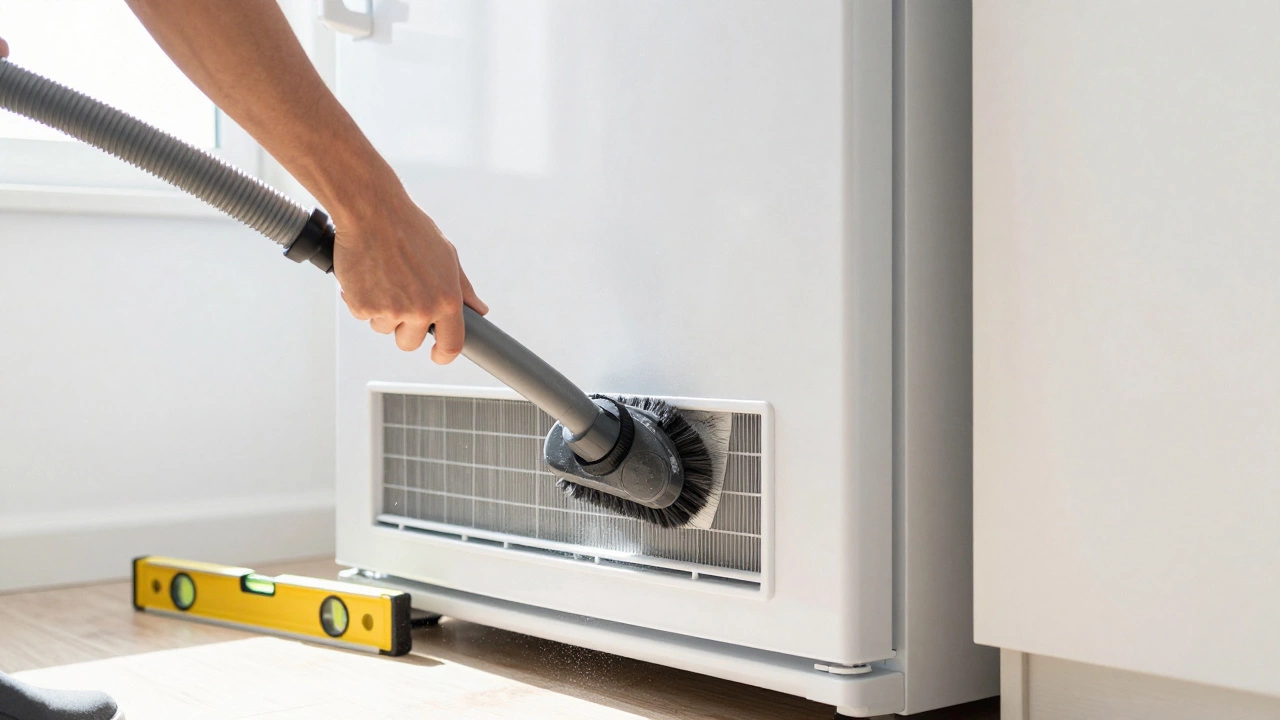
- Clean the Condenser Coils: Located on the back or bottom front, these coils dissipate heat. If they are clogged with pet hair and dust, the compressor has to work twice as hard. Vacuum them every six months.
- Check Door Seals: Close the door on a dollar bill. If you can pull it out easily, the seal is weak. Warm air entering the fridge causes frost buildup and compressor strain. Replace seals promptly.
- Replace Water Filters: If you have a filtered water dispenser, change the filter every 6 months. A clogged filter reduces water pressure, forcing the valve to work harder and potentially leaking.
- Keep It Level: An unlevel fridge won’t close properly. Use a bubble level to adjust the feet. Proper closure ensures the magnetic seals do their job.
Understanding Warranty vs. Reality
Most refrigerators come with a one-year full warranty and a five-year warranty on the sealed system (compressor and evaporator). This sounds good, but it doesn't cover labor. If your compressor dies in year four, the part is free, but paying a technician $150-$200 per hour to install it adds up.
Brands like Whirlpool and GE have extensive service networks. This means finding a qualified technician is easy, and parts are available quickly. Luxury brands like Sub-Zero often require authorized dealers for service, which can mean longer wait times and higher costs, though their repair success rate is high.
Before buying, check if there are certified repair technicians in your area who specialize in the brand you’re considering. A reliable brand is useless if you can’t get it fixed when it inevitably needs attention.
Which refrigerator brand lasts the longest?
Generally, GE, Whirlpool, and Frigidaire offer the best balance of longevity and ease of repair. For premium options, Sub-Zero units are known to last 20 years or more due to their industrial-grade components, though they require specialized maintenance.
Are Samsung refrigerators reliable?
Samsung has improved significantly since past recall issues. Their current models are generally reliable, but they rely heavily on proprietary electronic parts. If a sensor fails, waiting for replacement parts can take longer compared to brands like Whirlpool that use more universal components.
Do refrigerators with ice makers break more often?
Yes, statistically, refrigerators with automatic ice makers have a much higher failure rate. The ice maker assembly involves motors, water valves, and heating elements, all of which are prone to jamming, freezing, or leaking. Models without ice makers are significantly more reliable.
Is it worth buying a premium brand like Miele or Viking?
If you value aesthetics, custom interiors, and quiet operation, yes. However, you pay a premium for both the purchase price and future repairs. Parts for brands like Miele and Viking are expensive, and repairs often require specialized technicians. For pure reliability, mid-range brands often outperform them.
How can I tell if my refrigerator is failing before it breaks completely?
Watch for signs like inconsistent temperatures, excessive frost buildup in the freezer, unusual humming or clicking noises from the compressor, and water pooling under the unit. Addressing these issues early, such as cleaning coils or replacing door seals, can prevent catastrophic failure.
I am an expert in the services industry with a focus on appliance repair. My passion lies in understanding how things work and educating others in simple, engaging ways. This enthusiasm fuels my writing, where I delve into topics around appliance maintenance and troubleshooting. I aim to make these subjects clear and accessible to all readers.