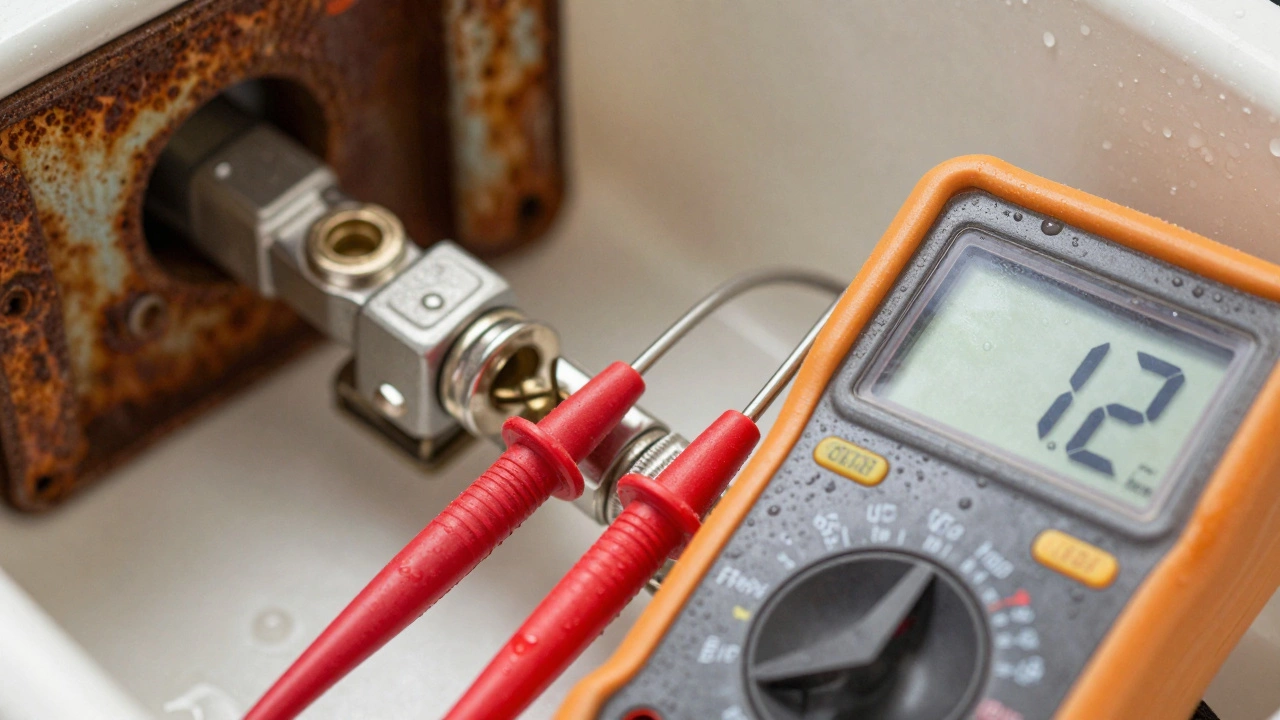
Water Heater Element Tester Calculator
Enter your multimeter resistance reading to determine if your water heater element is good, bad, or dangerous.
Your electric water heater element should read between 10-16 ohms when functioning properly. Readings outside this range indicate a problem.
Always test with power OFF and use a digital multimeter set to resistance (Ω).
Test Results
If your hot water suddenly turns cold or takes forever to heat up, chances are your water heater element has given out. It’s one of the most common reasons electric water heaters fail - and it’s usually not hard to diagnose. You don’t need to be a plumber to figure this out. With a multimeter and a little caution, you can tell if the element is dead before calling for help.
Why the element fails
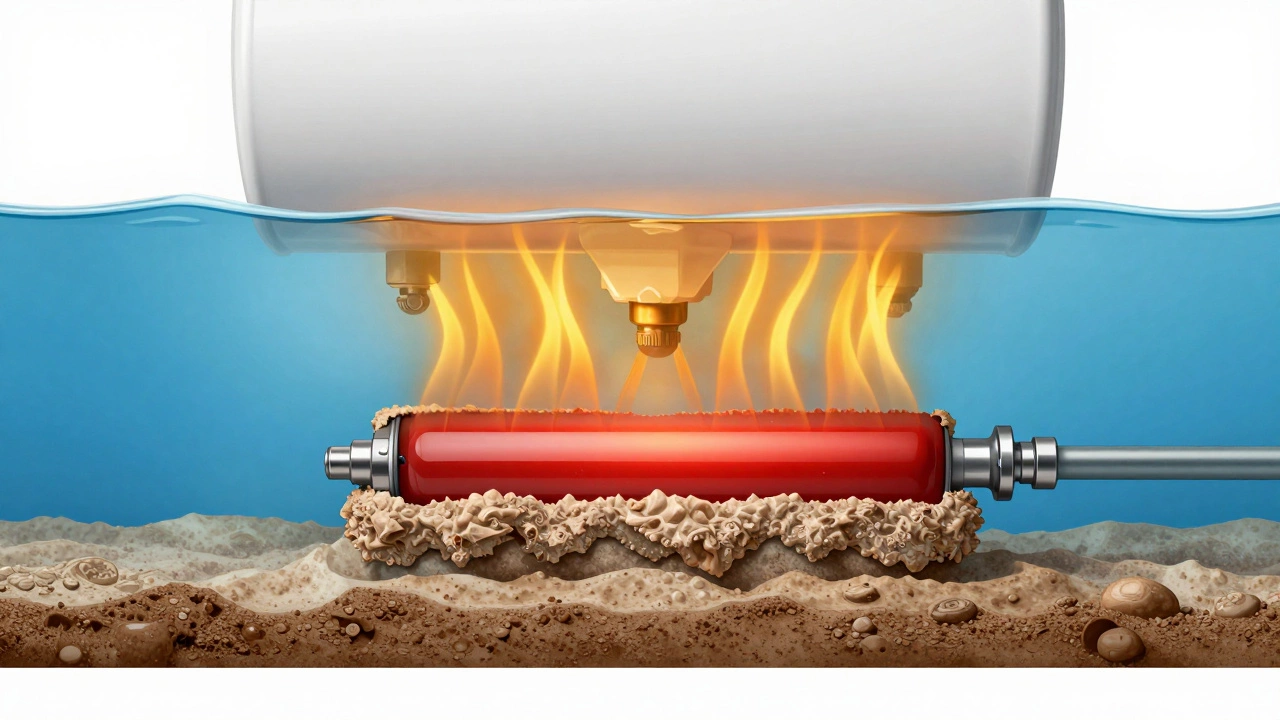
The heating element in your electric water heater is a simple coil of metal, usually made of nickel-chromium, that sits inside the tank. When electricity flows through it, it heats up and warms the water around it. Over time, mineral buildup from hard water coats the element, causing it to overheat and burn out. Corrosion, power surges, or simply old age can also kill it. Most elements last 8 to 12 years, but in areas with hard water like Wellington, they often fail sooner.If you’ve noticed a drop in hot water volume, longer wait times, or lukewarm showers, the element is the first thing to check. It’s cheaper and faster than replacing the whole tank.
How to check if the element is bad
Before you start, turn off the power. Go to your circuit breaker and flip the switch that controls the water heater. Don’t just rely on the thermostat - you need to cut the main power. Water and electricity don’t mix, even when the heater is off.Once the power is off, drain a few gallons of water from the tank to lower the water level below the elements. You’ll need a bucket and a garden hose connected to the drain valve at the bottom. Open a hot water tap somewhere in the house to let air in and help the water drain faster.
Remove the access panel on the side of the tank. There are usually two panels - one for the upper element and one for the lower. The lower element is more likely to fail first because it’s closer to sediment buildup. Unscrew the insulation and set it aside. You’ll see two or three wires connected to the element. Take a photo with your phone before disconnecting anything. That way, you won’t mix up the wires when you reconnect them.
Use a screwdriver to disconnect the wires. Be careful not to let them touch anything metal. Now you’re ready to test.
Using a multimeter to test the element
You need a basic digital multimeter - the kind that costs less than $20. Set it to measure resistance (ohms, symbol: Ω). Touch one probe to each of the two metal terminals on the element. If the multimeter shows a reading between 10 and 16 ohms, the element is good. That’s normal for a 4500-watt element. If it reads 0 (no resistance) or infinity (∞), the element is dead.Now test for a short to ground. Put one probe on a metal terminal and the other on the metal casing of the element. If the multimeter shows any reading at all - even a tiny one - the element is leaking electricity to the tank. That’s dangerous and means it must be replaced immediately.
Repeat this test for both the upper and lower elements. Sometimes only one is bad. Other times, both are gone. If both show no resistance or a short to ground, you’re looking at a full replacement.

What if the element tests okay?
If both elements test fine, the problem might be elsewhere. The thermostat could be faulty. It’s common for the upper thermostat to fail first, leaving the lower element without power. A bad thermostat might still send power to the element, but not enough to heat the water properly.You can test the thermostat by checking for voltage with the multimeter set to AC volts. With power back on (only if you’re comfortable doing this), touch one probe to the terminal screw and the other to the tank’s metal casing. You should read 240 volts. If you get nothing, the thermostat isn’t sending power. Replace it.
Another possibility is sediment buildup. If the tank is full of rust and scale, the water might be hot at the bottom but cold at the top. Flushing the tank can help. Drain it completely, then refill slowly to avoid trapping air.
Signs you’re dealing with a bad element
Here’s what to watch for:- No hot water, even after waiting an hour
- Water that’s warm but never gets hot
- Loud popping or crackling noises from the tank (caused by mineral deposits overheating)
- Water heater tripping the circuit breaker repeatedly
- Visible rust or corrosion around the element access panel
If you see any of these, especially with no hot water, test the element before doing anything else. It’s the most likely culprit.
Replacement tips
When you buy a new element, match the wattage and voltage exactly. Most residential heaters use 4500-watt, 240-volt elements. The size matters too - some are screw-in, others are bolt-on. Take the old one to the hardware store to compare. Don’t guess.Apply a little pipe thread sealant or Teflon tape to the threads before installing the new element. Tighten it snugly but don’t over-torque. You don’t need to use a torque wrench - just hand-tighten and then give it a quarter turn with a wrench.
Before turning the power back on, make sure the tank is completely full. Open the nearest hot water tap and let it run until water flows steadily. If you turn the power on with air in the tank, the element will burn out in seconds.
When to call a professional
You can handle most element replacements yourself. But if you’re unsure about working with electricity, or if the tank is leaking, rusted, or more than 10 years old, it’s time to call a licensed plumber. Replacing an element won’t fix a corroded tank. And if the breaker keeps tripping after replacement, there’s a deeper electrical issue.Also, if your water heater is a tankless model, the troubleshooting steps are completely different. This guide only applies to traditional electric storage tanks.
Preventing future failures
To make your next element last longer:- Flush the tank once a year - especially if you have hard water
- Install a water softener if your water has high mineral content
- Set the thermostat to 120°F (49°C). Higher temperatures speed up mineral buildup and wear out the element faster
- Check the anode rod every two years. If it’s more than half eaten away, replace it. It protects the tank and the elements from corrosion
These simple steps can double the life of your water heater. In Wellington, where water hardness varies by suburb, maintenance makes a big difference.
Final thoughts
A bad water heater element is frustrating, but it’s rarely a disaster. With the right tools and a bit of patience, you can fix it yourself and save hundreds of dollars. Most people panic when the hot water stops - but the fix is often simple. Test the element, replace it if needed, and get back to warm showers. Don’t rush to replace the whole tank unless you have to.How do I know if my water heater element is bad?
If your water heater isn’t heating water, start by testing the element with a multimeter. A good element reads between 10 and 16 ohms. If it reads 0 or infinity, it’s dead. Also test for a short to ground - any reading between the terminal and the metal casing means the element is faulty and must be replaced.
Can I test a water heater element without a multimeter?
Not reliably. You can try turning the power back on and checking if the breaker trips immediately - that might indicate a short. But without a multimeter, you can’t confirm whether the element is open or just weak. A multimeter is the only accurate way to test it. They cost under $20 and are worth having for home repairs.
Why does my water heater keep tripping the breaker?
A bad element that’s shorted to ground is the most common cause. When electricity leaks from the element into the tank, it creates a ground fault that trips the breaker. Other causes include a faulty thermostat, wiring issues, or an overloaded circuit. Always test the element first - it’s the easiest fix.
Should I replace both elements if only one is bad?
It’s not required, but it’s often smart. If one element failed, the other is likely close behind, especially if the tank is older than 8 years. Replacing both at once saves you from having to drain the tank again in a few months. It also ensures even heating and better efficiency.
How long does a water heater element last?
Typically 8 to 12 years, but in areas with hard water like Wellington, they can fail in as little as 5 years. Regular maintenance - flushing the tank and replacing the anode rod - can extend their life. Mineral buildup is the biggest killer, so cleaning the tank yearly helps a lot.
I am an expert in the services industry with a focus on appliance repair. My passion lies in understanding how things work and educating others in simple, engaging ways. This enthusiasm fuels my writing, where I delve into topics around appliance maintenance and troubleshooting. I aim to make these subjects clear and accessible to all readers.