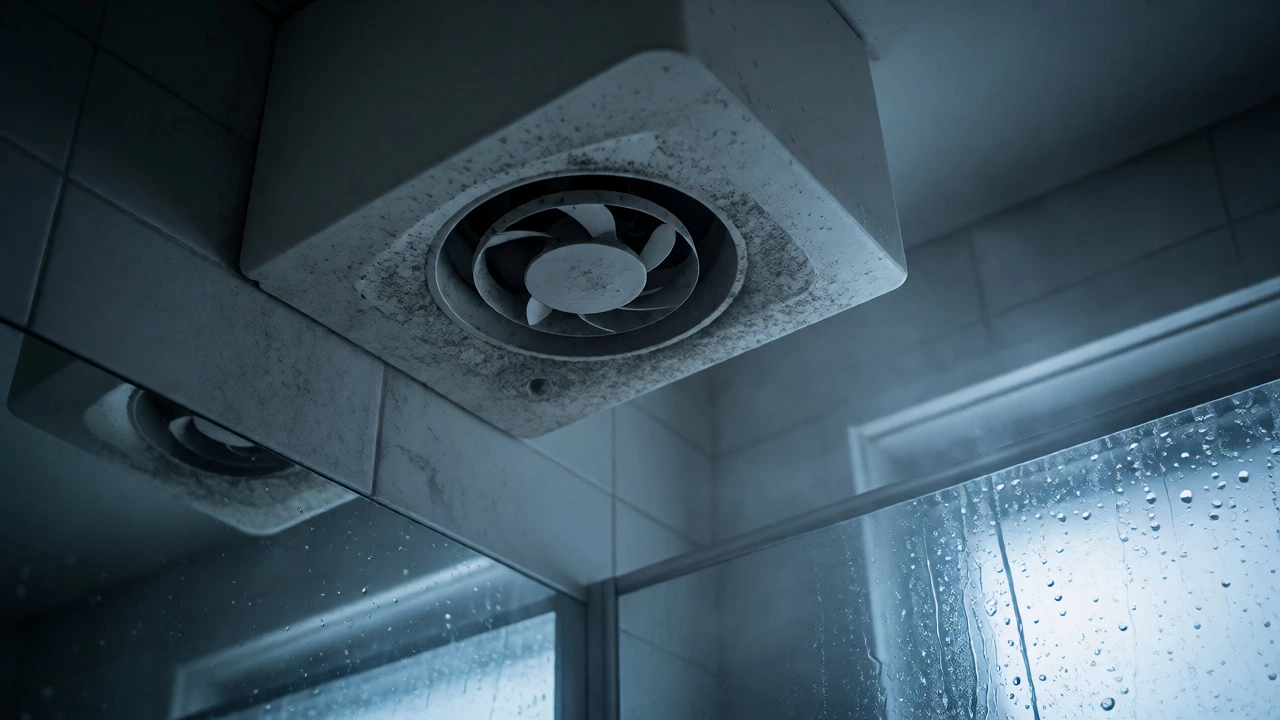
Bathroom Fan Troubleshooter
Answer the questions below to find out who you should call.
Is there power reaching the switch?
Check if other lights on the same circuit work, or use a voltage tester if safe.
Does the fan spin when switched on?
Listen closely. Does it hum but not move? Or does it spin freely?
How is the fan connected?
Look at the junction box in the ceiling cavity (if accessible/safe).
Is the external vent blocked?
Check outside wall/roof for bird nests, debris, or closed flaps.
You flip the switch. Nothing happens. Maybe there is a faint hum, or maybe just silence and the lingering smell of steam from your shower. It’s annoying, sure, but it’s also a potential mold factory waiting to happen. The big question hitting most homeowners in Wellington (and everywhere else) is simple: who fixes a bathroom extractor fan? Is this a job for your local sparky, or can you call a handyman?
The answer isn’t always black and white. It depends entirely on what’s broken. If the motor is dead but the wiring is fine, one person handles it. If the power isn’t reaching the unit, another takes over. Let’s break down exactly who does what, so you don’t waste money calling the wrong trade.
The Short Answer: It Depends on the Fault
Before you pick up the phone, do a quick check. This will save you time and potentially double your service callout fee if you book the wrong pro.
- Is there power at the switch? If the light bulb next to the fan works but the fan doesn’t, it’s likely the fan unit itself.
- Does the fan run but make noise? If it spins but sounds like a jet engine, it’s usually mechanical wear.
- Is there no power at all? If neither the fan nor any connected lights work, or the circuit breaker trips when you try to turn it on, you have an electrical issue.
If the problem is inside the fan box (motor, blades, housing), you need a technician who understands ventilation units. If the problem is the wires leading to it, you need an electrician. In many cases, these roles overlap, but regulations vary by location.
When You Need an Electrician
In New Zealand, and specifically under the Electricity Act 1992, certain electrical work must be done by a registered electrician. While changing a plug socket might seem trivial, working on fixed wiring is not. Here is when you absolutely need a licensed professional:
- New Installation or Replacement: If you are replacing an old fan with a new model that requires different wiring configurations or amperage, an electrician should handle the connection.
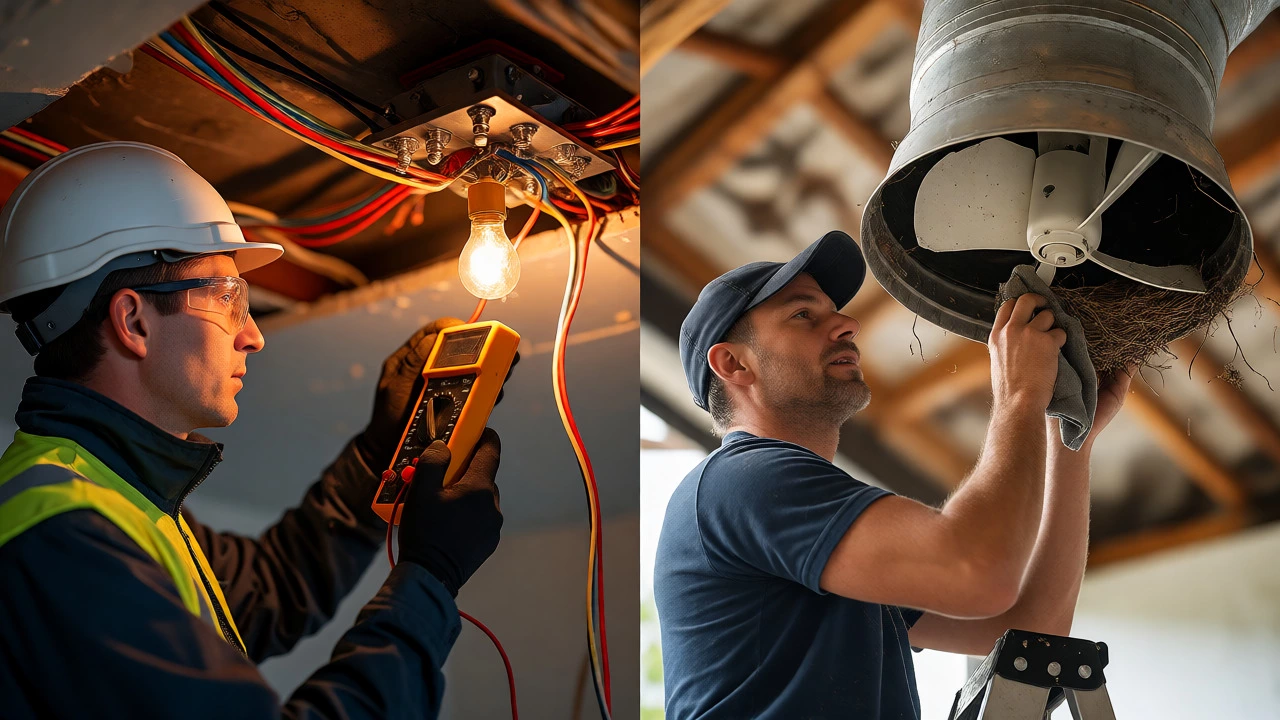
- Wiring Faults: If the cable is damaged, burnt, or loose within the ceiling cavity, only an electrician should access and repair it. They have the tools to test continuity and ensure the earth connection is solid.
- Circuit Breaker Tripping: If flipping the switch pops the breaker, you have a short circuit or ground fault. Do not touch this yourself. Call a sparky immediately.
- Hardwired Units Without Plugs: Many older fans are hardwired directly into the mains. Disconnecting and reconnecting these safely requires isolation testing that only a qualified electrician performs correctly.
An electrician ensures compliance with AS/NZS 3000 (the Wiring Rules). This matters if you ever sell your house. A non-compliant electrical fix can fail a building inspection.
When a Handyman or Ventilation Specialist Can Help
Not every broken fan needs a high-hourly-rate electrician. Often, the issue is mechanical or related to airflow rather than electricity. This is where a handyman or a dedicated ventilation specialist shines.
Mechanical Failures: Over time, dust and grime clog the impeller (the spinning blade part). The motor seizes up because it’s physically blocked, not because the coil burned out. A handyman can remove the cover, clean the blades, lubricate the bearings, and reset the thermal overload switch if the fan overheated.
Duct Blockages: Sometimes the fan works perfectly, but the air has nowhere to go. Bird nests, debris, or collapsed ducting in the roof space stop extraction. A handyman with ladder access can clear the external vent cap or inspect the ductwork. No electrical certification is needed to move a bird’s nest.
Switch Replacements (Plug-in Models): If your fan is plugged into a standard outlet behind the vanity, and the inline switch on the cord is broken, a competent handyman can replace the cord assembly. Just ensure they isolate the power first.
DIY: What You Can Actually Fix Yourself
Can you fix it yourself? Yes, if you are careful and the issue is minor. But know your limits. Never open the electrical junction box unless you are confident in isolating the circuit.
- Clean the Grille and Blades: Pop off the plastic cover (usually clips or screws). Vacuum the dust. Wipe the blades with a damp cloth. Often, this restores airflow and stops the grinding noise.
- Check the Thermal Cut-out: Some fans have a small red button on the motor housing. If the fan ran too hot, this tripped. Press it gently. If the fan starts, you had an overheating issue-likely due to dust buildup.
- Tighten Loose Screws: Vibration loosens mounting brackets. Tightening these can stop rattling noises without any technical skill.
If cleaning doesn’t work, and the fan still won’t spin, the capacitor or motor is likely dead. At this point, replacement is often cheaper than repair.
Cost Comparison: Who Costs More?
Let’s talk numbers. Prices in Wellington can vary, but here’s a realistic breakdown for 2026.
| Service Provider | Typical Hourly Rate | Callout Fee | Best For |
|---|---|---|---|
| Registered Electrician | $100 - $150 NZD | $80 - $120 NZD | Wiring faults, new installs, compliance issues |
| Handyman | $70 - $100 NZD | $50 - $80 NZD | Cleaning, mechanical repairs, duct clearing |
| Ventilation Specialist | $90 - $140 NZD | $70 - $100 NZD | Complex ducting, moisture control systems |
Notice the difference? An electrician costs more because they carry higher insurance and licensing requirements. If you call them for a dirty blade, you’re paying a premium for their license, not just their labor. Conversely, if you call a handyman for a burnt wire and they aren’t allowed to touch it legally, you’ll end up paying two callouts.
The "Grey Area": When Trades Overlap
Here is the tricky part. Many modern fans come with a plug and socket. Technically, swapping a plug-in fan is like swapping a lamp. Does that require an electrician?
In NZ, if the connection is via a standard 3-pin plug and socket, a handyman can usually swap the unit. However, if the socket itself is faulty, or if the fan is hardwired, you need an electrician. Always ask the provider: "Are you licensed to do fixed wiring?" If they say yes, you’re safe. If they say no, ensure the job is purely mechanical or plug-based.
Another grey area is the timer or humidity sensor module. These are electronic components. A handyman can often replace the whole fan unit including the sensor. But if the sensor wiring is complex or integrated into a smart home system, an electrician familiar with low-voltage controls is better suited.
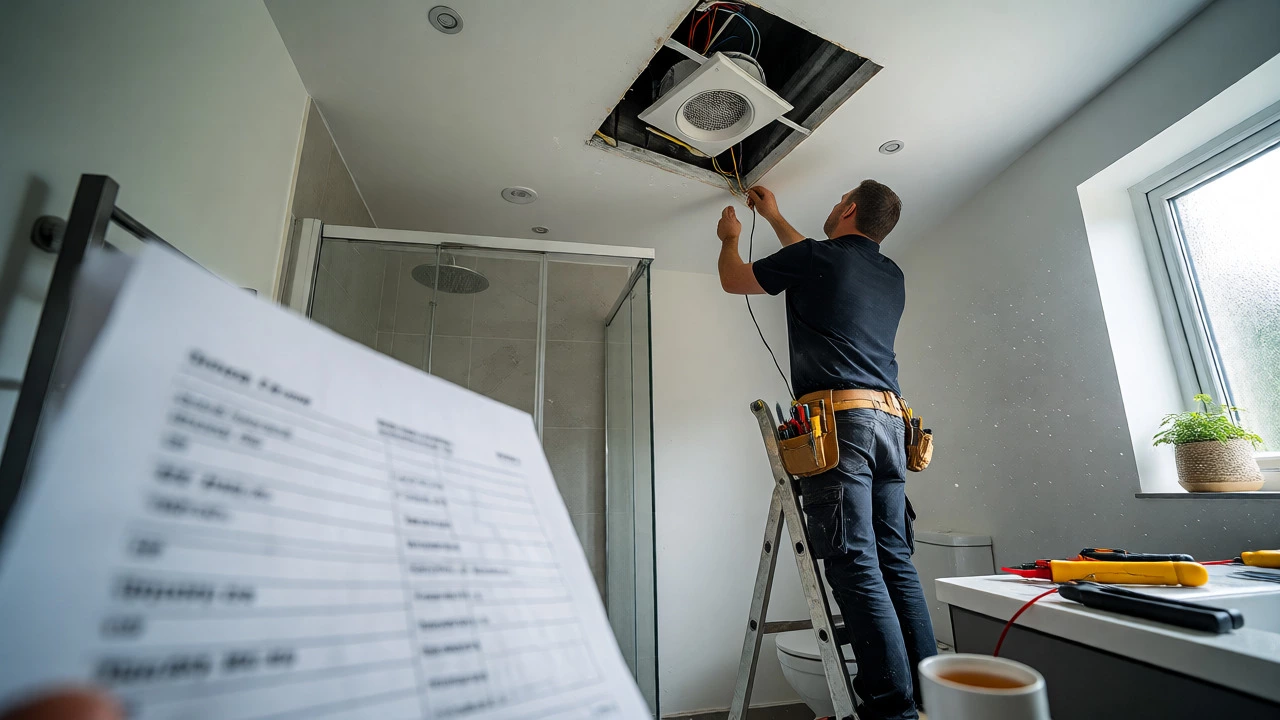
Why Ignoring a Broken Fan Hurts Your Wallet
You might think, "It’s just a little noise," or "The window helps." Think again. Bathrooms are humid environments. Without active extraction, moisture lingers on walls, ceilings, and grout.
In Wellington’s damp climate, mold sets in fast. Black mold on silicone seals looks bad, but hidden mold behind plasterboard causes health issues and structural rot. Remediating mold damage costs thousands-far more than a $150 fan repair. Additionally, poor ventilation increases energy bills because your heat pump or heater works harder to dry the air.
How to Choose the Right Pro
Don’t just Google "fan repair" and pick the first ad. Follow this checklist:
- Ask for Examples: Have they fixed similar fans before? Ask for photos of past jobs.
- Check Licensing: For electrical work, ask for their EWR (Electrical Workers Registration) number. Verify it online via the NZ Electrical Workers Registration Board.
- Get a Fixed Quote: Avoid hourly billing for simple swaps. Ask for a flat rate for diagnosis and repair.
- Warranty: Does the repair come with a warranty? A reputable pro will stand by their work for at least 3-6 months.
If you suspect the fan is beyond repair, ask for a quote on a new installation. Brands like Panasonic and Broan offer quiet, efficient models. Sometimes, spending $300 on a new unit is smarter than spending $150 fixing a 15-year-old motor.
Frequently Asked Questions
Can I replace my own bathroom extractor fan?
Yes, if it is a plug-in model and you are comfortable working at height. Turn off the power at the switch, remove the cover, unscrew the unit, and disconnect the plug. Install the new one in reverse order. If it is hardwired, hire an electrician to avoid safety risks and code violations.
Why is my extractor fan making a loud noise?
Loud noises usually mean three things: dust buildup on the blades causing imbalance, worn-out bearings in the motor, or a loose mounting bracket vibrating against the ceiling joists. Cleaning the blades and tightening screws often fixes it. If the noise persists, the motor bearings may need oiling or replacement.
Do I need a permit to fix an extractor fan?
In New Zealand, you generally do not need a building consent for replacing an existing extractor fan with a similar capacity unit. However, the electrical connection must be done by a registered electrician if it involves fixed wiring. Always check with your local council if you are unsure about specific regional rules.
How long do bathroom extractor fans last?
Most quality fans last between 10 and 15 years. High-humidity environments can shorten this lifespan. Signs of failure include reduced airflow, excessive noise, or the motor failing to start despite having power. Regular cleaning can extend the life of the motor by preventing overheating.
What happens if I don't fix my extractor fan?
You risk mold growth on walls and ceilings, peeling paint, and warped timber fixtures. Mold spores can trigger allergies and respiratory problems. In severe cases, prolonged moisture exposure can rot wooden roof structures or framing members, leading to expensive structural repairs later.
I am an expert in the services industry with a focus on appliance repair. My passion lies in understanding how things work and educating others in simple, engaging ways. This enthusiasm fuels my writing, where I delve into topics around appliance maintenance and troubleshooting. I aim to make these subjects clear and accessible to all readers.