Oven Repair vs. Replacement Calculator
Use the industry-standard "50% Rule" to decide whether to fix your 8-year-old oven or buy a new one.
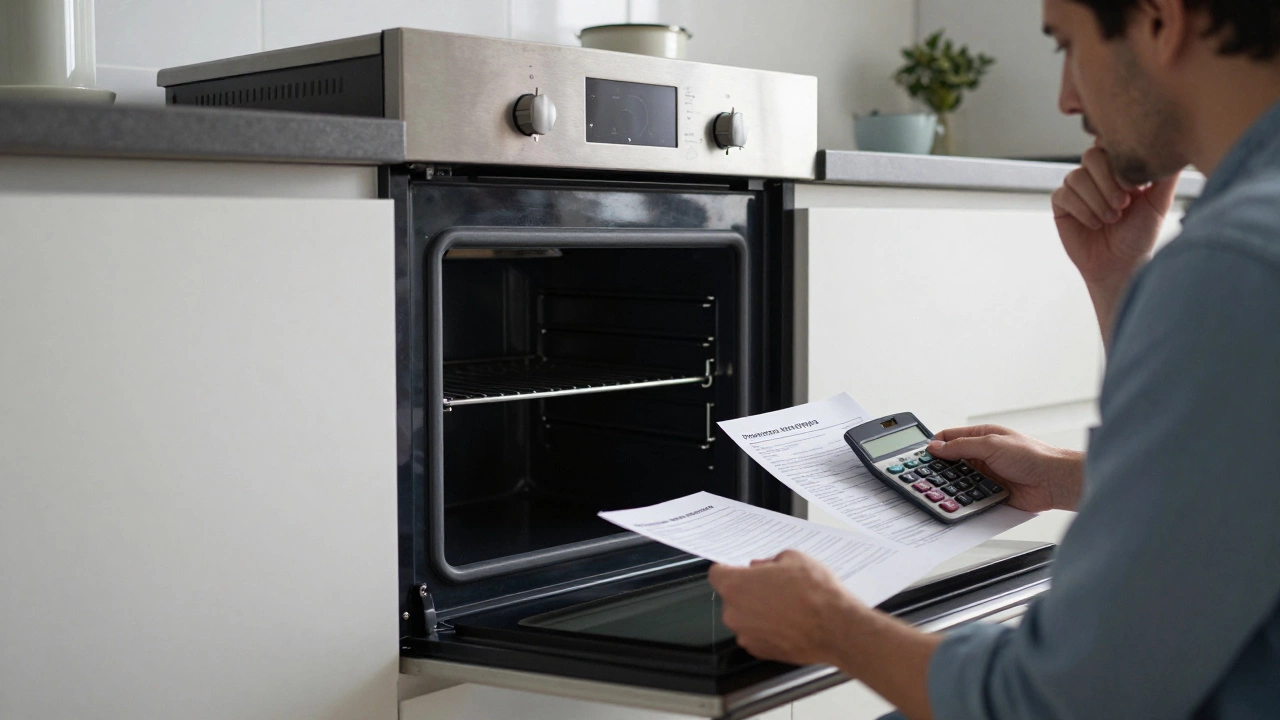
There is nothing worse than opening your oven door to find it’s dead silent. No hum of the heating element, no digital display, just a cold metal box where your dinner was supposed to be. If your oven is eight years old, you are likely standing at a crossroads: spend money fixing something that might break again next month, or bite the bullet and buy a new one?
The short answer depends on three things: the specific repair cost, the brand reliability, and whether you value energy efficiency over saving cash today. An electric oven is a major kitchen appliance designed for baking, roasting, and broiling food using electrical resistance heating elements typically lasts between 10 to 15 years. At eight years, your unit is in its prime but approaching middle age. It isn’t ancient, but it’s no longer a baby.
The Golden Rule of Appliance Repair
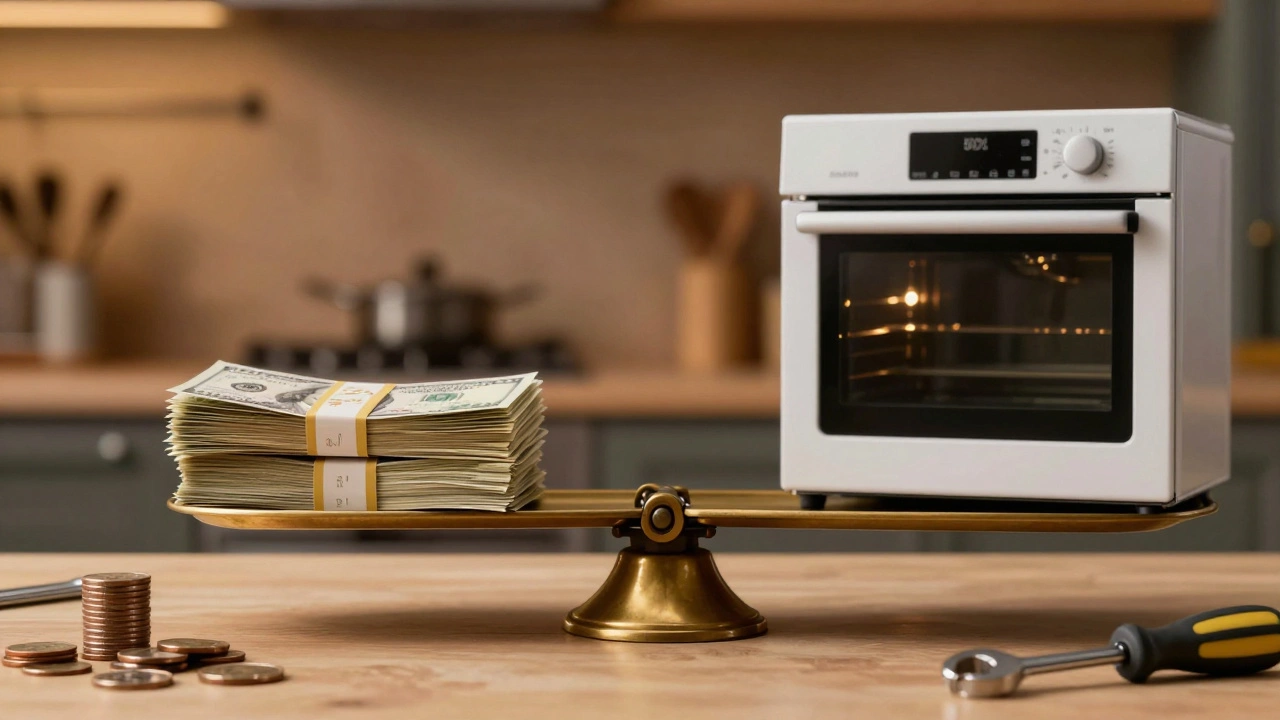
Before you call a technician, run this simple mental math. The industry standard heuristic for deciding whether to fix or replace is the "50% Rule." If the cost of the repair exceeds 50% of the price of a comparable new appliance, you should replace it.
Let’s look at the numbers. A mid-range replacement oven costs anywhere from $600 to $1,200 installed. Therefore, if a quote for parts and labor comes in above $300 to $600, you are better off buying new. Why? Because an eight-year-old oven has worn-out components. Fixing the thermostat doesn’t mean the heating element won’t fail six months later. You end up paying twice for the same convenience.
However, there are exceptions. If the problem is minor-like a broken door latch, a faulty light bulb, or a dirty sensor-the cost will be under $100. In these cases, repair is always worth it. These are maintenance issues, not signs of impending death.
Common Failures in 8-Year-Old Ovens
Not all breakdowns are created equal. Some issues signal the end of the line, while others are easily patched up. Here is what usually goes wrong around the eight-year mark:
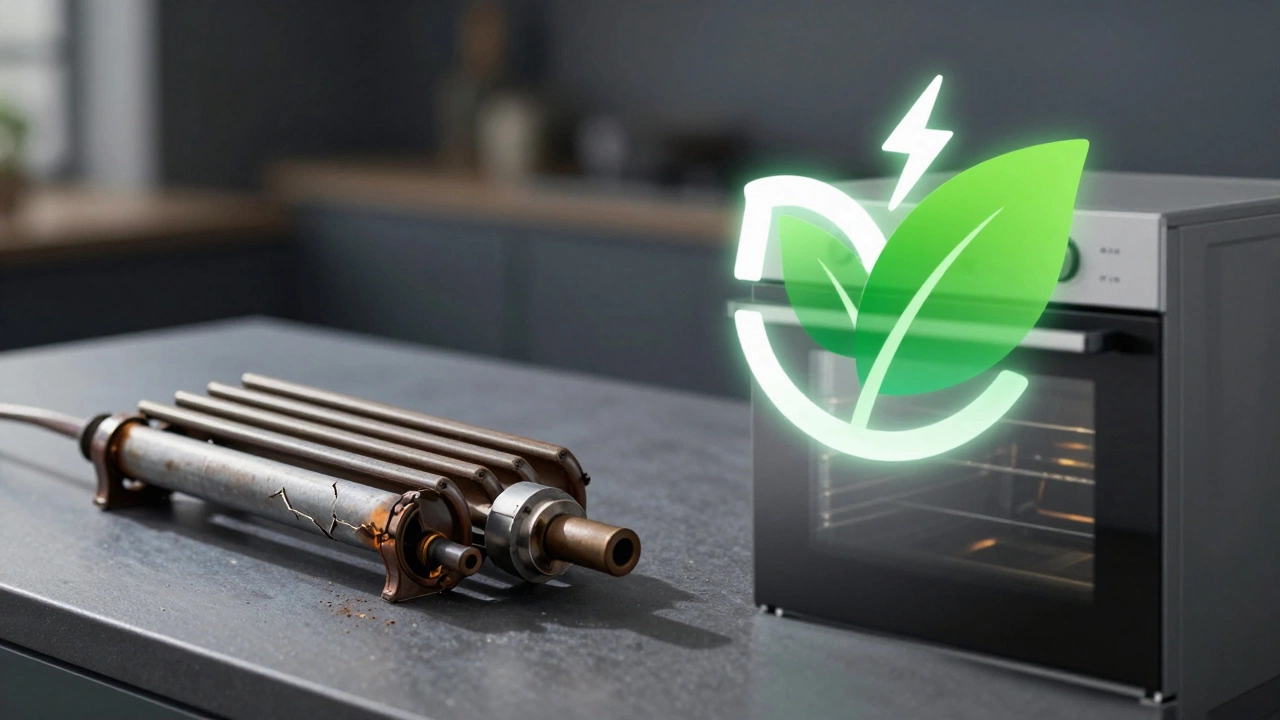
- Heating Elements: Both the top broil and bottom bake elements can crack or burn out. Replacing an element is relatively cheap (parts cost $20-$50), but labor adds up. If both elements are failing, the oven’s internal wiring may be compromised.
- Thermostat Sensors: If your food is burning before the timer goes off, or staying raw when it should be done, the temperature sensor is likely drifting. This is a critical safety and performance issue. Calibration fixes are rare; replacement is common.
- Control Boards: The brain of the oven. If the display is flickering or buttons aren’t responding, the main control board might have failed due to power surges or heat damage. These boards often cost $150-$300 plus labor, pushing you into the "replace" territory.
- Door Seals (Gaskets): Rubber seals degrade over time. If heat escapes, your oven works harder, driving up your electricity bill. Replacing a gasket is inexpensive ($50-$100) and extends the life of the oven significantly.
Energy Efficiency: The Hidden Cost of Old Appliances
You might think an eight-year-old oven uses the same amount of electricity as a new one. That is incorrect. Energy technology has improved steadily. According to data from the U.S. Department of Energy, newer ovens can be up to 10-15% more efficient than models from the late 2010s.
If you cook daily, that 15% savings adds up. Let’s say your current oven costs $150 a year to run. A new, high-efficiency model might drop that to $130. Over five years, you save $100. It doesn’t sound like much, but combine that with modern features like convection fans that cook food faster (using less total energy), and the financial gap narrows.
Furthermore, older ovens often suffer from heat loss due to degraded insulation and worn door seals. Your oven has to work overtime to maintain temperature, which spikes your utility bills during winter months when ambient temperatures are low.
When to Definitely Replace Your Oven
Some scenarios make the decision easy. If any of the following apply, skip the repairman and head to the store:
- Repeated Repairs: Have you fixed this oven in the last two years? If yes, do not fix it again. The underlying chassis or wiring is likely fatigued.
- Outdated Features: Does your oven lack convection? Is it difficult to clean because it doesn’t have a self-cleaning cycle? Modern ovens offer precision cooking modes, steam injection, and smart connectivity that make cooking easier and safer.
- Aesthetic Mismatch: Are you renovating your kitchen? A mismatched appliance lowers home resale value. Buyers expect cohesive looks.
- Brand Discontinuation: Some manufacturers stop making parts for older models after seven or eight years. If your technician says they need to order a part from a third-party supplier, expect delays and higher costs.
Comparison: Repair vs. Replace
| Factor | Repair | Replace |
|---|---|---|
| Upfront Cost | $100 - $400 (depending on part) | $600 - $1,500 (unit + installation) |
| Lifespan Extension | 1 - 3 years | 10 - 15 years |
| Energy Efficiency | No improvement | 10-15% reduction in usage |
| Warranty Coverage | 90 days on parts/labor | 1 year full warranty |
| Features | Same old functionality | Convection, smart controls, better insulation |
Pro Tips for Extending Oven Life
If you decide to keep your current oven, you can squeeze a few more years out of it with proper care. Most premature failures are caused by neglect, not age.
Clean the interior regularly. Spilled sugars and fats carbonize over time, creating hot spots that stress the heating elements. Use a non-abrasive cleaner and avoid harsh chemicals that can damage the enamel lining. Check the door seal every six months. Run a dollar bill test: close the door on the bill. If you can pull it out without resistance, your seal is leaking heat. Replace it immediately.
Also, avoid thermal shock. Never spray cold water into a hot oven to clean it. This rapid temperature change can crack the glass window or warp the metal cavity. Let the oven cool completely before cleaning.
Final Verdict: What Should You Do?
An eight-year-old oven is not obsolete, but it is vulnerable. If the repair is simple-under $150-and the oven has been reliable otherwise, fix it. It makes economic sense to extend its life by another three to four years.
However, if the repair involves the control board, multiple heating elements, or costs more than $300, replace it. You will gain better energy efficiency, modern cooking features, and peace of mind with a fresh warranty. Don’t throw good money after bad. Your future self will thank you when dinner cooks evenly and quickly.
How long does an average electric oven last?
The average lifespan of an electric oven is between 10 and 15 years. However, this depends heavily on usage frequency and maintenance. Heavy users who bake daily may see failure earlier, while occasional users might get 15+ years.
What is the most expensive part to replace in an oven?
The main control board is typically the most expensive component, costing between $150 and $300 for the part alone. Labor charges for replacing it can add another $100 to $150. Other costly repairs include the oven door assembly and complex electronic touchpads.
Can I replace an oven heating element myself?
Yes, replacing a heating element is one of the easiest DIY appliance repairs. You usually just need a screwdriver. Turn off the power at the breaker, remove the screws holding the element, disconnect the wires, and install the new one. Always double-check compatibility with your model number.
Is it safe to use an oven with a cracked glass door?
No, it is not safe. A cracked glass door compromises the oven's ability to retain heat and poses a risk of the glass shattering completely due to thermal stress. Heat can also escape onto the exterior surface, causing burns. Replace the glass immediately or consider replacing the entire oven if other components are aging.
Do new ovens really save money on electricity?
Yes, but the savings are modest. Newer ovens have better insulation and more efficient heating elements. While you might save $10-$20 a year on your electric bill, the real benefit is faster cooking times with convection features, which reduces the total time the oven is running.
I am an expert in the services industry with a focus on appliance repair. My passion lies in understanding how things work and educating others in simple, engaging ways. This enthusiasm fuels my writing, where I delve into topics around appliance maintenance and troubleshooting. I aim to make these subjects clear and accessible to all readers.