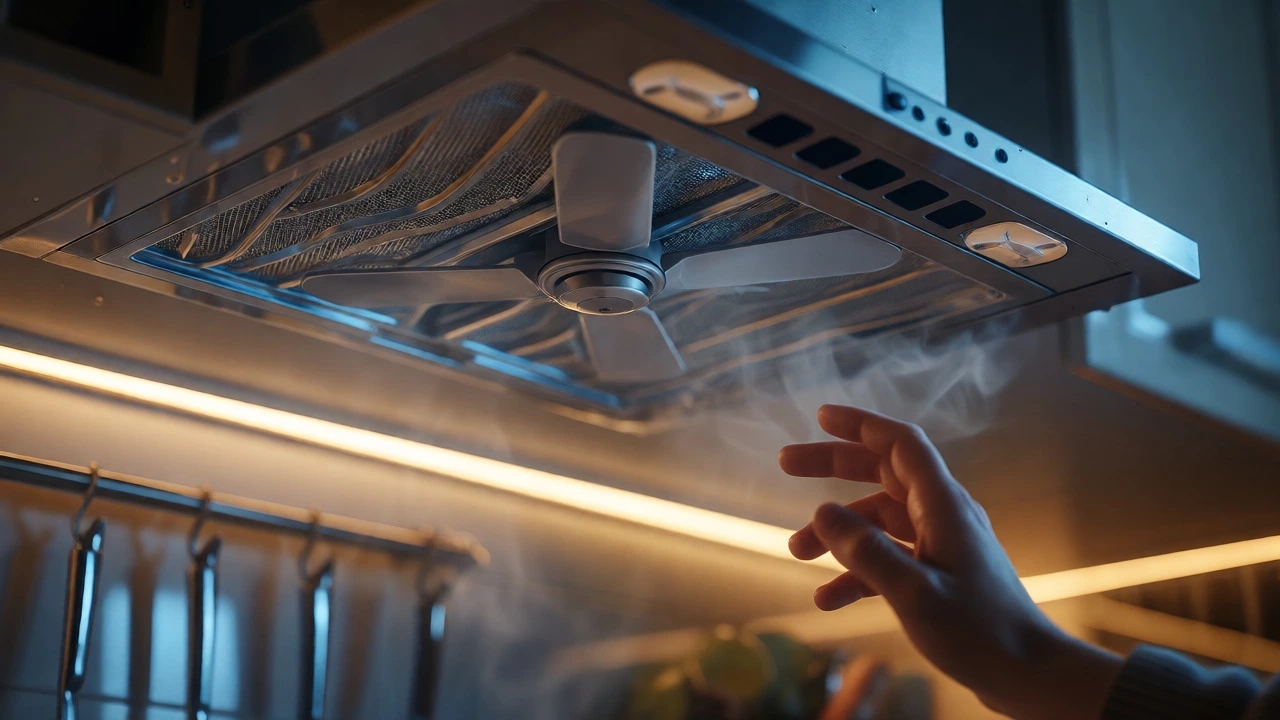
Extractor Fan Troubleshooter
Describe what your extractor fan is doing to find out who you should call.
Issue Detected
Recommended Action
Safety Warning:
You turn on the switch, but your kitchen extractor fan just hums or stays dead silent. It’s a common frustration, especially when you’re trying to clear out smoke from frying onions or steam from boiling pasta. The immediate question that pops into your head is: can an electrician fix an extractor fan? The short answer is yes, but with a major caveat. While electricians handle the wiring and power supply, they often don’t touch the mechanical parts like the motor or the blades. Knowing who to call saves you time, money, and the headache of waiting for two different tradespeople.
Understanding the Split Between Electrical and Mechanical Roles
It helps to think of your extractor fan as having two distinct bodies: the electrical system and the mechanical system. An electrician specializes in the flow of electricity. They deal with circuits, switches, fuses, and the wiring that runs through your walls and ceiling. If your fan isn’t getting any power at all, that’s squarely in their territory. They can test if the circuit breaker has tripped, check if the wall switch is faulty, or determine if there’s a break in the live wire feeding the unit.
On the flip side, the mechanical side involves the physical movement of air. This includes the motor, the fan blades, the housing, and the ducting. When these parts fail, you usually need an appliance technician or a specialized HVAC (Heating, Ventilation, and Air Conditioning) contractor. If the fan spins but makes a grinding noise, or if it vibrates violently, an electrician will likely look at you blankly. Those are mechanical issues, not electrical ones. However, many modern electricians are handy enough to swap out a simple plug-in unit, but complex built-in systems require specific expertise.
When You Definitely Need an Electrician
There are specific scenarios where calling an electrician is not just helpful, but necessary for safety and code compliance. If you notice a burning smell coming from the junction box behind the fan, stop using it immediately. That’s a sign of overheating wires or loose connections, which is a fire hazard. Only a qualified electrician should open that box and inspect the terminations.
Another clear indicator is if the fan works intermittently or only when you jiggle the pull cord. This suggests a faulty switch mechanism inside the electrical assembly. Replacing a light switch or a fan speed controller requires working with mains voltage, typically 120V or 230V depending on your region. Handling this without proper isolation tools and knowledge can lead to serious shock. Additionally, if you are installing a new extractor fan that needs to be hardwired rather than plugged into a socket, you absolutely need an electrician to ensure the connection is secure and meets local building regulations.
Situations Where an Electrician Might Say "No"
Don’t be offended if an electrician tells you they can’t fix your fan. It’s not because they lack skill; it’s about scope of work. If the issue is a seized motor bearing, they won’t have the right lubricants or replacement motors on hand. If the problem is a blocked duct due to years of grease buildup, that’s a cleaning job, not an electrical one. In these cases, they might recommend an appliance repair specialist.
Consider this scenario: Your fan turns on, but the airflow is weak. The motor sounds fine, but the room doesn’t get clearer. An electrician will confirm the voltage is correct, but they won’t disassemble the impeller to clean out sticky grease. That’s a maintenance task. If the capacitor (a small component that helps the motor start) has blown, some electricians can replace it because it’s an electrical component, but others prefer to refer you to someone who stocks fan-specific parts. Always ask upfront: "Do you stock replacement capacitors and motors for standard domestic fans?"
DIY Troubleshooting Before You Call Anyone
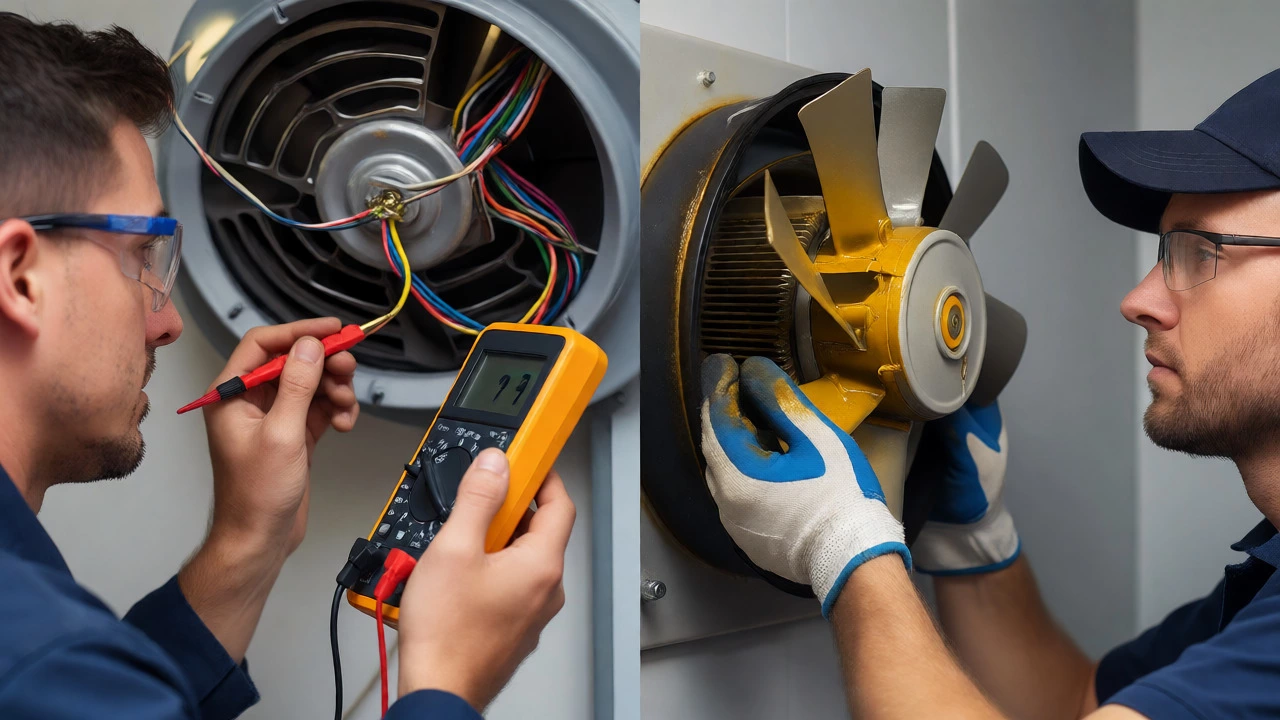
Before you pick up the phone, spend ten minutes checking the obvious things. Many "broken" fans are just dirty or poorly maintained. Turn off the power at the breaker panel first-never skip this step. Remove the filter cover and take out the mesh filters. Soak them in hot water with degreasing detergent. While they soak, wipe down the visible blades with a damp cloth. Grease buildup adds weight and resistance, forcing the motor to work harder until it burns out.
Check the external vent too. Go outside and see if the flap opens when the fan is running. Sometimes birds build nests in the duct, or snow blocks the exit. If the airflow is restricted, the fan overworks and fails. Also, inspect the pull chain or remote control batteries. It sounds trivial, but a dead battery in a wireless remote mimics a total electrical failure more often than you’d think. If these basic steps don’t revive your fan, then you know the issue is deeper.
Cost Comparison: Electrician vs. Appliance Technician
Let’s talk numbers. Hiring an electrician typically costs between $75 and $150 per hour, with a minimum call-out fee often around $60 to $90. If they simply reset a breaker or change a switch, expect to pay roughly $100 to $150 total. If they need to rewire a section, costs can jump to $300 or more.
An appliance technician might charge a similar hourly rate, but their diagnostic fees sometimes include the labor for minor repairs. If the motor needs replacing, a new motor costs $20 to $50, plus labor. Compare this to buying a new fan, which ranges from $40 for a basic model to $300+ for designer units. If your fan is older than five years, replacing it is often cheaper and more energy-efficient than repairing it. Newer models use less electricity and operate more quietly.
| Symptom | Likely Cause | Recommended Professional |
|---|---|---|
| Fan does not turn on at all | No power, faulty switch, tripped breaker | Electrician |
| Burning smell or sparks | Overheated wiring, loose connection | Electrician |
| Loud grinding or rattling noise | Worn bearings, loose blades, debris | Appliance Tech / HVAC |
| Weak airflow despite spinning | Clogged filters, blocked duct, failing capacitor | Appliance Tech / DIY Clean |
| Fan starts slowly or needs help | Faulty start capacitor | Electrician or Appliance Tech |
The Hybrid Solution: Handyman Services
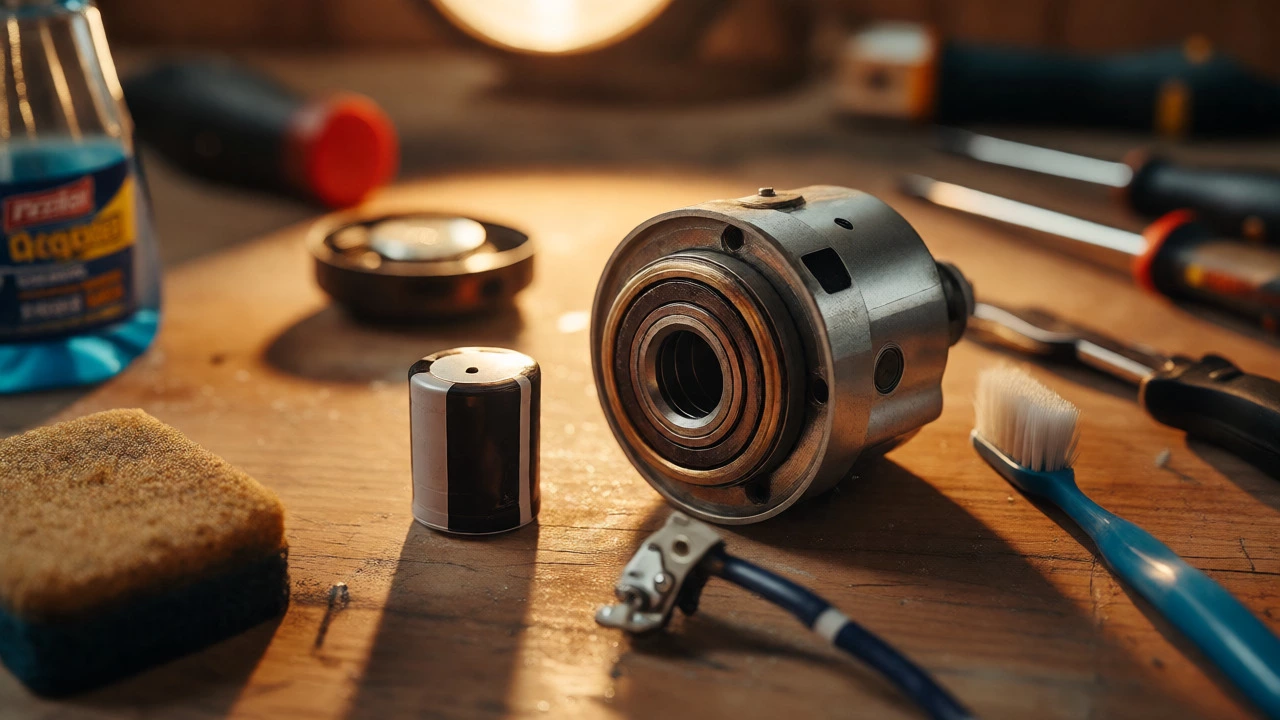
If you’re unsure whether your problem is electrical or mechanical, a licensed handyman might be your best bet. Many handymen hold basic electrical certifications and can handle simple rewiring or switch replacements. They also have the general skills to dismantle the fan, clean it, and check the mechanical integrity. For a flat fee, they can diagnose both sides of the equation. Just ensure they are insured and licensed for electrical work in your area. Don’t let an unlicensed handyman mess with mains voltage unless they are supervised by or certified as an electrician.
Preventive Maintenance Tips
To avoid future calls, keep your fan clean. Grease is the enemy of every extractor fan. Clean the filters monthly if you cook heavily, or quarterly if you use it lightly. Never run the fan dry for extended periods; moisture actually helps cool the motor in some designs, though most modern units are sealed. Ensure the external vent flap moves freely. If it sticks shut, the fan pushes against a closed door, stressing the motor. Finally, listen to it. A slight change in pitch can warn you that bearings are drying out before they seize completely.
Can I replace an extractor fan myself?
Yes, if it is a plug-in model. Simply unplug the old one and plug in the new one. If it is hardwired, you can replace it yourself only if you are confident working with live wires, turning off the main breaker, and connecting live, neutral, and earth wires correctly. Otherwise, hire an electrician to ensure safety and compliance.
Why does my extractor fan make a loud noise?
Loud noises usually indicate mechanical issues. Grinding sounds suggest worn motor bearings. Rattling often means a blade is loose or hitting the housing. Humming can indicate a failing capacitor or a motor struggling to start due to friction from grease buildup.
How much does it cost to fix an extractor fan?
Minor electrical fixes like changing a switch cost $100-$150. Motor replacement ranges from $150-$250 including parts and labor. If the repair exceeds $200, consider buying a new unit, as high-end fans cost $100-$300 and come with warranties.
Is it safe to use a fan with a burning smell?
No. Stop using it immediately and turn off the power at the breaker. A burning smell indicates overheating components, which could be melting insulation on wires or a seizing motor. Continuing to run it risks an electrical fire.
Do I need a permit to install a new extractor fan?
Generally, no, if you are replacing an existing unit in the same location. However, if you are adding a new circuit or modifying the ductwork structure, some municipalities require permits. Check local building codes, as rules vary by city and state.
I am an expert in the services industry with a focus on appliance repair. My passion lies in understanding how things work and educating others in simple, engaging ways. This enthusiasm fuels my writing, where I delve into topics around appliance maintenance and troubleshooting. I aim to make these subjects clear and accessible to all readers.