
Water Heater Brand Selector
Answer these questions to find the best water heater brand for your specific situation.
1. Water Quality
2. Ownership Plan
3. Budget Priority
4. Tech Preference
Best for: Budget-conscious buyers, soft water areas, tech enthusiasts wanting easy app control.
Best for: Hard water areas, long-term owners, those prioritizing durability over upfront cost.
Final Verdict
Calculating...
You’re standing in the aisle of your local hardware store, staring at two boxes. One says Rheem and the other says AO Smith. Both promise endless hot showers for years to come. Both cost roughly the same amount of money. So, which one actually lasts longer? Which one will give you fewer headaches when it breaks down in five years?
This isn’t just about brand loyalty. It’s about engineering differences that affect your wallet and your comfort. As someone who has fixed thousands of units here in Wellington, I can tell you that the answer isn't black and white. It depends on your water quality, your budget, and whether you prioritize upfront savings or long-term reliability. Let’s break down the real-world performance of these two giants.
The Short Answer for Busy Homeowners
If you want the quick take before reading the deep dive:
- Choose AO Smith if: You have hard water, you plan to keep the house for 10+ years, and you want a tank with superior corrosion resistance (Glass-lined).
- Choose Rheem if: You are on a tighter budget, you have soft water, or you need a specific smart-home integration feature that Rheem offers more affordably.
- Repairability: Rheem parts are often slightly cheaper and easier to find locally, while AO Smith tanks tend to last longer but can be harder to service once out of warranty.
Understanding the Core Technology Differences
Both companies make standard electric and gas storage tanks, as well as tankless models. But their internal philosophies differ significantly. The biggest differentiator is how they protect the steel tank from rusting from the inside out.
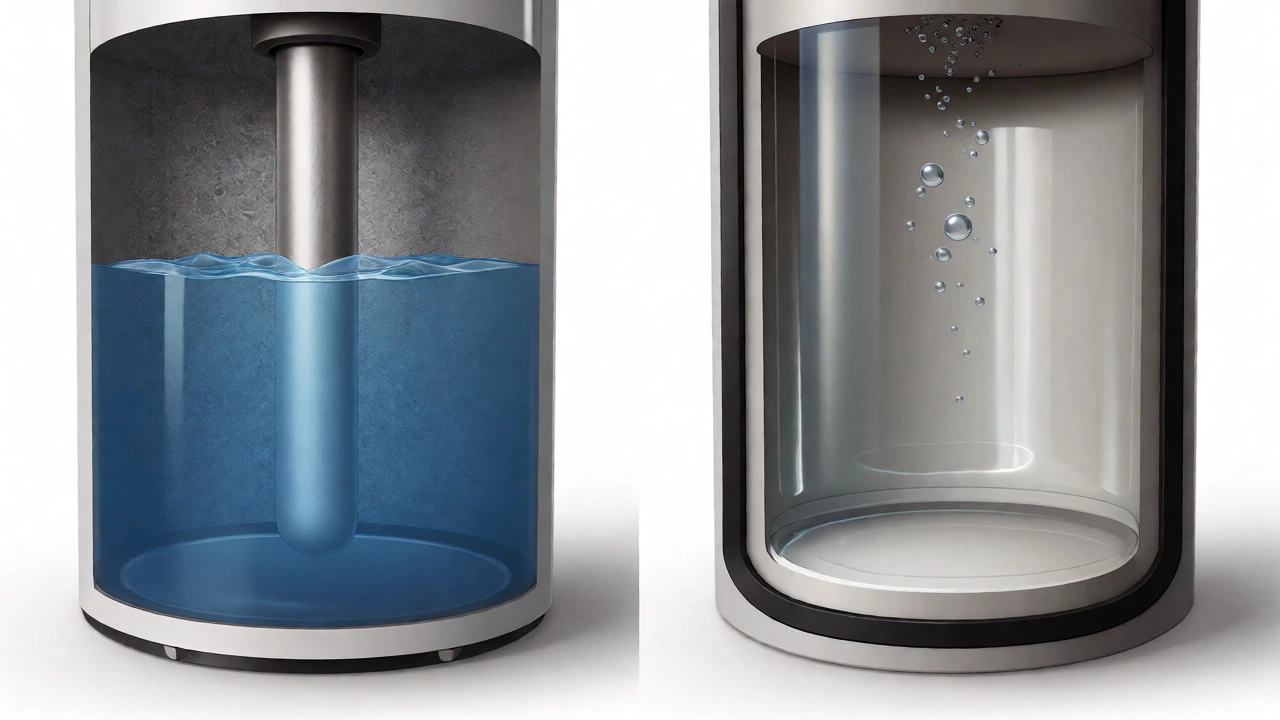
AO Smith built its reputation on glass-lined tanks. Think of this like a ceramic coating on a frying pan. The glass layer separates the water from the steel shell. This makes them incredibly resistant to sediment buildup and corrosion, especially in areas with aggressive water chemistry. If you live in a region with high mineral content, AO Smith is generally the safer bet because the glass doesn't degrade as quickly as traditional enamel linings used by competitors.
Rheem, on the other hand, often uses silica-based enamel linings combined with advanced anode rod technology. While still durable, silica lining can be more susceptible to cracking under thermal shock if the water pressure spikes suddenly. However, Rheem compensates for this by offering some of the best magnesium and aluminum anode rods on the market, which actively sacrifice themselves to prevent the tank from rusting. In my experience, a well-maintained Rheem with a good anode rod performs nearly identically to an AO Smith for the first 7-8 years.
Reliability and Lifespan: What the Data Says
Let’s look at the numbers. Industry standards suggest a lifespan of 8-12 years for most residential water heaters. But we know that's an average, not a guarantee.
| Feature | Rheem | AO Smith |
|---|---|---|
| Average Lifespan (Standard) | 8-10 Years | 10-12 Years |
| Tank Lining Type | Silica Enamel / Glass | High-Grade Glass-Lined |
| Anode Rod Quality | Excellent (Smart Anodes available) | Good (Standard Aluminum/Magnesium) |
| Part Availability | Very High (Global Supply Chain) | High (Strong in North America/Aus/NZ) |
| Upfront Cost | $$ (Mid-Range) | $$$ (Premium) |
| Warranty Support | Fast, often covers labor initially | Strict, usually parts-only after year 1 |
Why does AO Smith last longer? It comes down to thickness. AO Smith tanks typically use thicker gauge steel. They also apply multiple layers of glass coating. This adds weight and cost, but it pays off in longevity. Rheem focuses more on efficiency and smart features. Their newer models, like the Rheem ProGasmatic series, integrate Wi-Fi controls that let you monitor energy usage. AO Smith has caught up with their EnduroMax line, but Rheem’s app interface is often considered more user-friendly by tech-savvy homeowners.
Cost Analysis: Upfront vs. Long-Term Value
Here is where many people get tripped up. You might save $150 buying a Rheem instead of an AO Smith today. But if that Rheem fails three years earlier than the AO Smith, you’ve lost money on replacement costs, installation fees, and the hassle of being without hot water.
Consider the total cost of ownership over 10 years:
- Rheem Strategy: Buy mid-range model ($600). Install ($300). Replace at year 9 ($600 + $300 install). Total: ~$1,800.
- AO Smith Strategy: Buy premium model ($750). Install ($300). Lasts 12+ years. Total: ~$1,050 (assuming no replacement needed within the decade).
In this scenario, the "cheaper" option actually costs more. However, if you are renting out a property or planning to sell your home in two years, the lower upfront cost of Rheem makes perfect sense. Don’t pay for longevity you won’t enjoy.
Serviceability and Repair Challenges
As a repair technician, I care about what happens when things go wrong. And things always go wrong eventually.
Rheem wins on part availability. Because they are one of the largest manufacturers globally, almost every plumber carries Rheem heating elements, thermostats, and valves. If your Rheem breaks on a Tuesday night, I can likely fix it Wednesday morning with stock on hand.
AO Smith parts are also widely available, but certain proprietary components, like their specific heat exchangers in gas models, can sometimes require ordering. Additionally, AO Smith’s strict warranty terms mean that if you don’t register your product online within 30 days, you might lose extended coverage. Rheem is generally more lenient with proof of purchase requirements for basic warranties.
One common issue with both brands is the drain valve. On cheaper Rheem models, these are plastic and crack easily during flushing. AO Smith tends to use brass or reinforced plastic, which holds up better. Always ask your installer to upgrade the drain valve to a full-port ball valve, regardless of the brand. It’s a $20 part that saves you a $200 call-out fee later.

Energy Efficiency and Smart Features
Modern water heaters aren’t just buckets of hot water; they’re appliances. Both brands offer hybrid heat pump models that use 60% less energy than standard electric tanks. These are expensive upfront ($1,500+) but pay for themselves in electricity bills within 3-5 years.
Rheem’s EcoNet platform allows you to set schedules, detect leaks, and receive maintenance alerts via smartphone. For example, if the system detects that the tank isn’t heating efficiently, it tells you exactly which component might be failing. AO Smith’s Smart Control does similar things but integrates deeply with Alexa and Google Home. If you are already invested in a smart home ecosystem, check which brand has better compatibility with your existing hub.
For gas users, condensing technology is key. Both make condensing gas heaters that recover heat from exhaust gases. Rheem’s Infinity series is highly rated for flow rates, meaning you can run two showers simultaneously without temperature drops. AO Smith’s equivalent is solid but often requires more precise venting setups, which can increase installation complexity.
Which One Should You Buy? A Decision Guide
Still stuck? Use this simple decision tree to pick your winner.
Scenario A: You live in an area with very hard water (high calcium/magnesium).
Pick AO Smith. The glass lining resists scale buildup better. Scale acts like insulation on the heating element, forcing it to work harder and burn out faster. AO Smith handles this abuse better.
Scenario B: You are a landlord or flipping houses.
Pick Rheem. Lower initial cost keeps margins healthy. The unit will last through the tenant turnover or sale process. If it dies in year 4, you replace it cheaply.
Scenario C: You love gadgets and want remote monitoring.
Pick Rheem. Their app is intuitive, and the leak detection sensors are reliable. You’ll appreciate the peace of mind knowing your phone will buzz if something goes wrong while you’re on vacation.
Scenario D: You want the absolute longest life possible.
Pick AO Smith (specifically their commercial-grade residential models). Yes, they cost more. But if you hate replacing appliances, this is the buy-it-once option.
Maintenance Tips to Extend Life (Regardless of Brand)
Even the best tank fails if neglected. Here is how to double the lifespan of either brand:
- Flush the Tank Annually: Sediment settles at the bottom. This insulates the burner (gas) or element (electric), causing overheating and failure. Drain 2-3 gallons until the water runs clear.
- Check the Anode Rod: Every 3 years, inspect the sacrificial anode. If it’s mostly eaten away, replace it ($20 part). This single step prevents the tank from rusting through.
- Set Temperature to 120°F (49°C): Higher temps accelerate mineral buildup and scald risk. 120°F is safe and efficient.
- Install a Pressure Relief Valve Check: Ensure your T&P (Temperature and Pressure) valve isn’t dripping. Constant dripping means your household pressure is too high, stressing the tank seams.
Is Rheem owned by AO Smith?
No, they are separate, competing companies. Rheem Manufacturing Company is owned by Paloma Group (Japan), while A.O. Smith Corporation is independently traded on the NYSE. They do not share manufacturing facilities or parent companies.
Which brand has better customer support?
User reviews generally favor Rheem for ease of contacting support and processing warranty claims. AO Smith support can be slower, and their warranty claims often require detailed documentation of installation dates and maintenance logs. However, AO Smith’s technical troubleshooting guides are often more comprehensive for DIYers.
Are tankless water heaters better than Rheem or AO Smith storage tanks?
Tankless units (made by both brands) last longer (20+ years) and save energy, but they have higher upfront costs and potential flow-rate limitations. Storage tanks from Rheem or AO Smith are simpler, cheaper to install, and provide unlimited hot water volume as long as the tank size matches your demand. Choose tankless only if space is limited or you rarely use hot water.
How long does the warranty actually last?
Most standard models come with a 6-year limited warranty. Premium lines offer 10 or 12 years. Note that these are usually pro-rated. Year 1 covers parts and labor. Years 2-5 cover parts only. After that, you pay for everything. Always register your product immediately to activate the full term.
Can I switch from Rheem to AO Smith easily?
Yes. Plumbing connections (inlet/outlet pipes, gas lines, electrical wiring) are standardized. A plumber can swap a Rheem for an AO Smith in the same slot in about 2-4 hours. Just ensure the new tank fits the physical space, as dimensions vary slightly between models.
I am an expert in the services industry with a focus on appliance repair. My passion lies in understanding how things work and educating others in simple, engaging ways. This enthusiasm fuels my writing, where I delve into topics around appliance maintenance and troubleshooting. I aim to make these subjects clear and accessible to all readers.