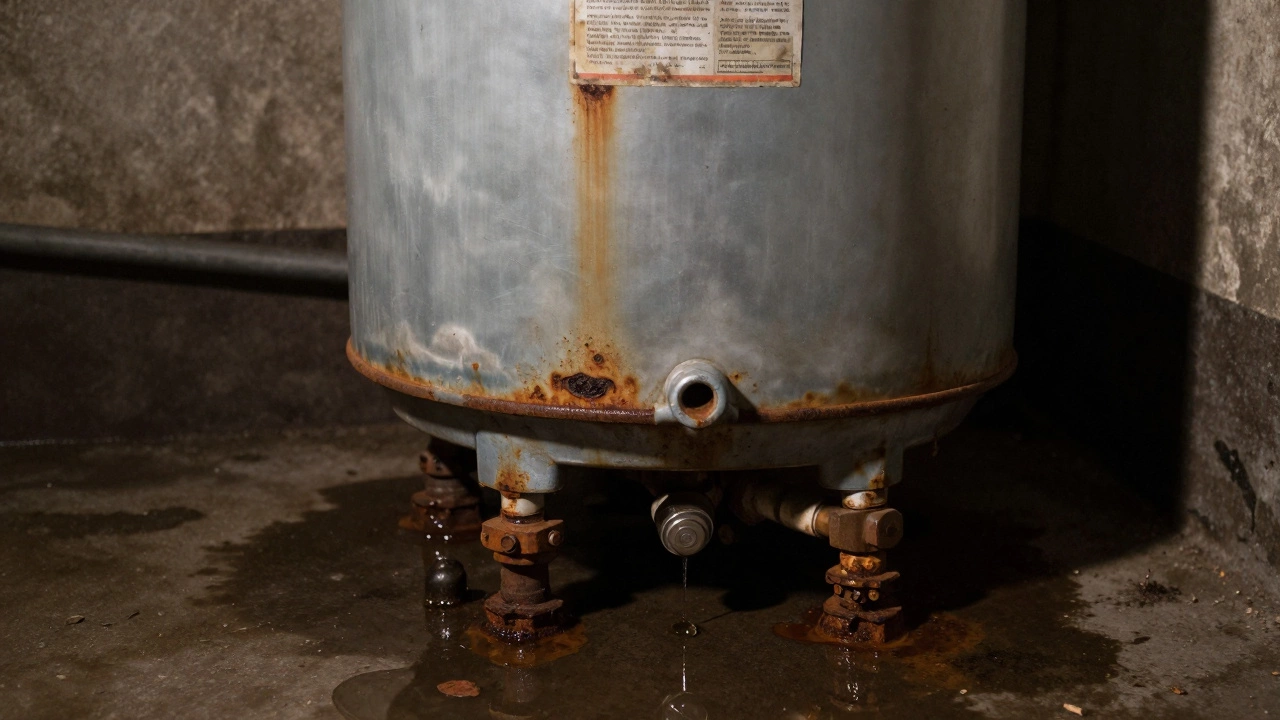
Water heaters don’t last forever. Most homes in New Zealand rely on them, and when they break, you’re left with cold showers and a messy floor. But before you panic and call for a full replacement, know this: water heater failure usually follows a pattern. It’s rarely sudden. It’s almost always a slow leak, a strange noise, or a gradual drop in hot water that tells you something’s wrong. If you catch these signs early, you can avoid a big repair bill-or even a flooded basement.
1. The Tank Is Leaking
Leaking is the number one reason water heaters fail. Not all leaks are the same. A small drip from the pressure relief valve? That’s fixable. A puddle under the tank itself? That’s the end of the line.
The tank is made of steel lined with glass to resist rust. But over time, that lining breaks down. Water sits in there for years, and even the smallest crack lets moisture in. Once rust starts eating through the metal, there’s no saving it. You can’t patch a rusted tank. It’s done.
Check under your water heater every few months. If you see even a little moisture, wipe it dry and watch. If it comes back, get it inspected. Don’t wait until it’s a flood. In Wellington, where humidity and rain are constant, rust moves faster than you think.
2. The Heating Element or Thermostat Is Dead
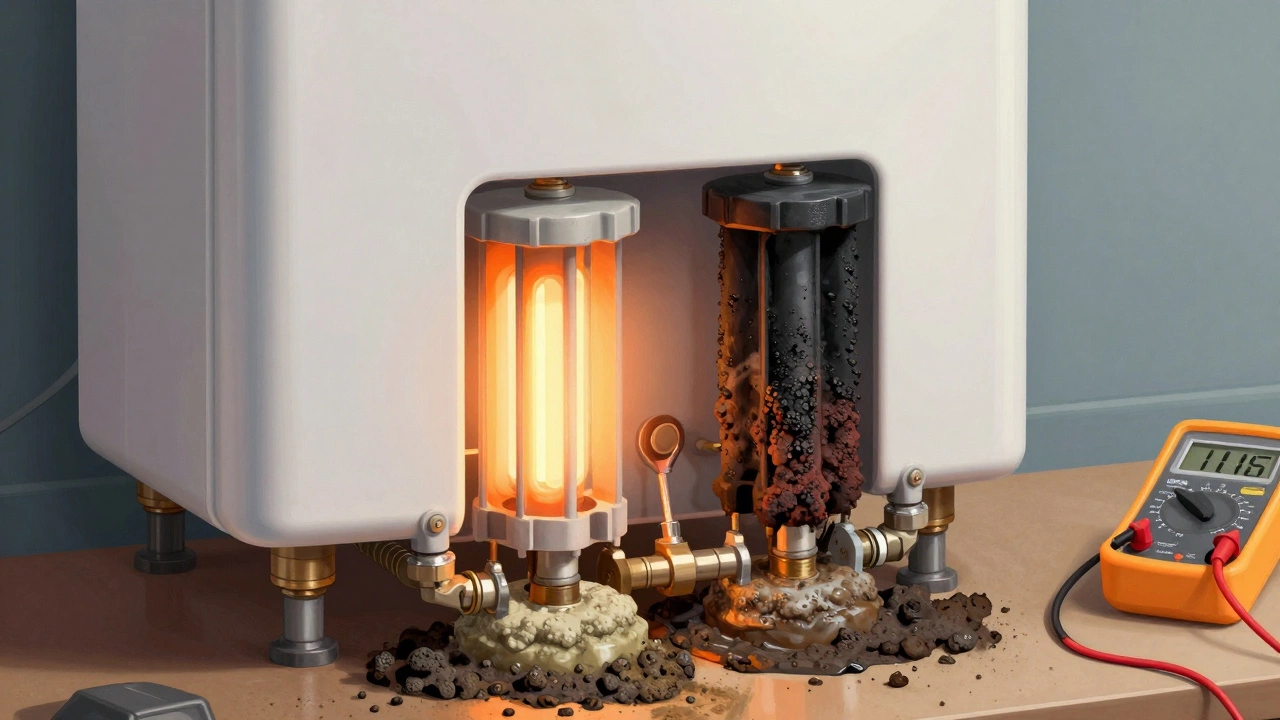
If you’re getting lukewarm water instead of hot, it’s probably not the tank-it’s the heating system. Electric water heaters have two heating elements: one at the top, one at the bottom. The top one heats the water first. If it fails, you’ll get cold water after the first shower. If the bottom one fails, you’ll get hot water at first, then it runs out fast.
Thermostats can go bad too. Sometimes they get stuck, or the wires corrode. In older units, the thermostat is set too high, and the element burns out from constant use. You can test both with a multimeter, but most people don’t have one. If your water heater is over 8 years old and you’re losing hot water faster than before, it’s likely the elements or thermostat.
3. Sediment Is Building Up
This one’s sneaky. You don’t see it, but it’s killing your heater from the inside. Hard water leaves behind minerals like calcium and magnesium. They sink to the bottom and form a thick layer of sediment. That layer acts like insulation. The heating element has to work twice as hard to heat the water above it.
Result? Higher energy bills, longer wait times for hot water, and a heater that makes popping or rumbling noises. That noise? It’s water boiling under the sediment. It’s not dangerous-but it’s a sign your heater is under stress. In areas with hard water, like parts of Canterbury or Hawke’s Bay, this happens faster. Flushing the tank once a year cuts this problem in half. But if you’ve never done it, and your heater is over 10 years old, the damage might already be done.
4. The Anode Rod Is Gone
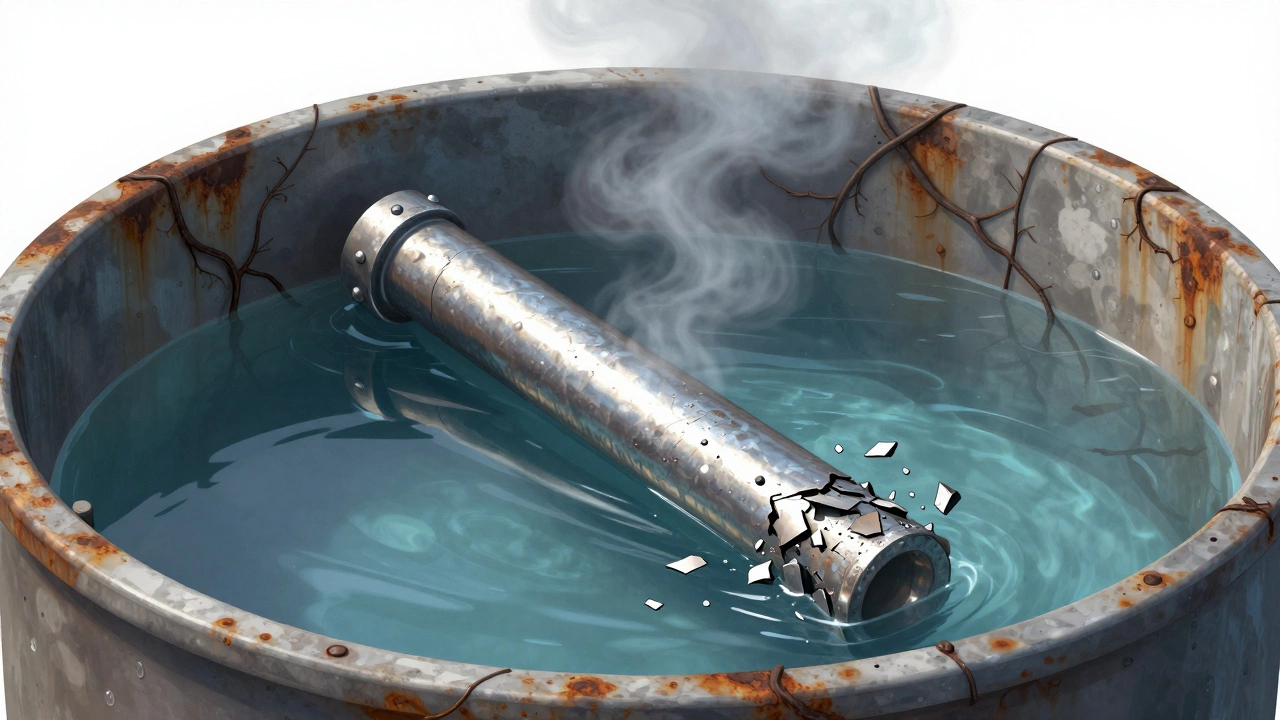
Every water heater has a sacrificial anode rod. It’s a magnesium or aluminum stick stuck into the top of the tank. Its job? To attract rust to itself instead of the tank. Think of it as a bodyguard for your water heater. Every 3 to 5 years, it gets eaten away.
Most people never check it. By the time the rod is gone, the tank is already rusting. If you’ve got a rotten egg smell from your hot water, that’s a clue. It’s sulfur bacteria feeding on the leftover bits of the anode rod. Replacing the rod every 4 years can add 5-10 years to your heater’s life. But if you skip it, you’re basically asking the tank to die early.
5. The Pressure Relief Valve Is Stuck or Leaking
This valve is your heater’s safety release. If pressure builds too high, it opens to let steam or water out. It should never drip. If it’s leaking constantly, the valve might be faulty-or the water pressure in your house is too high.
Test it once a year: lift the lever on the valve. You should hear a rush of water. If nothing comes out, or it keeps dripping after you let go, replace it. A stuck valve can cause dangerous pressure buildup. In Wellington, where water pressure can spike after heavy rain or during peak usage, this is more common than you’d think.
6. You’re Running Out of Hot Water Too Fast
If you used to get 20 minutes of hot shower, and now it’s 8 minutes, something’s wrong. It’s not just about usage. It’s about capacity and efficiency. Sediment, worn elements, or a broken dip tube (the pipe that sends cold water to the bottom of the tank) can all cut your hot water supply.
A broken dip tube lets cold water mix with hot water at the top of the tank. That means your shower starts hot, then suddenly turns cold. It’s not a thermostat issue-it’s a plumbing issue inside the tank. Replacing the dip tube is cheap and easy. But if your heater is older than 10 years, it’s usually not worth the fix.
When to Replace Instead of Repair
Not every problem needs a new heater. But some signs mean it’s time:
- The tank is leaking from the body (not a fitting)
- You’re over 10 years old
- It’s making loud popping or banging noises
- You’ve replaced parts twice in the last 2 years
- Your energy bill has jumped 20% without changing usage
If you’re seeing two or more of these, replacement is smarter than repair. Newer models are 20-30% more efficient. They last longer. And they come with better warranties. A 50-gallon electric tank with a 10-year warranty costs around $800-$1,200 installed in New Zealand. It’s a big upfront cost-but it’s cheaper than paying for repeated repairs and high bills.
How to Prevent Failure
You can’t stop time-but you can slow it down. Here’s what works:
- Flush the tank once a year. Just hook up a hose and drain it until the water runs clear.
- Set the thermostat to 50°C. Higher doesn’t mean better-it just wears out the system faster.
- Check the pressure relief valve annually.
- Install a water softener if you have hard water.
- Replace the anode rod every 4 years.
These steps cost less than $100 a year. They can double your heater’s life. And they save you from the mess, stress, and cost of a sudden failure.
What Happens If You Ignore It?
Ignoring a failing water heater doesn’t just mean cold showers. It means:
- Flooding: A ruptured tank can dump 80+ litres of water in minutes. That’s enough to ruin floors, walls, and furniture.
- Higher bills: A struggling heater uses more electricity or gas to do the same job.
- Safety risks: A stuck pressure valve can explode under extreme pressure-rare, but it happens.
- Insurance claims: Some policies won’t cover water damage from an old, unmaintained heater.
It’s not just about convenience. It’s about protecting your home.
Why does my water heater smell like rotten eggs?
The smell comes from sulfur bacteria reacting with the anode rod in the tank. It’s not dangerous, but it’s annoying. Replacing the anode rod with an aluminum-zinc version or flushing the tank with hydrogen peroxide usually fixes it. If the smell returns quickly, your water supply may have high sulfur content.
How long should a water heater last?
Most electric water heaters last 8 to 12 years. Gas models last a bit longer-10 to 15 years. But this depends heavily on water quality, maintenance, and usage. In areas with hard water, like parts of New Zealand, the lifespan can drop to 6-8 years without regular flushing.
Can I replace a water heater myself?
Technically, yes-if you’re comfortable with plumbing, electrical work, and gas lines. But in New Zealand, building codes require permits for water heater installations, especially gas models. Most insurance policies also require professional installation. It’s safer and smarter to hire a licensed plumber.
Is a tankless water heater better?
Tankless heaters save space and energy because they heat water on demand. But they’re more expensive to install-often $2,000-$4,000-and need strong gas lines or heavy-duty electrical circuits. In homes with high hot water use (like families of four or more), they’re worth it. For singles or couples, a standard tank is still more practical and affordable.
Why does my water heater make noise?
Popping or rumbling noises usually mean sediment has built up on the bottom of the tank. As water heats, it gets trapped under the sediment and boils, creating noise. Flushing the tank removes the sediment and stops the sound. If the noise continues after flushing, the heating element may be damaged.
I am an expert in the services industry with a focus on appliance repair. My passion lies in understanding how things work and educating others in simple, engaging ways. This enthusiasm fuels my writing, where I delve into topics around appliance maintenance and troubleshooting. I aim to make these subjects clear and accessible to all readers.