Water Heater Sediment Impact Calculator
Enter your details below to estimate how much money you might be losing due to neglected water heater maintenance.
Why This Matters
According to the U.S. Department of Energy, even half an inch of sediment can reduce heating efficiency by up to 18%. Sediment acts as an insulator, forcing your burner or element to work harder. It also accelerates corrosion of the anode rod, potentially leading to tank failure years earlier than expected.
You probably think your water heater is a set-and-forget appliance. It sits in the basement or closet, humming quietly, doing its job day after day. But here is the uncomfortable truth: if you never flush it, that quiet hum is actually the sound of your wallet bleeding out and your unit slowly dying.
Most homeowners ignore this task for years, sometimes decades. Why? Because nothing breaks immediately. There are no sirens, no flashing lights, just a slow accumulation of grit at the bottom of the tank. This article breaks down exactly what happens when you skip maintenance, how it affects your energy bills, and why waiting until it fails is always more expensive than spending twenty minutes flushing it once a year.
The Silent Killer: Sediment Buildup
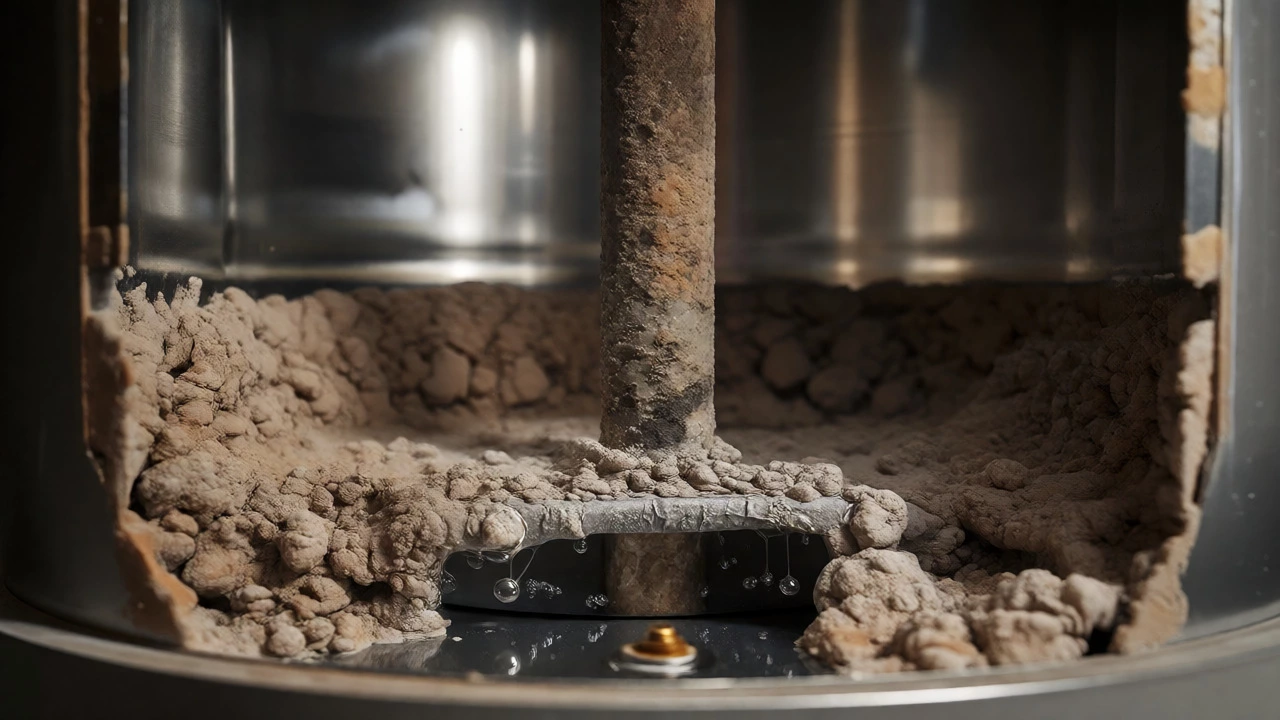
Municipal water isn't pure. It carries minerals like calcium and magnesium, along with tiny particles of sand and rust from aging pipes. When your water heater heats this water, those minerals don't evaporate. They settle. Gravity pulls them to the bottom of the tank, where they form a layer of hard, rocky sludge known as sediment.
Think of it like boiling pasta in a pot and never cleaning it. The starch sticks to the bottom, burns, and turns into a crust. In your water heater, this crust builds up over time. Initially, it’s just a thin layer. After five years without flushing, it can be several inches thick. After ten? It might fill the lower third of the tank.
This sediment isn't just dirt; it's an insulator. And insulation is bad news when you're trying to heat water efficiently.
Your Energy Bills Will Climb
Here is the physics problem: most residential water heaters use electric heating elements located near the bottom of the tank, or gas burners underneath the tank. Both rely on direct contact between the heat source and the water to transfer energy efficiently.
When sediment accumulates, it creates a barrier. The burner or element has to work harder to push heat through that layer of rock-like debris to reach the water above. This is called thermal resistance. The result is simple math: your heater runs longer to achieve the same temperature.
According to the U.S. Department of Energy, even half an inch of sediment can reduce heating efficiency by up to 18%. Let’s put that in perspective. If your average annual water heating cost is $500, you’re wasting nearly $90 every year just because you didn’t open a valve and let some dirty water drain out. Over ten years, that’s $900 thrown away-often enough to buy a new water heater entirely.
The Tank Corrodes From the Inside Out
Inside every standard storage-tank water heater lives a critical component: the anode rod. This sacrificial metal rod (usually made of magnesium or aluminum) attracts corrosive ions in the water, preventing them from eating away at the steel tank itself. It literally sacrifices itself so the tank survives.
Sediment speeds up this process dramatically. The mineral-rich sludge creates a highly conductive environment that accelerates corrosion around the base of the anode rod. Worse, heavy sediment can bury the bottom of the rod, causing uneven depletion. Instead of wearing down evenly, the exposed parts corrode rapidly while the buried parts remain intact but ineffective.
Once the anode rod is fully consumed, the corrosion attacks the steel walls of the tank directly. Since the tank is under constant pressure and heat, these weak points eventually fail. And unlike a leaky faucet, a failed water heater tank doesn't drip-it bursts. We'll get to the disaster part later.
Loud Noises Are Not Normal
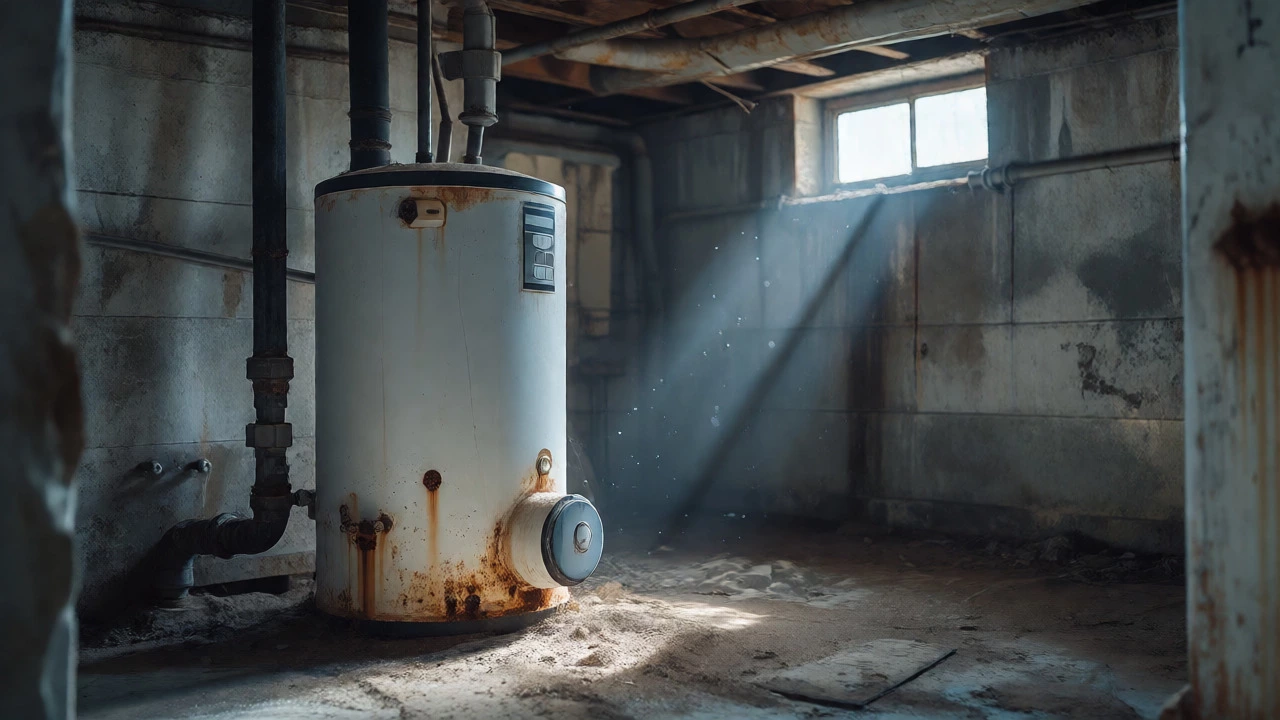
If you hear popping, cracking, or rumbling sounds coming from your water heater, you have a problem. These noises are often dismissed as normal operation, but they are actually warning signs of severe sediment buildup.
Here’s what’s happening: water gets trapped beneath the layer of sediment. As the burner heats up, this trapped water boils and turns into steam bubbles. These bubbles rise through the hot sediment and collapse violently when they hit cooler water above. That collapse creates the loud popping noise. It’s essentially small explosions occurring inside your tank thousands of times per hour.
This process does two things: it stresses the tank lining and reduces efficiency. Each bubble formation requires extra energy, and the physical force of the collapsing bubbles can crack the glass lining that protects the steel interior. Once that lining cracks, rust sets in faster.
Reduced Hot Water Capacity
Have you noticed that your shower runs cold sooner than it used to? You might blame the family size or long showers, but sediment is likely the culprit.
A 40-gallon water heater holds 40 gallons of water. But if three inches of sediment sit at the bottom, that space is occupied by rock, not water. You effectively lose 5 to 10 gallons of usable hot water capacity. For a household that relies on back-to-back showers, this shortage becomes noticeable quickly.
Additionally, sediment can clog the dip tube-the pipe that directs incoming cold water to the bottom of the tank. If this tube gets blocked or broken due to sediment abrasion, cold water mixes with hot water at the top instead of staying at the bottom. The result? Lukewarm showers and inconsistent temperatures.
| Issue | Cause | Financial Impact | Repair Cost Estimate |
|---|---|---|---|
| High Energy Bills | Thermal insulation from sediment | 15-20% increase annually | $0 (if flushed early) |
| Tank Leak | Anode rod failure + corrosion | Water damage risk | $1,200 - $3,000+ |
| Shortened Lifespan | Overheating elements/burner | Replacement needed 3-5 years early | $800 - $1,500 |
| Inconsistent Temperature | Dip tube blockage | Comfort loss | $150 - $300 |
The Burst Risk: A Plumbing Nightmare
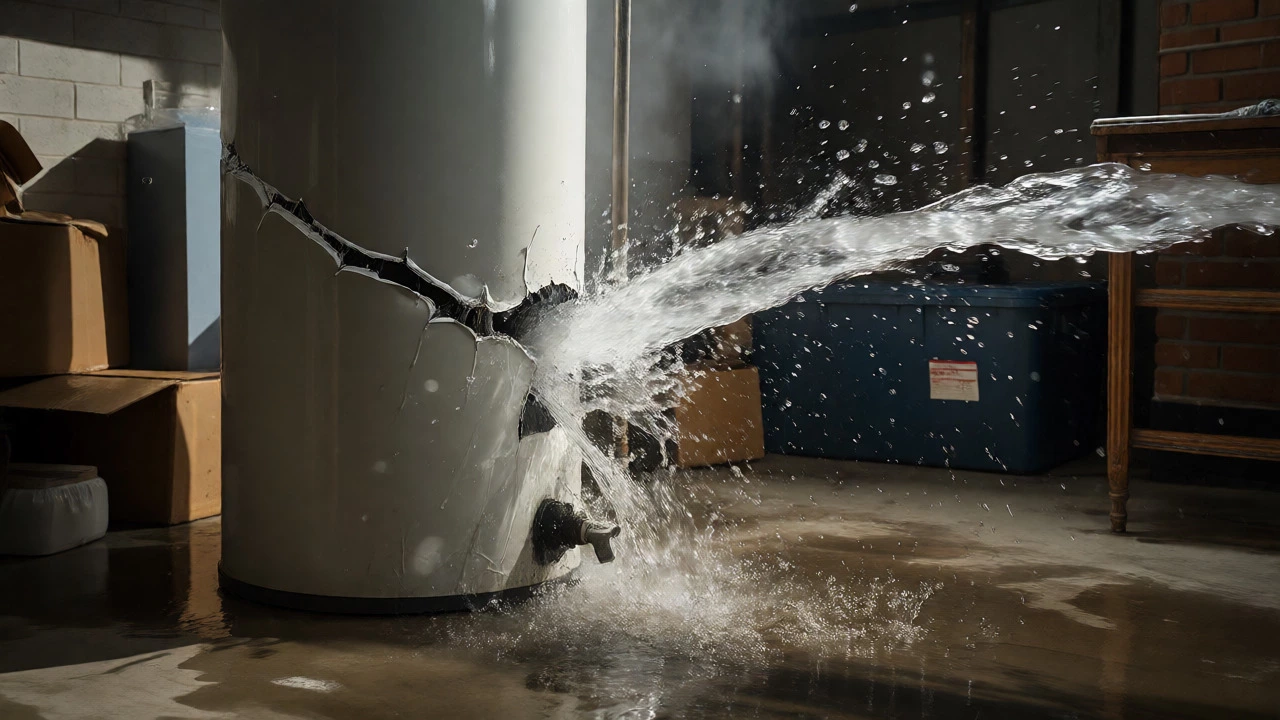
The worst-case scenario isn't just higher bills; it's catastrophic failure. When sediment overheats the bottom of the tank, it can warp the metal. Combined with the weakened structure from corrosion, the tank loses its integrity.
Water weighs about 8.3 pounds per gallon. A full 50-gallon water heater holds over 400 pounds of water. If the tank ruptures, that water releases instantly. Depending on the location of the heater, this can flood basements, destroy drywall, ruin flooring, and promote mold growth within 24 hours.
Insurance often covers sudden accidental discharge, but not gradual leaks caused by lack of maintenance. If a plumber finds significant sediment and rust during inspection, they may flag it as poor maintenance, potentially voiding claims. Flushing prevents this surprise.
How Often Should You Actually Flush?
Manufacturers typically recommend flushing once a year. However, this depends on your water hardness. If you live in an area with "hard" water (high mineral content), you might need to flush every six months. Areas with soft water might allow for every 18 months.
How do you know? Check your local water quality report. Look for grains per gallon (GPG) of hardness:
- Soft: Less than 1 GPG - Flush annually.
- Moderately Hard: 1-7 GPG - Flush annually.
- Hard: 7-10.5 GPG - Flush every 6-9 months.
- Very Hard: Over 10.5 GPG - Flush every 6 months.
If you notice any of the symptoms mentioned above-noise, lukewarm water, or high bills-flush it immediately, regardless of the schedule.
Is It Too Late to Save It?
If you've never flushed your water heater and it's older than 8 years, proceed with caution. Aggressive flushing can dislodge large chunks of sediment that might plug the drain valve or the dip tube. Sometimes, a heater that has been neglected for too long will start leaking shortly after being disturbed because the sediment was actually plugging small pinhole leaks.
However, not flushing guarantees failure. Most plumbers agree that attempting a gentle flush is worth the risk. If it leaks afterward, you were going to replace it soon anyway. If it doesn't, you've extended its life significantly.
Next Steps for Homeowners
Don't wait for a burst pipe to remind you about maintenance. Here is your action plan:
- Check your age: Look at the manufacturer's label. If it's over 5 years old and never flushed, prioritize this task.
- Inspect the anode rod: If you're handy, remove the hex head screw on top of the tank. Pull out the rod. If it's less than ½ inch thick, replace it ($15-$25 part).
- Flush the tank: Turn off power/gas, connect a hose to the drain valve, run it outside, and drain until water runs clear. Refill before turning power back on.
- Set a reminder: Put it on your calendar for next year. Consistency beats intensity.
Treating your water heater like a car engine helps. You wouldn't drive 50,000 miles without changing the oil. Similarly, ignoring sediment buildup costs you money and comfort. Twenty minutes of effort today saves thousands tomorrow.
Can I flush my water heater myself?
Yes, most homeowners can flush a water heater with basic tools. You need a garden hose, a bucket, and possibly a wrench if the valve is stiff. Ensure the water is cool enough to handle or wear gloves. Always turn off the power or gas supply before starting to prevent dry-firing elements or burning gas unnecessarily.
Why is my water brown after flushing?
Brown water usually indicates rust from the tank's interior or iron bacteria in the well water. If it clears up after running the tap for a few minutes, it was likely loose sediment stirred up during the flush. If it persists, check your home's piping or consult a plumber to test for internal tank corrosion.
Does flushing remove all sediment?
Not necessarily. Heavy, compacted sediment layers can be difficult to remove completely through a standard drain valve. Some professionals use a method called "reverse flushing," which involves connecting a hose to the hot water outlet and forcing water backward through the tank to break up stubborn deposits.
Will flushing fix a leaking water heater?
No. Flushing prevents future leaks caused by corrosion but cannot repair existing holes or cracks in the tank. If your heater is already leaking from the bottom, the tank is compromised and needs replacement. Tightening connections might help if the leak is from the pipes or valves, not the tank body.
How much does professional flushing cost?
Professional water heater maintenance typically ranges from $100 to $200 depending on your location and whether other inspections are included. This price usually covers flushing the tank, checking the T&P relief valve, inspecting the anode rod, and testing safety controls. It's a fraction of the cost of emergency repairs.
I am an expert in the services industry with a focus on appliance repair. My passion lies in understanding how things work and educating others in simple, engaging ways. This enthusiasm fuels my writing, where I delve into topics around appliance maintenance and troubleshooting. I aim to make these subjects clear and accessible to all readers.