
Freezer Symptom & Repair Diagnostic Tool
Select the symptom your freezer is showing to find the likely cause and the best course of action.
Power Failure
Likely Cause: Tripped Circuit Breaker or GFCI Outlet.
Inefficient Cooling
Likely Cause: Dirty Condenser Coils or Low Refrigerant Gas.
Compressor Start Issue
Likely Cause: Failed Start Relay.
Airflow Obstruction
Likely Cause: Door Seal (Gasket) Leak or Defrost Timer Failure.
Mechanical Noise
Likely Cause: Failing Evaporator Fan Motor.
Quick Action Plan: Save Your Food First
Before you start poking around with a screwdriver, you need to secure your groceries. Once the temperature rises above 40°F (4°C), the clock starts ticking on food safety.- Keep the door shut. Every time you open the lid, you let out the remaining cold air. If the power is out or the unit is dead, a full freezer can keep food safe for about 48 hours if left unopened.
- Group items together. If you have space, pack frozen items close to each other. They act like ice blocks, keeping each other cold for longer.
- Use a cooler. If you suspect the fix will take days, move high-value items (like seafood or meat) into a cooler with dry ice or gel packs.
- The "Touch Test". If food is still rock hard, it's safe to move. If it's thawed but still cold (below 40°F), you can cook it immediately or refreeze it, though quality might drop. If it's warm to the touch, toss it.
Check the Obvious Culprits
You'd be surprised how often a "broken" freezer is actually just a tripped breaker or a loose plug. Start with these basic checks before assuming the worst.
First, look at the lights. If the internal light doesn't turn on when you open the door, you have a power issue. Check your electrical panel for a tripped circuit breaker. If the breaker is fine, try plugging a lamp into the same outlet to see if the socket itself is dead. Sometimes a GFCI outlet a ground fault circuit interrupter designed to shut off power during a ground fault can trip, requiring a simple press of the "Reset" button.
Next, check the thermostat. It's possible someone bumped the dial while cleaning, turning the cooling down or off entirely. Set it to the coldest setting and wait an hour to see if you hear the motor kick back in.
Diagnosing the Noise (or Silence)
Listen to your freezer. The sounds it makes-or doesn't make-are the biggest clues to what's wrong inside. A healthy unit has a steady hum and a periodic click.
If you hear a clicking sound every few minutes but the motor doesn't start, your Compressor the pump that compresses and circulates refrigerant through the cooling system might be struggling. This is often caused by a failed Start Relay an electrical device that provides the initial boost of power to start the compressor motor. The relay is a small plastic part attached to the side of the compressor; if it's burnt out, it's a cheap and relatively easy part to replace.
If the freezer is running constantly-meaning the motor never stops-but the food is warming up, you likely have a refrigerant leak or a failing compressor. If you see oil patches near the coils, that's a sign that the gas has escaped. Unfortunately, this usually means the unit is a "lemon" and replacing it is more cost-effective than repairing it.
| Symptom | Likely Cause | Difficulty to Fix | Recommendation |
|---|---|---|---|
| No power / No lights | Tripped Breaker / GFCI | Very Easy | Check Panel / Reset Button |
| Running but not cold | Dirty Coils / Low Gas | Medium | Vacuum Coils / Call Pro |
| Clicking sound / No hum | Start Relay Failure | Easy | Replace Relay |
| Excessive frost buildup | Door Seal Leak | Easy | Replace Gasket |
| Loud rattling/grinding | Evaporator Fan Motor | Medium | Replace Fan Motor |
Dealing with Frost and Airflow
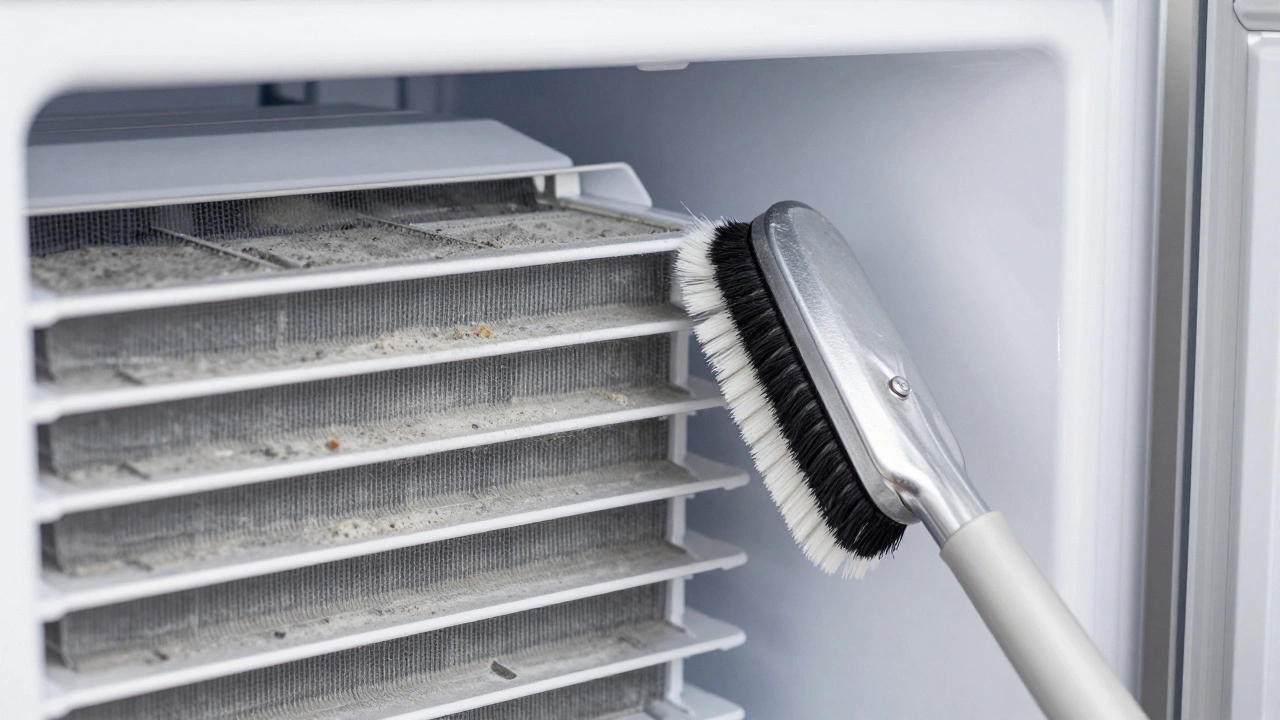
Airflow is everything in a freezer. If the cold air can't move, the food won't stay frozen, even if the motor is working perfectly. This is where the Evaporator Coils the heat exchange coils where refrigerant evaporates and absorbs heat from the freezer interior come into play.
If you notice a massive wall of ice on the back panel, your freezer is likely suffering from "frost lock." This happens when a Defrost Timer a clock-like switch that tells the freezer when to stop cooling and start melting ice off the coils or a defrost heater fails. The coils get buried in ice, and the air can't get through. You can try a manual defrost by unplugging the unit and leaving the doors open for 24 hours (keep your food in a cooler!), but if the timer is broken, the ice will just come back in a week.
Also, check your vents. If you've stuffed a giant bag of frozen corn right in front of the air return vent, you're essentially choking the machine. Move your food away from the walls and vents to let the air circulate freely.
The Role of the Condenser Coils
Most people forget that freezers have to "dump" the heat they remove from the food somewhere. They do this through the Condenser Coils the external coils that release heat from the refrigerant into the surrounding air. These are usually located at the bottom or back of the unit.
If these coils are covered in pet hair, thick dust, or grease, the freezer can't release heat efficiently. The compressor has to work twice as hard, it overheats, and eventually, it just shuts off to protect itself. Grab a vacuum with a brush attachment or a coil brush and clean those coils every six months. It's the single best way to extend the life of your appliance.
When to Stop Fixing and Start Shopping
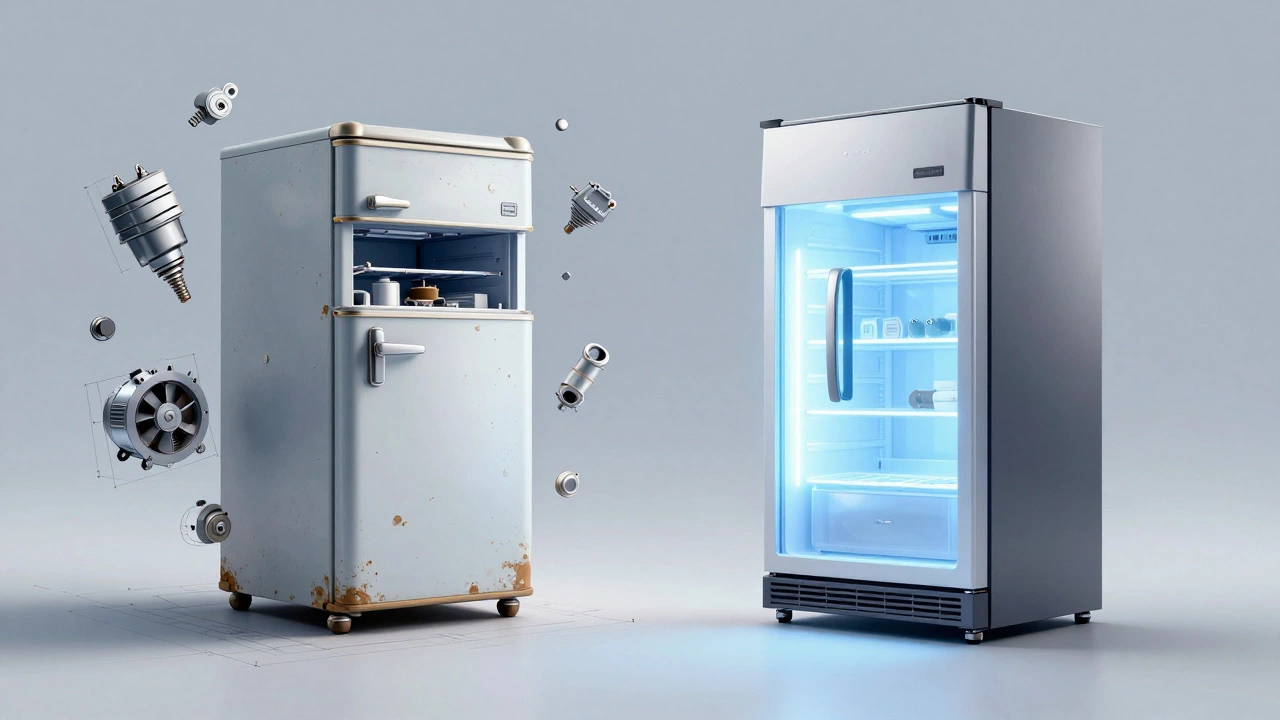
Not every freezer is worth saving. If you're facing a Refrigerant Leak a hole in the sealed system that allows cooling gas to escape or a completely dead compressor, you're looking at a very expensive repair. In many cases, the cost of labor and parts for these specific issues exceeds 50% of the price of a new, more energy-efficient model.
If your unit is more than 10 years old and the compressor has failed, it's time to let it go. Modern freezers use better insulation and more eco-friendly refrigerants, which will save you money on your monthly power bill regardless of the upfront cost.
How long will food stay frozen if the freezer quits?
A full, unopened freezer can keep food safe for about 48 hours. A half-full one usually lasts around 24 hours. The key is to keep the door closed to trap the cold air. Once the food reaches 40°F (4°C), you enter the "danger zone" where bacteria grow quickly.
Can I use a hairdryer to defrost my freezer?
It is generally not recommended. The intense heat from a hairdryer can easily warp or melt the plastic interior liners of your freezer. The safest method is to unplug the unit, open the doors, and place towels around the base to catch the dripping water.
What does it mean if my freezer is humming but not cooling?
This usually means the motor (compressor) is running, but the cooling process is failing. This could be due to dirty condenser coils, a failed evaporator fan, or a leak in the refrigerant system. Check the coils first; if they are clean, you likely have a mechanical failure that requires a professional.
Is it safe to refreeze food that has thawed?
You can refreeze food if it's still cold (below 40°F) to the touch. However, the texture and quality will suffer-especially with meats and vegetables. If the food has reached room temperature or smells off, throw it away immediately to avoid food poisoning.
How do I know if my door seal is leaking?
Try the "Dollar Bill Test." Close the door on a dollar bill. If you can pull the bill out easily without any resistance, the seal (gasket) is loose. This lets warm air in, causing the freezer to frost up and the motor to run constantly.
Next Steps and Troubleshooting
If you've checked the power, cleaned the coils, and defrosted the unit but it's still not cooling, you've reached the limit of DIY repair. Your next move depends on your budget and the age of the machine.
For newer units (under 5 years): Call a certified technician. Check if you are still under manufacturer warranty. Many compressors have a separate 5-to-10 year warranty even if the rest of the unit is only covered for one year.
For older units: Start browsing for a replacement. Look for an Energy Star-certified model to lower your utility costs. When shopping, consider if a chest freezer (which keeps the cold air better when opened) or an upright freezer (which is easier to organize) fits your needs better.
Pro Tip: Once you get your freezer back up and running, consider buying a cheap Govee or similar WiFi temperature alarm. These devices send a notification to your phone the second the temperature rises above a certain threshold, so you can fix the problem before your food spoils.
I am an expert in the services industry with a focus on appliance repair. My passion lies in understanding how things work and educating others in simple, engaging ways. This enthusiasm fuels my writing, where I delve into topics around appliance maintenance and troubleshooting. I aim to make these subjects clear and accessible to all readers.