Electric Oven Troubleshooter
Select the primary symptom you are experiencing to get a diagnosis, likely causes, and recommended actions.
Your electric oven is the workhorse of your kitchen. It handles everything from Sunday roasts to delicate pastries. But when it stops working right, it’s not just an inconvenience; it can ruin a meal or even become a safety hazard. You might notice the food isn't cooking evenly, the display is blank, or perhaps the oven simply won't heat up at all.
Before you call a technician and pay for a service visit, it helps to know what usually goes wrong with these appliances. Most electric oven faults fall into a handful of common categories. By understanding the symptoms and the likely causes, you can often pinpoint the issue yourself. Sometimes, it’s a simple fix like a tripped breaker or a dirty sensor. Other times, it points to a component that needs professional replacement.
The Oven Won’t Heat Up At All
This is arguably the most frustrating problem. You set the temperature, press start, and wait... but the interior remains cold. If your oven has no heat, the culprit is almost always related to the power supply or the heating elements themselves.
First, check the obvious. Is the oven plugged in? Does your home’s circuit breaker look tripped? Ovens draw significant power, so a heavy load elsewhere in the house can sometimes trip the main switch. If the power is on, look inside the oven. Do you see any glow from the heating elements?
If there is no glow, the issue is likely one of the following:
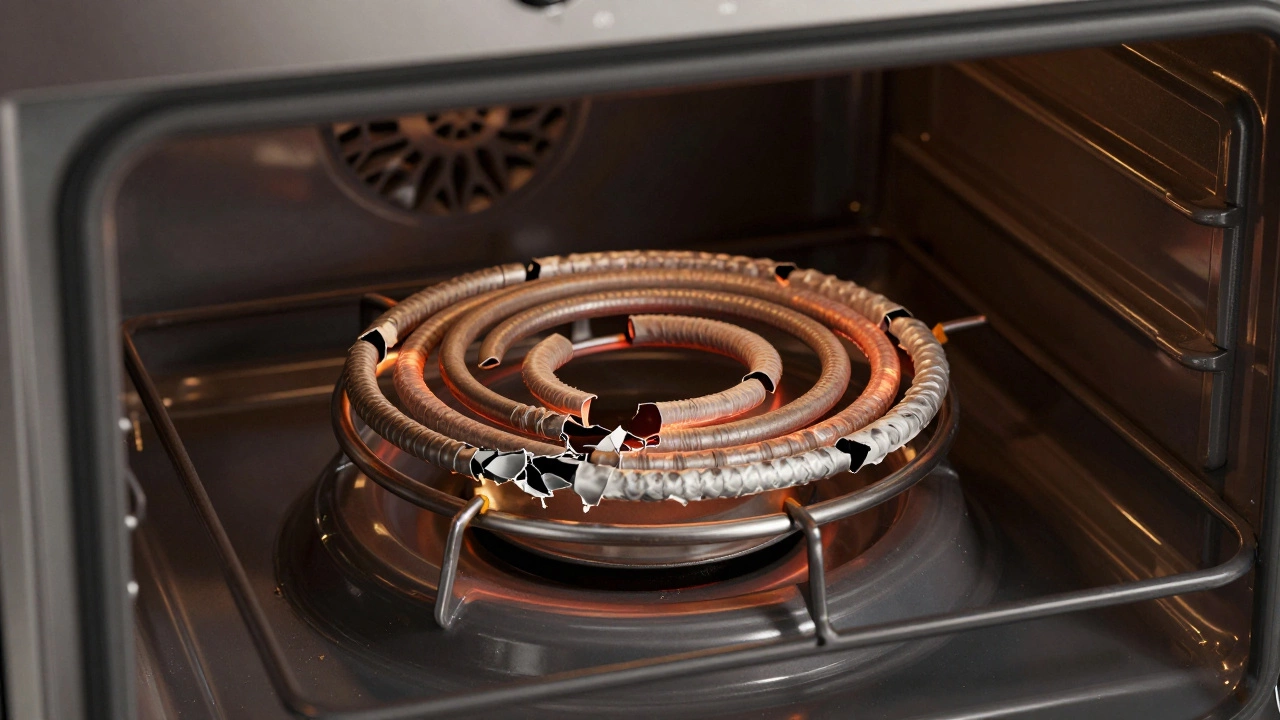
- Baking Element: The primary heating coil located at the bottom of the oven cavity responsible for generating heat during baking modes. This element burns out over time due to thermal stress. If it looks blistered, cracked, or has open loops, it’s dead.
- Broil Element: The top-mounted heating coil used for high-heat broiling and grilling functions. While this primarily affects broiling, some models rely on it for certain convection settings.
- Thermal Fuse: A safety device that cuts power to the oven if internal temperatures exceed safe limits. If this blows, the oven will lose all power to protect itself from fire risk. It cannot be reset and must be replaced.
A quick test involves checking continuity with a multimeter. If you’re not comfortable doing this, watch for visual signs. A broken element is easy to spot. If the elements look fine but there’s still no heat, the problem might be deeper, involving the relay board or the control panel sending incorrect signals.
Uneven Cooking and Hot Spots
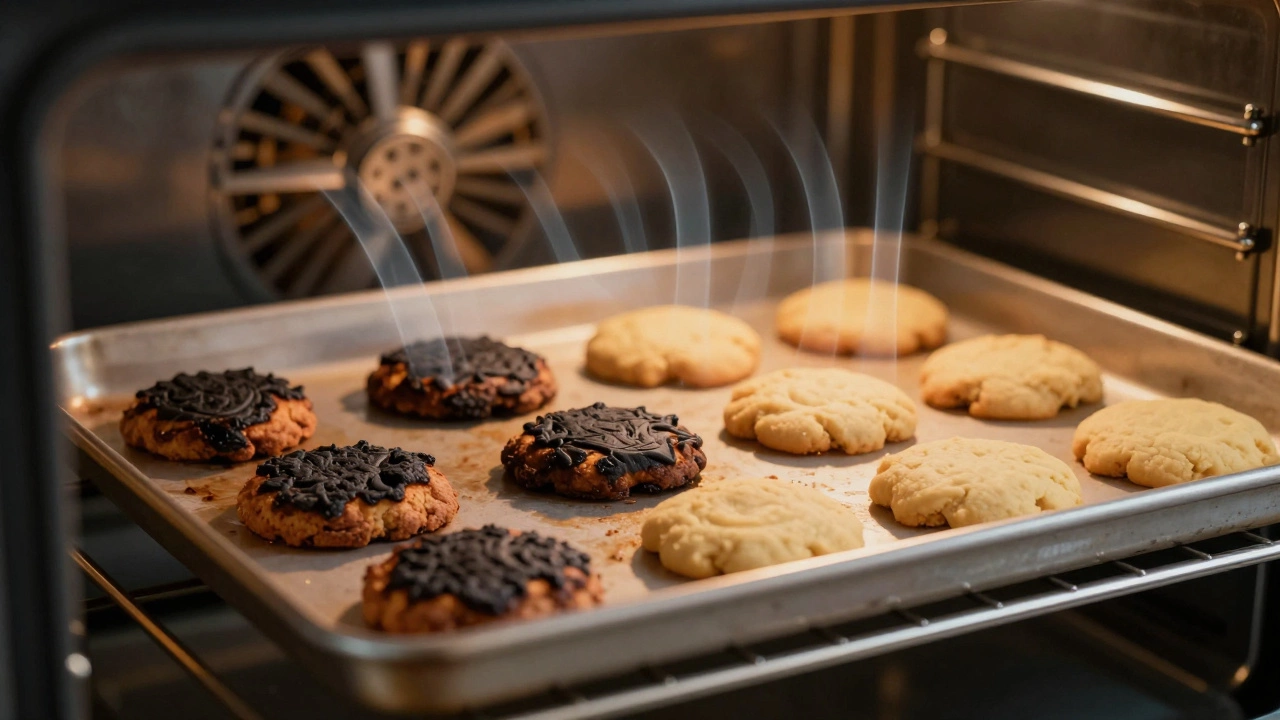
Have you ever pulled out a tray of cookies only to find they are burnt on one side and raw on the other? Or maybe your roast is grey in the middle while the edges are charred? Uneven cooking is a classic sign that your oven’s temperature distribution is off.
In modern electric ovens, especially those with Convection Fans: Built-in fans that circulate hot air around the food for more even cooking and faster reduction times., the fan plays a crucial role. If the fan motor fails or the blades are obstructed by grease buildup, air won't circulate properly. This creates stagnant pockets of heat.
Another major cause is a failing Oven Thermostat: The component that monitors internal temperature and cycles the heating elements on and off to maintain the set point.. The thermostat acts as the brain's thermometer. If it drifts out of calibration, it might tell the oven to stop heating when it's actually too cold, or keep heating long after it's reached the target temp. Over time, the metal bimetal strip inside the thermostat warps, losing its accuracy.
To check for this, use an independent oven thermometer. Place it in the center of the rack and compare the reading to your oven's display. If there’s a discrepancy of more than 25°F (about 14°C), your thermostat or temperature sensor needs attention.
| Symptom | Likely Cause | Difficulty to Fix |
|---|---|---|
| Food burnt on top, raw below | Faulty broil element or misaligned racks | Easy |
| Food burnt on left/right sides | Clogged convection fan or blocked vents | Medium |
| General inconsistency | Calibrated thermostat or bad temperature sensor | Medium |
| Bottom burning only | Damaged baking element insulation | Hard |
Door Seals and Heat Loss
The door of your oven is designed to be a fortress against heat escape. It uses a thick layer of glass and a rubber-like gasket to create an airtight seal. When this seal breaks, energy efficiency plummets, and cooking times skyrocket.
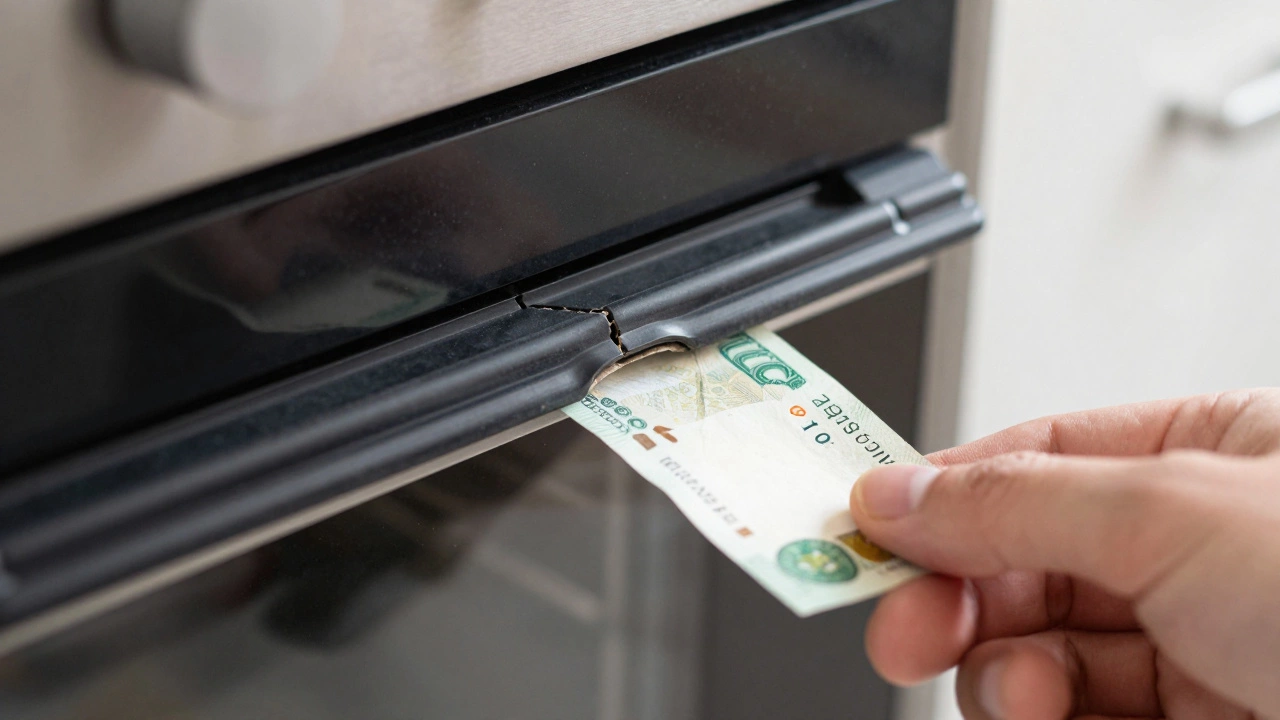
You can perform a simple "dollar bill test" to check your Oven Door Gasket: The heat-resistant rubber seal around the perimeter of the oven door that prevents hot air from escaping.. Close the door on a dollar bill (or a piece of paper). If you can pull the paper out easily without resistance, the seal is compromised.
Gaskets degrade over time due to high heat and cleaning chemicals. They can crack, shrink, or detach from the frame. Additionally, if the oven door hinges are loose or worn, the door might not sit flush against the body, breaking the seal regardless of the gasket's condition. Replacing a gasket is generally a straightforward DIY task, but fixing hinge alignment might require more precision.
Display Issues and Control Panel Glitches
Modern ovens are essentially computers with heaters attached. As such, they suffer from electronic gremlins. A blank display, flickering lights, or unresponsive buttons are common complaints.
If the display is completely black, check the power again. If power is present, the issue could be a blown fuse within the control board itself. However, if the display is on but acting erratically-showing random numbers or ignoring inputs-the User Interface Board: The electronic module containing the display screen, touchpad, and microprocessor that interprets user commands. might be failing.
Spills are the enemy here. Sugar-based liquids or acidic foods can splash onto the control panel. Even if wiped clean, residue can seep under the buttons and corrode the contacts over time. In many cases, replacing the entire control panel is cheaper and easier than trying to repair individual buttons.
Weird Noises: Buzzing, Clicking, or Humming
An electric oven should be relatively quiet. A gentle hum from the fan is normal, but loud noises indicate mechanical trouble.
- Clicking sounds: Often heard when the oven is cycling on and off. If the clicking is rapid and continuous, the thermostat might be short-cycling, turning the element on and off too quickly. This can burn out the element prematurely.
- Buzzing or humming: This usually comes from the Relay Board: An electrical component that switches high-power circuits on and off based on low-power signals from the control board.. Relays make a distinct click when they engage. If a relay is sticking or failing, it might buzz. Alternatively, a failing convection fan motor can produce a grinding or buzzing noise as the bearings wear out.
- Popping or crackling: This can happen if food debris falls onto a hot element. However, if it happens without food nearby, it could indicate arcing electricity, which is a serious fire hazard. Turn off the oven immediately and call a pro.
When to Call a Professional vs. DIY
Not every fault requires a technician. Simple tasks like cleaning the fan vent, replacing a visible broken element, or swapping a door gasket are manageable for most homeowners. You’ll need basic tools like screwdrivers and a multimeter for testing.
However, avoid DIY if:
- The issue involves the main wiring harness or the back panel where high-voltage lines run.
- You suspect gas leaks (if you have a dual fuel range).
- The control board needs programming or complex diagnostics.
- You are uncomfortable working with electricity. Always disconnect power at the breaker before touching any internal components.
Knowing the difference saves you money. If you replace a thermostat when the real issue was a tripped breaker, you’ve wasted parts and time. Start with the simplest explanations first. Check connections, clean sensors, and verify power before ordering expensive parts.
How much does it cost to repair an electric oven?
Costs vary widely depending on the part and labor. Replacing a heating element typically costs between $100 and $300 including labor. More complex issues like control board replacements or thermostat repairs can range from $200 to $500. Diagnostic fees usually range from $50 to $100, which may be waived if you proceed with the repair.
Can I use my oven if the door seal is damaged?
It is not recommended. A damaged seal allows heat to escape, leading to uneven cooking and higher energy bills. More importantly, the exterior of the oven can become dangerously hot, posing a burn risk, especially to children and pets. Replace the seal as soon as possible.
Why is my oven taking longer to preheat?
Slow preheating is often caused by a weak heating element, a failing thermostat that doesn't recognize the correct temperature, or a blocked convection fan. It could also be a sign of a poor door seal allowing heat to escape continuously.
Is it dangerous if my oven sparks?
Yes. Occasional small sparks from food debris hitting a hot element are common and harmless. However, consistent sparking, arcing, or burning smells indicate an electrical fault. This poses a fire risk. Turn off the oven at the breaker and contact a qualified technician immediately.
How do I clean the oven temperature sensor?
The temperature sensor is a thin metal probe protruding from the back wall of the oven. Over time, it can get coated in grease and carbon. To clean it, turn off the oven and let it cool. Gently wipe the probe with a soft cloth and mild detergent. Avoid abrasive scrubbers that could damage the coating.
I am an expert in the services industry with a focus on appliance repair. My passion lies in understanding how things work and educating others in simple, engaging ways. This enthusiasm fuels my writing, where I delve into topics around appliance maintenance and troubleshooting. I aim to make these subjects clear and accessible to all readers.