If you turn on the tap and nothing but cold water comes out, your hot water heater isn’t kicking on-and that’s not just inconvenient, it’s a full-blown morning crisis. You’re not alone. Thousands of households in Wellington and across New Zealand face this exact problem every winter. The good news? Most of the time, it’s not a broken unit. It’s something simple you can check yourself before calling a plumber.
Is the power turned on?
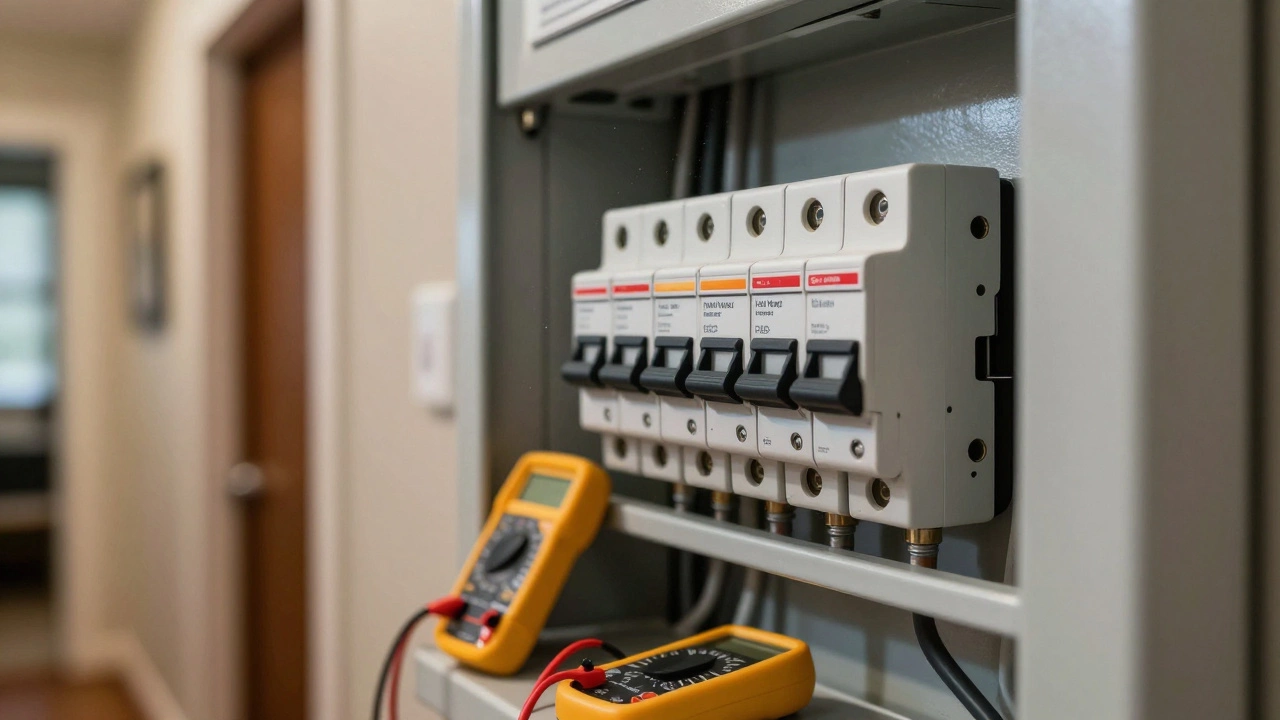
Start with the most obvious thing: is your electric water heater even getting power? Check the circuit breaker in your switchboard. If it’s tripped, reset it. If it trips again right away, you’ve got a short circuit or a faulty heating element. Don’t keep resetting it-that’s dangerous.
For gas water heaters, the issue isn’t power, but gas supply. Make sure the gas valve near the heater is fully open. It should be parallel to the pipe. If it’s turned perpendicular, it’s shut off. Also, check if your gas meter has a shut-off valve that might’ve been accidentally closed after a service or emergency.
Is the pilot light out?
If you’ve got an older gas water heater, the pilot light is probably your culprit. It’s a tiny flame that stays lit 24/7 to ignite the main burner when needed. Over time, dust, drafts, or a weak thermocouple can snuff it out.
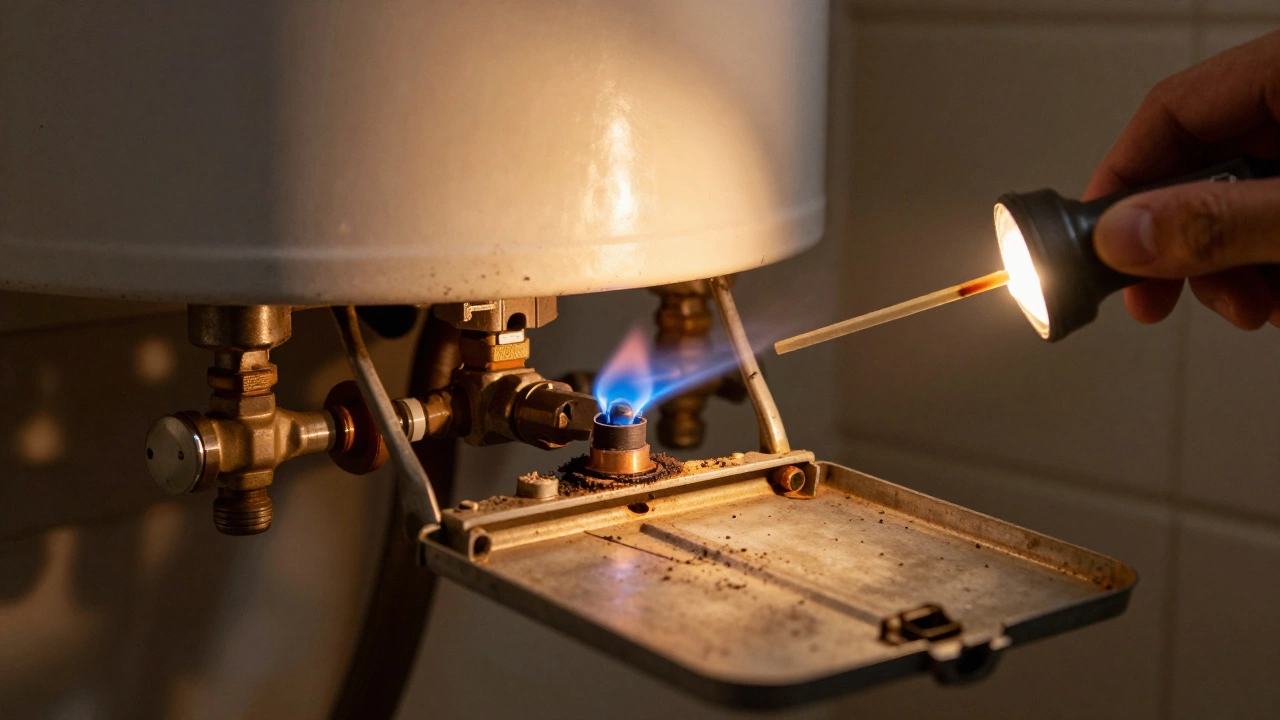
Locate the access panel on the bottom of the heater. Open it and look for a small blue flame. If you see nothing but black soot or a faint smell of gas, the pilot’s out. Don’t panic. Most units have a simple re-light procedure: turn the knob to “Pilot,” press and hold it down, and use a long lighter or match to ignite the pilot. Keep holding the button for 30 to 60 seconds after the flame catches-this lets the thermocouple heat up and signal the gas valve to stay open. Then turn the knob to “On.”
If the pilot won’t stay lit after several tries, the thermocouple is likely faulty. It’s a cheap part ($20-$40) and easy to replace if you’re comfortable with basic tools. If you’re unsure, call a professional. Gas leaks are serious.
Thermostat settings or failure
Electric water heaters have one or two thermostats tucked behind access panels on the side of the tank. These control when the heating elements turn on. If the upper thermostat fails, the water won’t heat at all. If the lower one fails, you might get lukewarm water for a short time before it runs out.
Turn off the power at the breaker before you touch anything. Remove the panels and insulation. Look for the temperature dial. Is it set below 50°C? Many people turn it down to save energy, not realizing that’s too low for proper hot water delivery. Set it to 60°C-the recommended safety and efficiency level in New Zealand.
If the dial feels loose or doesn’t click when you turn it, the thermostat might be broken. You can test it with a multimeter, but if you don’t have one or don’t know how to use it, replacing both thermostats together is the safest bet. They usually come as a pair, and if one’s dead, the other won’t last long.
Tripped high-limit switch
Every electric water heater has a safety switch called a high-limit thermostat. It shuts off power if the water gets too hot-usually above 80°C. This can happen if the main thermostat fails, or if sediment builds up at the bottom of the tank and traps heat.
Look for a small red button on the upper thermostat. If it’s popped out, that’s your problem. Press it to reset. If it pops again within a few hours, you’ve got a deeper issue: either a faulty thermostat, a bad heating element, or heavy sediment buildup.
Sediment is common in areas with hard water, like parts of Wellington. Over time, minerals settle and form a layer that insulates the heating element from the water. The element overheats, trips the limit switch, and eventually burns out. Flushing your tank once a year prevents this. It’s a 30-minute job with a garden hose and a bucket.
Heating elements are dead
Electric water heaters use one or two heating elements to warm the water. These are like giant toaster coils inside the tank. Over time, they corrode, burn out, or get coated in mineral scale.
If you have no hot water at all, the upper element is likely dead. If you get a little hot water before it runs cold, the lower element is the problem. You can test them with a multimeter: disconnect the wires, set the meter to ohms, and touch the probes to the element’s terminals. A reading between 10 and 30 ohms means it’s good. No reading or infinite resistance? It’s dead.
Replacing a heating element is straightforward. Drain the tank, remove the old one, and screw in the new one. Make sure the new one matches the voltage and wattage of the old one. Most residential units use 240V, 4500W elements. Don’t forget to refill the tank completely before turning the power back on-running an element dry will destroy it instantly.
Gas valve or control module failure
Modern gas water heaters don’t use simple pilot lights anymore. Many now have electronic ignition systems and control modules that manage gas flow. If your heater has a digital display or makes clicking sounds but never ignites, the control module might be faulty.
These modules are expensive to replace ($200-$400) and often require professional programming. Before replacing it, check for error codes on the display. Most brands (like Rheem, Bradford White, or Rinnai) have a code chart in the manual. A code like “E1” or “Ignition Failure” usually points to the control board or a sensor issue.
If your heater is over 10 years old and the control module is failing, consider replacing the whole unit. Newer models are 20-30% more efficient, come with better warranties, and often include smart features like remote monitoring and leak detection.
Age and wear: when to replace
Water heaters don’t last forever. The average lifespan is 8 to 12 years. If yours is 10+ years old and you’re dealing with repeated issues-especially leaks around the base, strange noises, or frequent pilot outages-it’s not worth the repair.
Older tanks rust from the inside out. Even if you fix the thermostat or element, the tank itself is a ticking time bomb. A rupture can flood your laundry room or garage, causing thousands in damage.
Look for signs: rust-colored water, puddles under the tank, or a metallic smell when you run hot water. These mean corrosion is inside. Replacing it now saves you from an emergency call at 2 a.m. in the middle of winter.
Quick checklist: what to check first
- Electric heater: Is the circuit breaker on? Is the high-limit button reset? Is the thermostat set to 60°C?
- Gas heater: Is the gas valve open? Is the pilot light lit? Can you smell gas? (If yes, leave immediately and call a professional.)
- Both types: Is the tank over 10 years old? Are there leaks or rust? Have you flushed the tank in the last year?
If you’ve gone through all these steps and still have no hot water, it’s time to call a licensed plumber. Don’t waste hours guessing. A professional can diagnose the issue in under 30 minutes and give you a clear fix-whether it’s a $50 part or a $2,000 replacement.
Prevention: keep your heater running longer
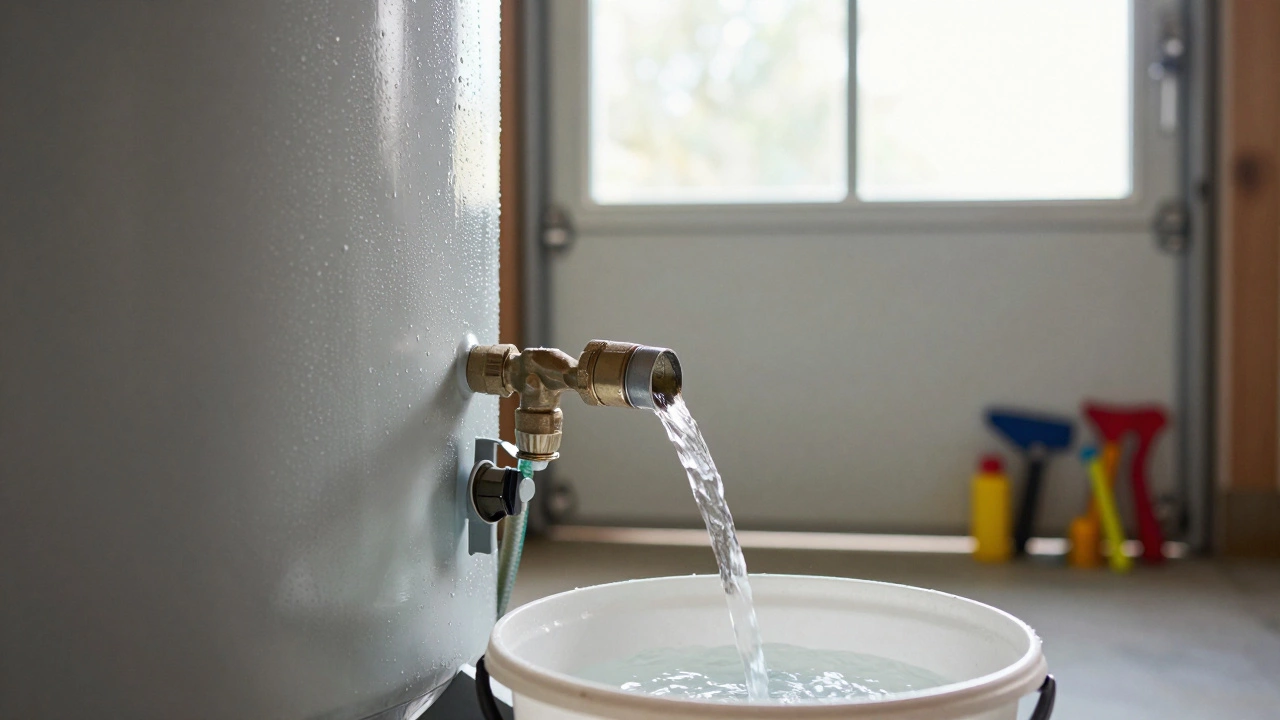
One annual flush can double your heater’s life. Turn off the power or gas, attach a hose to the drain valve at the bottom, open the valve, and let the water run until it’s clear. This removes sediment that kills elements and triggers safety switches.
Install a water softener if you live in a hard water area. It reduces mineral buildup and keeps your heater efficient. Also, set the temperature to 60°C-not higher. Anything above that wastes energy and increases the risk of scalding.
Finally, keep the area around your heater clear. Don’t store boxes, paint, or cleaning supplies near it. Good airflow helps prevent overheating, and easy access makes repairs faster and cheaper.
I am an expert in the services industry with a focus on appliance repair. My passion lies in understanding how things work and educating others in simple, engaging ways. This enthusiasm fuels my writing, where I delve into topics around appliance maintenance and troubleshooting. I aim to make these subjects clear and accessible to all readers.