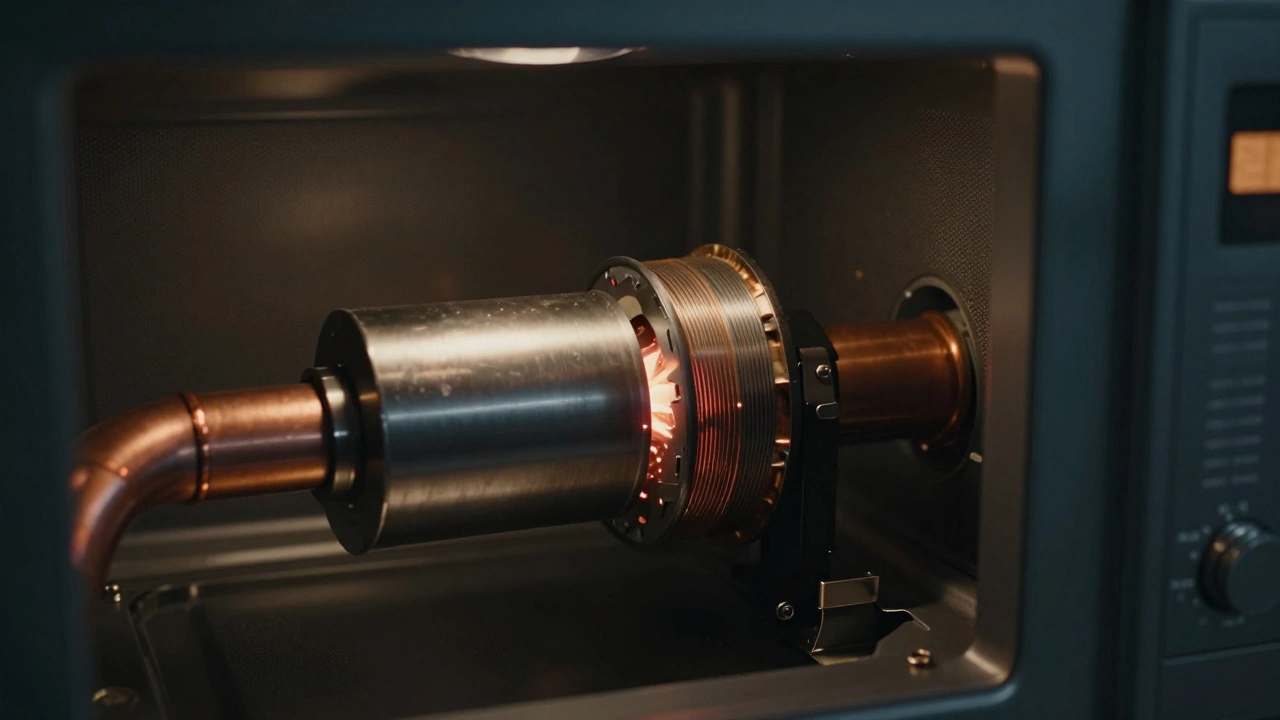
Microwave Repair vs. Replace Calculator
It starts with a strange noise. Maybe it’s a loud hum, a crackle like static electricity, or just silence when you hit start. You stare at the Microwave Oven is a kitchen appliance that uses electromagnetic radiation to heat food by causing water molecules to vibrate. wondering if it’s dead or just being difficult. The truth is, microwaves are surprisingly robust machines, but they do have weak points. When things go wrong, it’s rarely random. Specific components wear out faster than others due to heat, vibration, and electrical stress.
If your microwave isn’t heating properly, sparking inside, or making weird noises, you’re likely dealing with one of a few common failures. Knowing what usually goes bad helps you decide whether to call a pro, replace the unit, or try a simple fix yourself. Let’s break down the most frequent culprits behind microwave breakdowns.
The Magnetron: The Heart That Stops Beating
The single most common reason a microwave stops heating is a failed Magnetron is the vacuum tube component that generates the high-frequency microwaves used to cook food.. Think of the magnetron as the engine of the car. If the engine dies, the lights might still work, the radio might still play, but you aren’t going anywhere. Similarly, if your magnetron fails, the turntable might spin, the light might turn on, and the display might count down, but your leftover pizza stays cold.
Magnetrons are expensive parts, often costing more than buying a new budget-friendly microwave. They fail because they generate intense heat during operation. Over time, the internal filaments burn out or the copper waveguide degrades. This usually happens after five to seven years of heavy use. If you hear a loud humming sound but no heating, the magnetron is struggling. If it’s completely silent and not heating, it’s likely dead. Replacing a magnetron requires specialized tools and safety precautions because these units hold high-voltage charges even when unplugged.
The High Voltage Capacitor: A Silent Danger
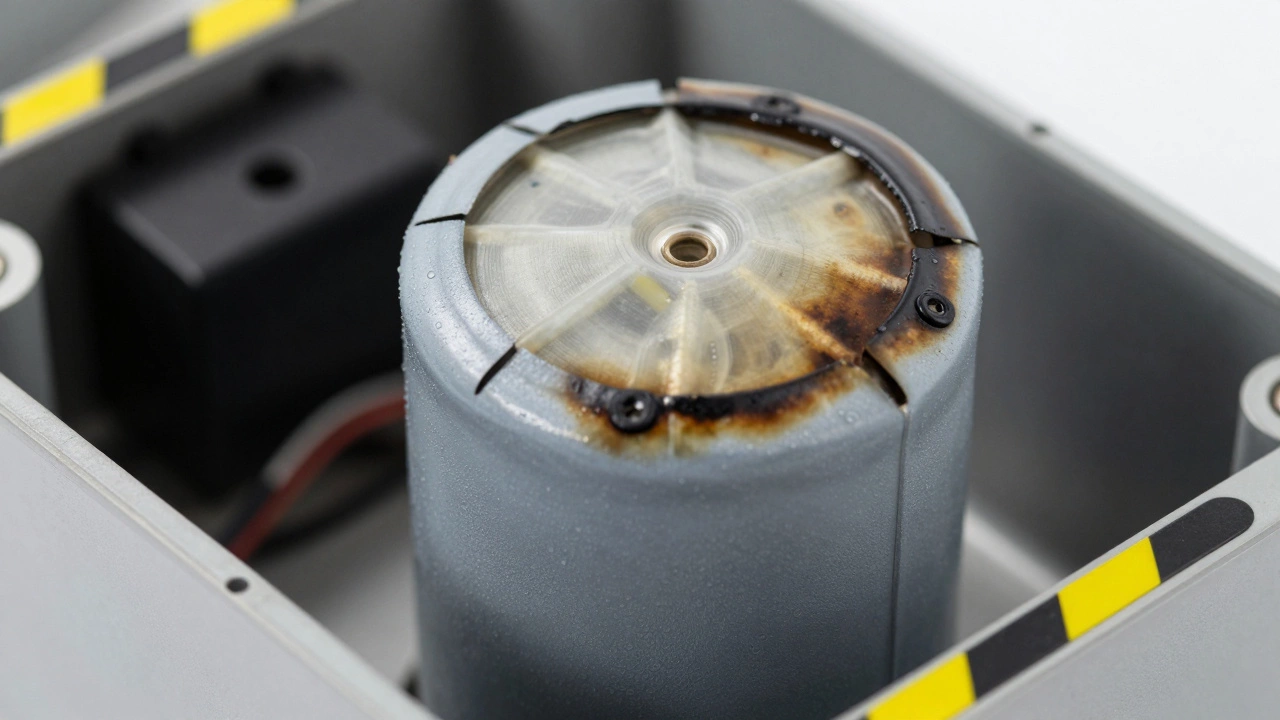
Closely linked to the magnetron is the High Voltage Capacitor is an electronic component that stores electrical energy to boost voltage for the magnetron.. Its job is to store energy and release it in bursts to power the magnetron. Unlike the magnetron, which gives audible warning signs, capacitors can fail quietly or dangerously. A swollen or leaking capacitor is a clear sign of failure. Sometimes, you might see scorch marks on the casing.
Here is the critical part: capacitors can store lethal voltages long after the microwave is unplugged. Even if you unplug the machine, that capacitor could still deliver a shock capable of stopping your heart. This is why DIY repairs involving the capacitor should only be attempted by those who know how to safely discharge them using a insulated screwdriver and proper grounding techniques. For most homeowners, this is a job for a certified technician.
The Turntable Motor: Why Your Plate Won’t Spin
If your food is cooking unevenly, leaving cold spots in the center while burning the edges, the issue might be the Turntable Motor is a small electric motor located beneath the glass plate that rotates the food for even heating.. The motor sits under the glass tray and pushes it around via a drive coupling. It’s a low-power component, but it takes a beating from grease buildup and physical strain.
Sometimes, the motor is fine, but the plastic coupling ring has cracked. This ring connects the motor shaft to the turntable base. If it breaks, the motor spins freely without moving the plate. Other times, grease gets into the motor bearings, causing it to seize up. Cleaning the area thoroughly might revive it, but if the motor itself is burnt out, replacement is necessary. It’s a cheap part, usually under $20, but accessing it requires removing the bottom panel of the microwave.
The Door Switches: Safety First
Microwaves are designed with multiple safety interlocks to prevent radiation leakage. These are handled by Door Interlock Switches are mechanical switches that detect when the door is closed and allow the microwave to operate safely.. There are usually three switches: two main switches and one monitor switch. If any of these fail, the microwave will refuse to start. You might press start, and nothing happens. No lights, no noise, just silence.
These switches are mechanical and wear out over thousands of open-and-close cycles. Sometimes, the latch on the door itself wears down, failing to push the switch fully. Before replacing the switches, check the door alignment. Does the door sit flush? Is the hinge loose? If the door is misaligned, adjusting it might fix the problem. If the door is fine but the microwave still won’t start, one of the switches is likely broken. This is a relatively safe repair compared to the high-voltage components, but you must ensure the door latches correctly before testing.
The Control Board: The Brain Freeze
Newer microwaves rely heavily on digital controls. The Control Board is the printed circuit board (PCB) that manages user inputs, timing, and power distribution. acts as the brain. It receives signals from the keypad and sends commands to the motor, magnetron, and display. When the control board fails, symptoms can be bizarre. Buttons might stop responding, the clock might reset randomly, or the microwave might start running without input.
Control boards are sensitive to moisture and heat. Steam escaping from the cavity can condense on the board, corroding connections over time. Power surges are another enemy. If your microwave was plugged in during a storm, the surge protector might have saved your TV but fried the microwave’s delicate electronics. Diagnosing a control board issue often involves checking for continuity in the keypad membrane. If the keypad is fine, the board itself is likely faulty. Replacement boards are model-specific, so finding an exact match is crucial.
When to Repair vs. Replace
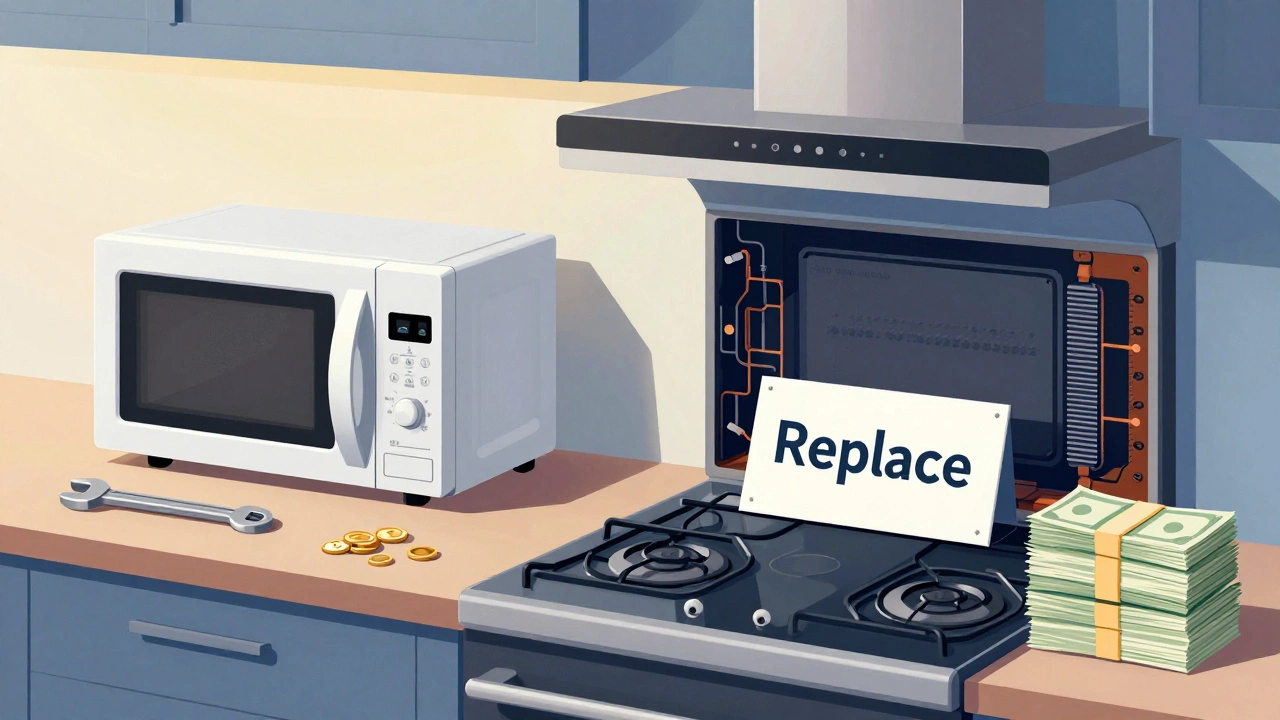
Not every broken microwave deserves a repair bill. The decision comes down to cost, age, and safety. Here is a simple rule of thumb: if the repair costs more than 50% of the price of a new unit, buy new. Microwaves typically last 7 to 10 years. If yours is older than that, other components may fail soon anyway.
| Component Failed | Avg. Repair Cost | Difficulty Level | Recommendation |
|---|---|---|---|
| Turntable Motor | $20 - $40 | Low | Repair |
| Door Switches | $30 - $60 | Medium | Repair |
| Control Board | $80 - $150 | High | Replace Unit |
| Magnetron | $100 - $200 | Very High | Replace Unit |
| High Voltage Capacitor | $50 - $90 | Dangerous | Professional Repair Only |
Also consider the type of microwave. Over-the-range models with ventilation fans are more complex and expensive to repair than basic countertop units. If your over-the-range microwave fails, the labor cost alone might outweigh the value of the machine. In contrast, a simple countertop model with a broken door switch is a straightforward, affordable fix.
Safety Warnings Before You Start
If you decide to tackle the repair yourself, safety is non-negotiable. Microwaves contain high-voltage components that can kill you. Always unplug the microwave before opening any panels. Use a multimeter to verify there is no residual charge in the capacitor. Never remove the outer metal casing unless you are confident in your electrical knowledge. Radiation leaks are rare but possible if the door seal or hinges are damaged. If you suspect a leak, do not use the microwave and get it tested by a professional with a radiation meter.
Keep your workspace clean and dry. Water and electricity are a deadly combination. Take photos before disconnecting wires so you know exactly where everything goes back. Label connectors if possible. Rushing through disassembly leads to mistakes that can damage other components or leave the unit unsafe.
Is it worth repairing an old microwave?
If your microwave is less than 7 years old and the repair cost is under $100, it is usually worth fixing. However, if the magnetron or control board needs replacement, the cost often exceeds the value of the appliance. New mid-range microwaves are affordable, making replacement a smarter financial choice for major component failures.
Why does my microwave spark inside?
Sparking, or arcing, is usually caused by metal objects inside the cavity, dirty waveguide covers, or damaged interior walls. Grease buildup on the waveguide cover (a small plastic or mica sheet) can ignite. Clean the interior thoroughly. If sparks persist with an empty, clean microwave, the waveguide cover may be damaged and needs replacement to prevent fire hazards.
Sparking, or arcing, is usually caused by metal objects inside the cavity, dirty waveguide covers, or damaged interior walls. Grease buildup on the waveguide cover (a small plastic or mica sheet) can ignite. Clean the interior thoroughly. If sparks persist with an empty, clean microwave, the waveguide cover may be damaged and needs replacement to prevent fire hazards.
Can I replace a microwave magnetron myself?
Technically yes, but it is not recommended for beginners. Magnetron replacement requires disassembling the entire unit, handling high-voltage components, and ensuring precise reassembly to maintain radiation shielding. One mistake can lead to electric shock or radiation leakage. Hire a professional for this specific repair.
Why does my microwave run but not heat?
This symptom almost always points to a failed magnetron, a blown thermal fuse, or a faulty high-voltage diode. Since the turntable and lights work, the control board is sending power, but the heating element isn't activating. Check the thermal fuse first as it's the cheapest part; if that's intact, the magnetron is likely dead.
How do I test if my microwave door switches are working?
You need a multimeter set to continuity mode. Unplug the microwave and access the switches near the door hinges. Press the switch lever manually while touching the multimeter probes to the terminals. You should hear a beep indicating continuity. If there is no beep when pressed, the switch is broken and needs replacement.
I am an expert in the services industry with a focus on appliance repair. My passion lies in understanding how things work and educating others in simple, engaging ways. This enthusiasm fuels my writing, where I delve into topics around appliance maintenance and troubleshooting. I aim to make these subjects clear and accessible to all readers.