Electric Stove Problem Checker
What's the issue?
This tool will help you identify the most common electric stove problems based on your symptoms.
Burner Troubleshooting
Diagnostic Result
Oven Troubleshooting
Diagnostic Result
Electric stoves are one of the most reliable kitchen appliances - until they suddenly stop working the way they should. If your stove isn’t heating, or if one burner works but another doesn’t, you’re not alone. These aren’t rare glitches. In fact, two problems account for over 80% of all electric stove repairs we see here in Wellington. You don’t need a technician to diagnose them. With a little basic checking, you can often fix the issue yourself - or at least know exactly what to ask for when you call for help.
Problem One: Burner Doesn’t Heat Up
The most common issue? A single burner won’t turn on. You flip the switch, hear a faint click, and nothing happens. No red glow, no heat, no warning light. It’s frustrating, especially when you’re trying to boil water or sear a steak.
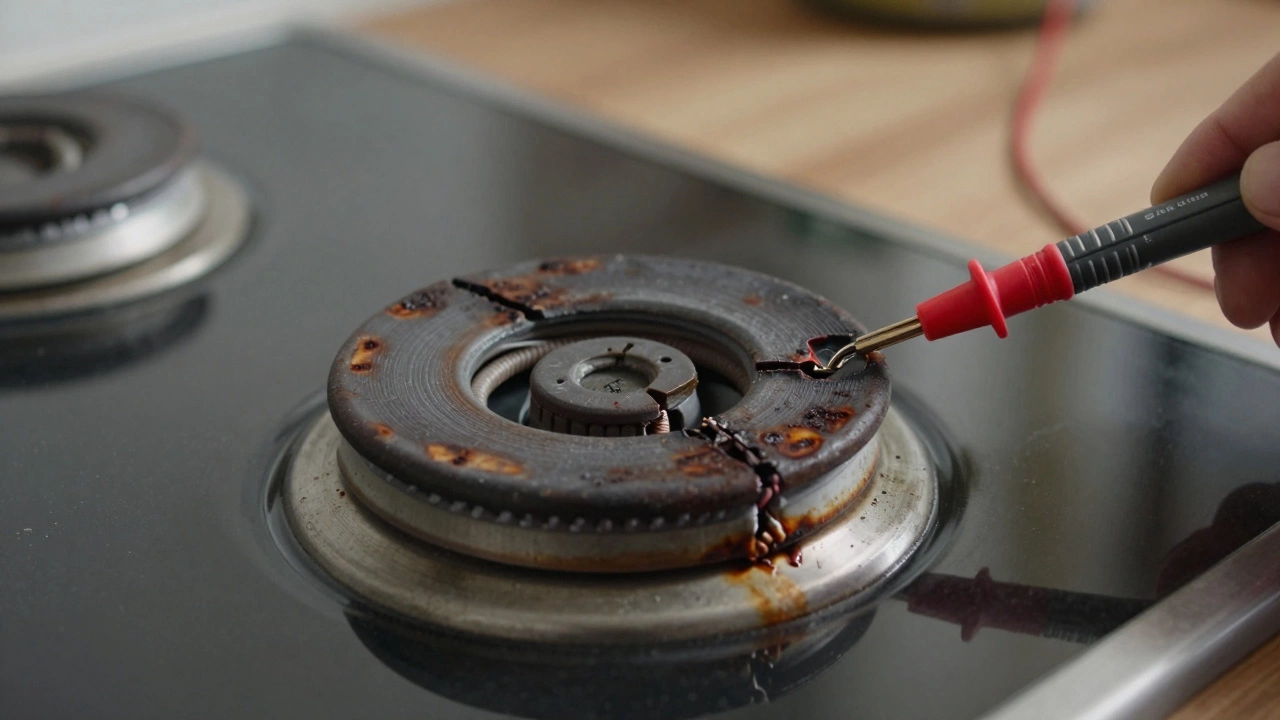
This almost always comes down to one thing: a failed heating element. These are the coiled wires under the glass surface that glow red when they’re working. Over time, they wear out. Constant heating and cooling, spills that seep underneath, or even just age - after 8 to 12 years - can cause the internal wire to break. It’s not a mystery. It’s physics.
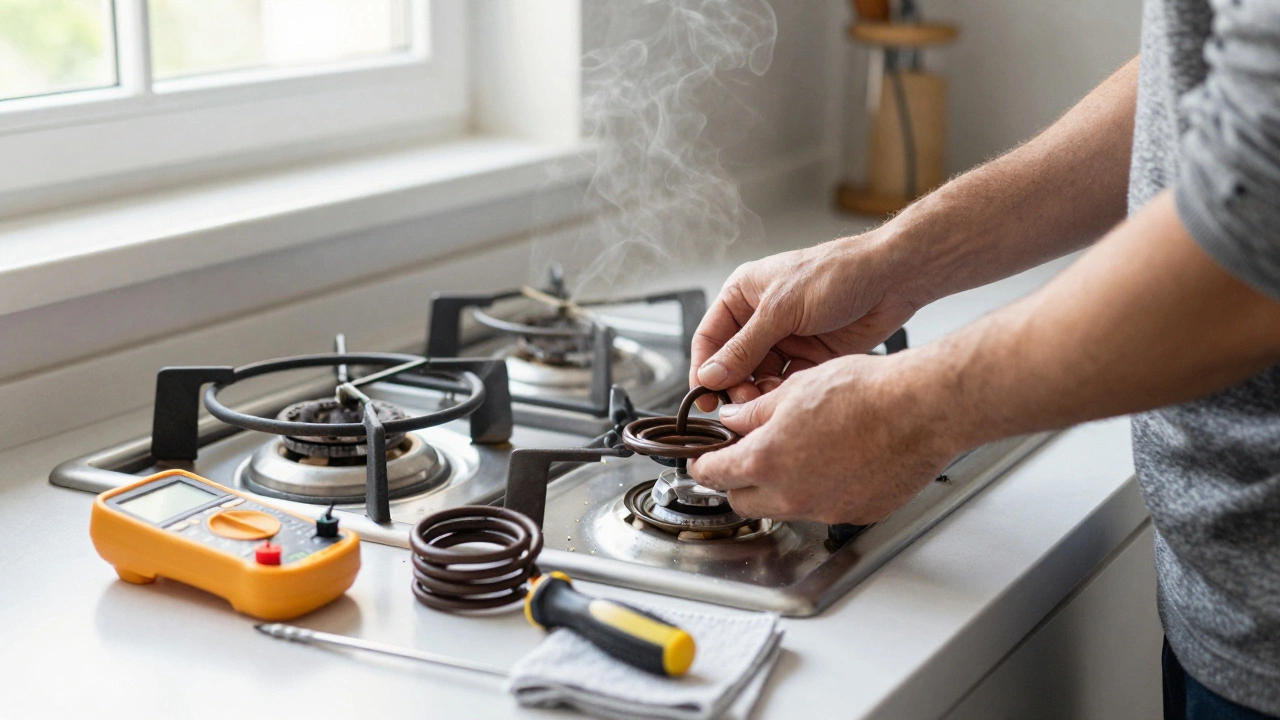
Here’s how to check it yourself. First, unplug the stove or turn off the circuit breaker. Safety first. Then, remove the burner by gently lifting it straight up. Look at the coil. Is it cracked? Are there dark, burnt spots? Is one end loose or disconnected? If you see any of that, the element is dead. You can buy a replacement online or from an appliance parts store. Make sure the model number matches. Most electric stoves use standard-sized elements, so replacements are easy to find. Replacing it takes less than 15 minutes. Just disconnect the old one, plug in the new one, and snap it back into place.
But here’s the catch: sometimes the element looks fine. That doesn’t mean it’s good. A multimeter can test for continuity. Set it to ohms (Ω), touch the probes to the two metal terminals on the element’s base. If you get a reading between 20 and 120 ohms, it’s working. If it shows no reading at all - or infinite resistance - the element is dead. You’ll need to replace it.
Another less common cause? A faulty infinite switch. That’s the dial you turn to adjust heat levels. If it’s worn out, it won’t send power to the element. But this usually affects multiple burners, not just one. If only one burner is dead, start with the element.
Problem Two: Oven Doesn’t Heat or Heats Unevenly
The second most frequent problem? The oven won’t get hot - or it heats unevenly. One side of your cake is burnt, the other’s raw. Or the oven stays cold even when you set it to 180°C. This isn’t about the stove top. This is about the oven element.
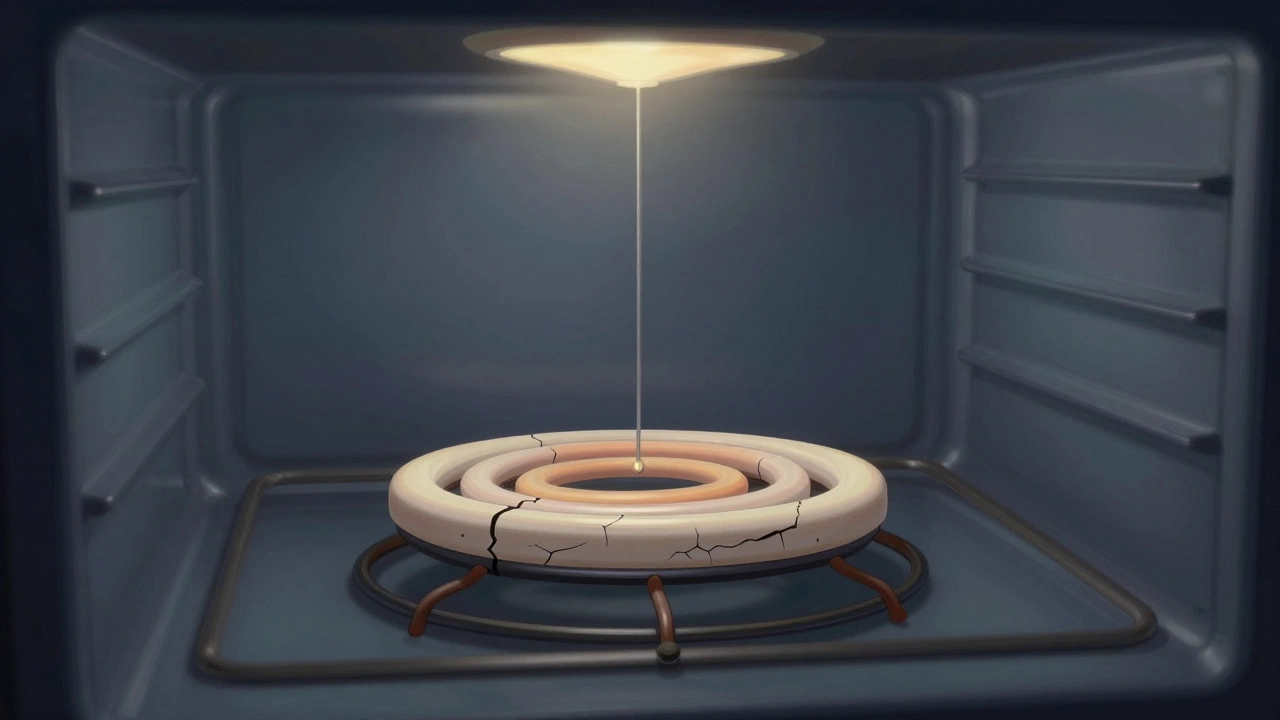
Electric ovens have two heating elements: one on the bottom for baking, and one on the top for broiling. Most of the time, baking relies on the bottom element. If it fails, your oven won’t reach temperature. You might notice the oven light comes on, the fan runs, but no heat builds up. That’s your clue.
To check, open the oven door and look at the bottom. Is the element glowing red when the oven is on? If not, it’s likely broken. Sometimes it’s obvious - you’ll see a split or a blackened spot. Other times, it looks fine. Same test as before: unplug the oven, remove the element (usually held in by two screws), and use a multimeter. No continuity? Replace it.
But here’s something people often miss: the oven sensor. Modern stoves use a temperature probe to monitor internal heat. If that sensor is faulty, the oven thinks it’s already hot - so it shuts off early. The result? Your oven runs for 10 minutes, then stops. You think it’s broken. It’s not. The sensor is just sending wrong signals.
How do you test it? Remove the sensor. It’s a thin metal rod near the back wall. Use your multimeter. At room temperature, it should read around 1000-1100 ohms. If it’s way off - say, 500 or 2000 - it’s bad. Replacements are cheap, under $30. Install it, reset the oven, and try again.
Another possibility? A blown thermal fuse. This is a safety device that cuts power if the oven overheats. If it’s blown, the oven won’t heat at all. You’ll need to locate it - usually near the heating element or on the back panel - and test it for continuity. If it’s dead, replace it. But don’t assume it’s the fuse. Always check the element and sensor first.
What You Can Do Right Now
You don’t need to wait for a repairman. Here’s what to do in order:
- Check if the problem is isolated to one burner or the whole oven.
- For a single burner not heating: remove it, inspect for damage, and test with a multimeter.
- For the oven not heating: check the bottom element first. Then test the temperature sensor.
- Replace the faulty part. Parts are widely available online or at local appliance stores.
- Reset the oven by turning off the power for 5 minutes, then turning it back on.
Most of these fixes cost under $50. Labor? You’re doing it yourself. That’s the real savings.
Why These Problems Happen So Often
Electric stoves are simple machines. But that simplicity makes them vulnerable. The heating elements are exposed to moisture, grease, and constant thermal stress. Every time you boil water and steam rises, or you spill sauce and it bakes onto the surface, you’re slowly degrading the components. It’s not a defect. It’s wear and tear.
Also, many people don’t realize that electric stoves don’t have fuses that reset like a circuit breaker. When a component fails, it’s done. No amount of turning it off and on will fix a broken element. You need a replacement.
And here’s a pro tip: clean your stove regularly. Wipe spills as soon as they cool. Don’t let them harden. A buildup of grease under the burner can trap heat and shorten the element’s life. A simple wipe-down with vinegar and water every few weeks can add years to your stove.
When to Call a Professional
You can fix 9 out of 10 electric stove issues yourself. But if you’ve checked the element, the sensor, and the wiring - and everything tests fine - then it’s time to call someone. The problem might be deeper: a faulty control board, a damaged power relay, or a wiring issue inside the wall. These aren’t DIY fixes. They need a trained technician with the right tools.
Also, if you’re uncomfortable working with electricity - even at low voltage - don’t risk it. Safety comes first. A certified repair person can diagnose the issue in under 20 minutes and have you cooking again before lunch.
Prevention Tips
- Don’t use abrasive cleaners on the glass surface. They scratch and trap heat.
- Use flat-bottomed pots. They transfer heat better and reduce stress on the element.
- Keep the area under the burners clean. Dust and debris can cause overheating.
- Replace elements before they completely fail. If one burner is getting slow, the others aren’t far behind.
Electric stoves last 10 to 15 years. With basic care, you can stretch that to 20. But when the problems come - and they will - knowing how to spot the two most common issues saves you time, money, and frustration.
I am an expert in the services industry with a focus on appliance repair. My passion lies in understanding how things work and educating others in simple, engaging ways. This enthusiasm fuels my writing, where I delve into topics around appliance maintenance and troubleshooting. I aim to make these subjects clear and accessible to all readers.