Dishwasher Lifespan Estimator
Estimate Your Dishwasher's Lifespan
Your Estimated Lifespan
Most people don’t think about their dishwasher until it stops working. Then suddenly, you’re staring at a pile of dirty dishes and wondering if it’s worth fixing-or if it’s time to buy a new one. The truth is, a good dishwasher should last at least 10 years, and many last 12 to 15 with proper care. But not all dishwashers are built the same. Some break down after five years. Others run like clockwork for two decades. So what really determines how long yours will last?
What Factors Affect Dishwasher Lifespan?
The age of your dishwasher isn’t the only thing that matters. How you use it, what kind of water you have, and even how often you clean the filter all play a role. In Wellington, where hard water is common, mineral buildup can clog spray arms and damage heating elements faster than in areas with softer water. That’s why a dishwasher in a coastal home might wear out quicker than one in a new build with a water softener.
Brand quality matters too. Top-tier brands like Bosch, Miele, and Siemens use stainless steel tubs, heavier-duty motors, and better seals. Cheaper models often have plastic interiors and weaker pumps. You can spot the difference: a dishwasher with a stainless steel tub usually lasts 3-5 years longer than one with a plastic tub.
Usage patterns matter. Running your dishwasher twice a day, every day, puts way more stress on it than using it once every other day. A dishwasher used 5-7 times a week will typically last 10-12 years. One used 10+ times a week? Don’t be surprised if it starts showing wear after 7-8 years.
Signs Your Dishwasher Is Reaching the End
You don’t need to wait for it to completely die to know it’s time to replace it. Here are the top warning signs:
- Dishes come out cloudy or gritty-even after using rinse aid and cleaning the filter
- Water doesn’t drain properly, leaving puddles at the bottom
- The door doesn’t seal right, leaking water onto the floor
- Noises like grinding, screeching, or loud thumping during cycles
- It takes two cycles to clean a normal load
- Energy bills have crept up over the last year without changing usage
If you’re seeing two or more of these, it’s not just an old appliance-it’s an inefficient one. Repairing a 12-year-old dishwasher often costs 50-70% of what a new model costs. At that point, replacement makes more sense.
How to Extend Your Dishwasher’s Life
Good maintenance isn’t optional-it’s the difference between 8 years and 15. Here’s what actually works:
- Clean the filter every month. Most people forget this. Food scraps and grease build up in the bottom, blocking water flow. Remove it, rinse under hot water, and scrub with an old toothbrush.
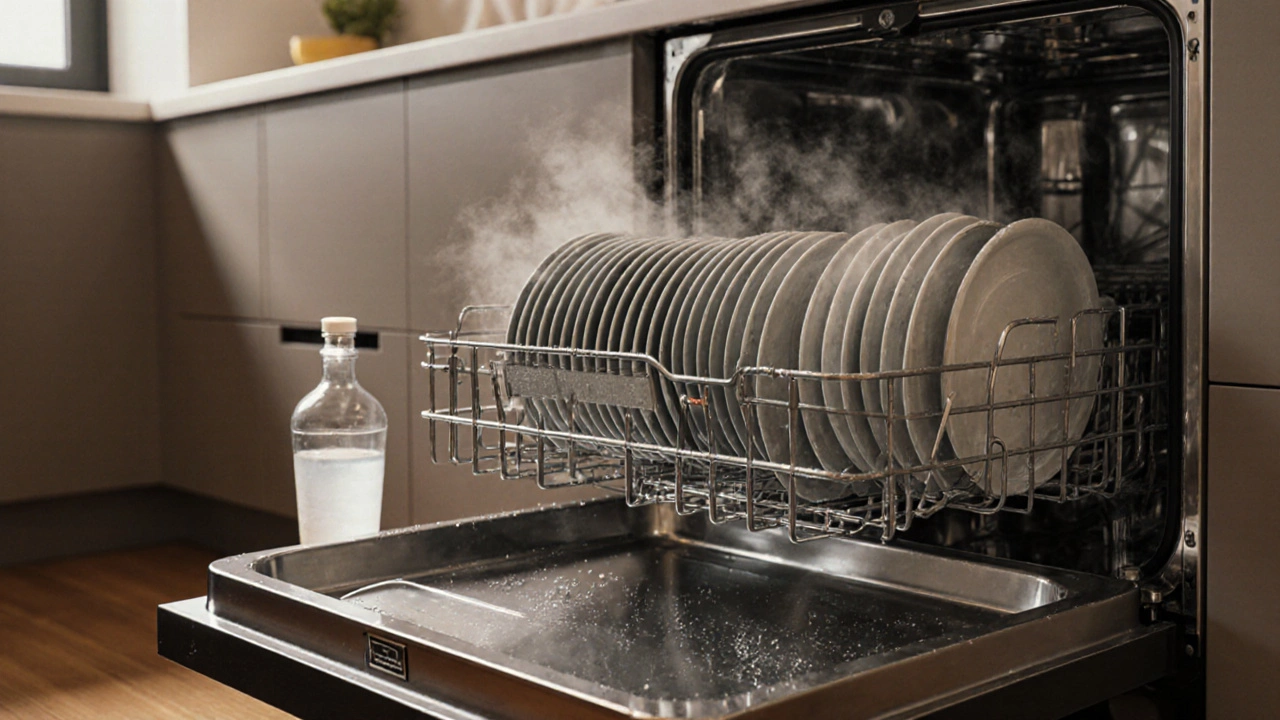
- Run a vinegar cycle monthly. Place a cup of white vinegar on the top rack and run a hot cycle. It dissolves lime scale and kills odors. Do this even if you have a water softener.
- Use the right detergent. Powder or pods work better than gel in hard water areas. Gel can leave sticky residue that gums up the spray arms.
- Don’t overload it. Crowding blocks water flow. Dishes need space to get cleaned properly.
- Check the spray arms. Every few months, pull them off and rinse the holes under running water. Clogged holes mean dirty dishes.
These simple habits cost nothing but save you hundreds in repairs and early replacements.
When to Repair vs. Replace
Let’s say your dishwasher is 8 years old and the motor’s making a weird noise. Should you fix it?
Here’s a quick rule: if the repair cost is more than half the price of a new unit, walk away. A new mid-range dishwasher costs between $600 and $900 in New Zealand. So if a technician quotes you $350 or more to replace the pump or control board, it’s time to shop for a new one.
There are exceptions. If your dishwasher is under warranty, or if it’s a high-end model with a stainless steel tub and you’re emotionally attached to it, a repair might be worth it. But if it’s a budget model from a big-box store, and it’s over 10 years old? Save your money.
Also consider efficiency. A dishwasher from 2010 uses about 12 liters of water per cycle. A new Energy Star-rated model uses 8-10 liters. Over five years, that’s thousands of liters saved-and lower bills.
What to Look for in a New Dishwasher
If you’re replacing yours, here’s what to prioritize:
- Stainless steel tub - lasts longer and resists stains and odors better than plastic
- Adjustable racks - lets you fit pots, pans, and wine glasses without stacking
- Third rack - handy for utensils and small items
- Quiet operation - look for 45 dB or lower if your kitchen is near the living area
- Energy rating - aim for at least 4 stars in New Zealand’s Energy Rating Label
- Soil sensor - automatically adjusts cycle length based on how dirty the dishes are
Brands like Bosch and Miele consistently rank highest in reliability. Samsung and LG offer good value, but check recent owner reviews for motor and drying performance.
How Long Do Dishwashers Really Last? The Real Numbers
Consumer Reports tracks appliance longevity across thousands of households. Their 2024 data shows:
- Average lifespan: 10.5 years
- Top 25% last 15+ years
- Bottom 25% fail before 7 years
- 68% of dishwashers that last past 10 years have had regular maintenance
- Only 12% of dishwashers over 12 years old need major repairs
That last stat is important. If your dishwasher is 12 years old and still working, it’s likely to keep going-unless you’ve been neglecting it. The biggest killer isn’t age. It’s neglect.

What Happens When a Dishwasher Dies?
Don’t just toss it in the bin. Dishwashers contain metals, electronics, and sometimes refrigerants in the drying system. In New Zealand, local councils offer free appliance recycling through their waste centers. Wellington City Council accepts dishwashers at the Miramar Transfer Station for no charge. Some retailers even take back old units when you buy a new one.
Recycling keeps hazardous materials out of landfills and recovers copper, steel, and plastic. It’s the right thing to do-and it’s easy.
Final Thought: Think Long-Term, Not Short-Term
Buying the cheapest dishwasher might save you $200 now, but you’ll pay for it in repairs, wasted water, and frustration. A mid-range model with a stainless steel tub, good warranty, and energy efficiency pays for itself in under three years through lower bills and fewer breakdowns.
Your dishwasher works every day, often without thanks. Treat it right, and it’ll return the favor for more than a decade. Ignore it, and you’ll be cleaning dishes by hand sooner than you think.
How long should a dishwasher last before needing repair?
Most dishwashers run without major issues for 8 to 10 years. After that, you may start seeing small problems like leaking seals, clogged spray arms, or weak drying. These aren’t always signs of failure-just wear. Regular maintenance can delay major repairs by several years. If your dishwasher is under 7 years old and needs a big repair, it’s worth fixing. Beyond 10 years, replacement is usually smarter.
Is it worth repairing a 12-year-old dishwasher?
Generally, no. A 12-year-old dishwasher is already past its average lifespan. Repair costs often exceed 50% of a new unit’s price. Plus, older models are less energy-efficient and use more water. Even if the repair works, you’re likely to face another issue within a year or two. It’s more cost-effective and environmentally friendly to replace it with a modern, efficient model.
Can hard water shorten a dishwasher’s life?
Yes, badly. Hard water leaves mineral deposits that clog spray arms, coat heating elements, and damage valves. In places like Wellington, where water hardness is high, dishwashers without a water softener can show signs of wear in as little as 5 years. Running a monthly vinegar cycle helps, but installing a whole-house water softener is the best long-term solution if you’re serious about extending appliance life.
What’s the most common reason dishwashers fail?
The most common failure point is the pump or drain system, often caused by food debris buildup. Other top causes include worn door seals (leading to leaks), broken heating elements (poor drying), and failed control boards. But almost all of these can be avoided with regular cleaning of the filter, spray arms, and interior.
Should I buy a dishwasher with a stainless steel tub?
Absolutely. Stainless steel tubs are more durable, resist stains and odors better, and retain heat more effectively than plastic ones. This means better drying performance and longer life. Plastic tubs can crack or warp over time, especially with high heat cycles. A stainless steel model might cost $100-$200 more upfront, but it’ll last 3-5 years longer on average.
Next Steps
If your dishwasher is still running but showing early signs of trouble, start with maintenance: clean the filter, run a vinegar cycle, and check the spray arms. If it’s over 10 years old and you’re spending more than $200 on repairs, start looking at replacements. Look for models with stainless steel tubs, energy ratings of 4 stars or higher, and quiet operation. And don’t forget to recycle your old unit properly-your local council will thank you.
I am an expert in the services industry with a focus on appliance repair. My passion lies in understanding how things work and educating others in simple, engaging ways. This enthusiasm fuels my writing, where I delve into topics around appliance maintenance and troubleshooting. I aim to make these subjects clear and accessible to all readers.