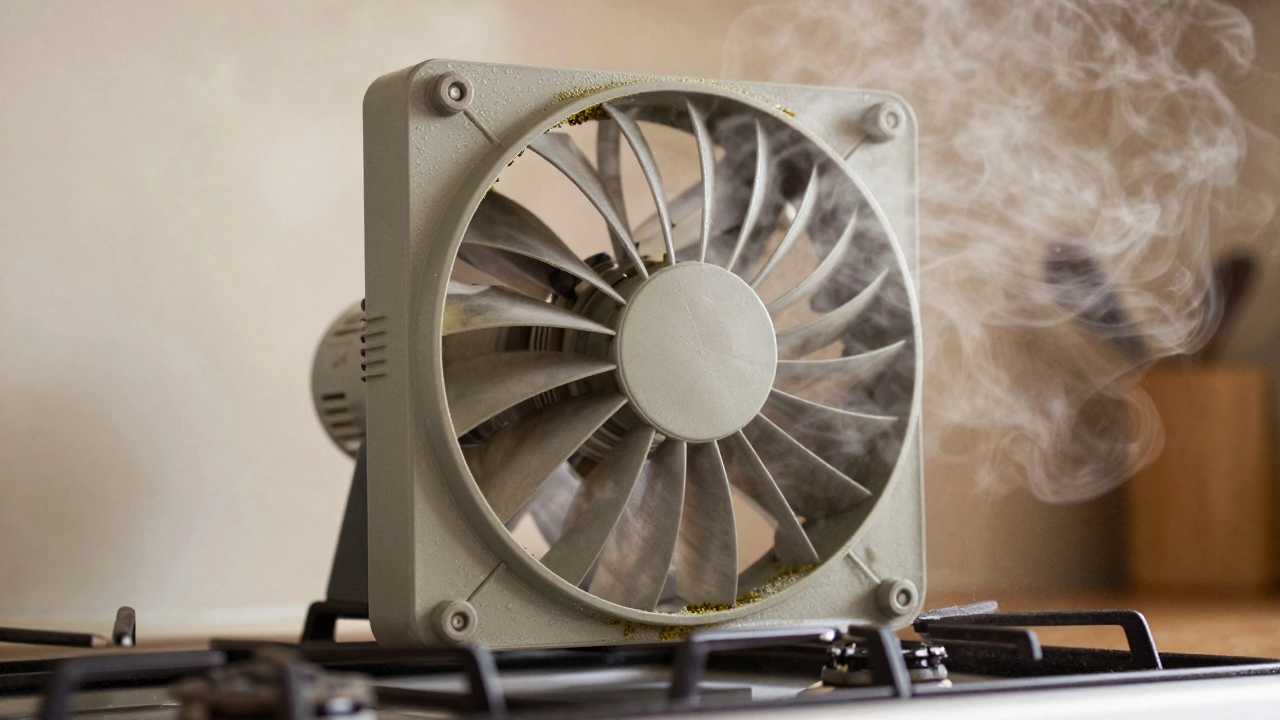
Extractor Fan Wear Assessment
This diagnostic tool helps you identify signs of extractor fan wear based on the article guidelines. Answer the questions below to determine if your fan needs repair or replacement.
Assessment Questions
Ever notice your extractor fan getting louder? Or maybe it’s not pulling out steam like it used to? You start wondering - is this just old age, or is it broken? The truth is, extractor fans do wear out. But not the way most people think. They don’t just suddenly die one day. Instead, they slow down, get noisy, and lose power over months or years - often giving you plenty of warning signs if you know what to look for.
How Long Do Extractor Fans Last?
Most kitchen extractor fans last between 10 and 15 years. That’s if they’re cleaned regularly and not running nonstop. In homes with heavy cooking - think frying, boiling, or baking several times a day - they might only last 7 to 9 years. The motor, bearings, and blades all degrade with use. Heat, grease, and moisture eat away at the parts slowly. You won’t see it happening, but it’s there.
There’s a big difference between a fan that’s just dirty and one that’s worn out. A clogged filter or greasy duct can make a fan feel weak. Clean it, and it works like new. But if the motor hums unevenly, the blades wobble, or the fan stops mid-cycle, that’s internal wear. You’re not fixing a dirty fan - you’re fighting a dying motor.
What Parts Actually Wear Out?
Extractor fans have three main parts that fail over time:
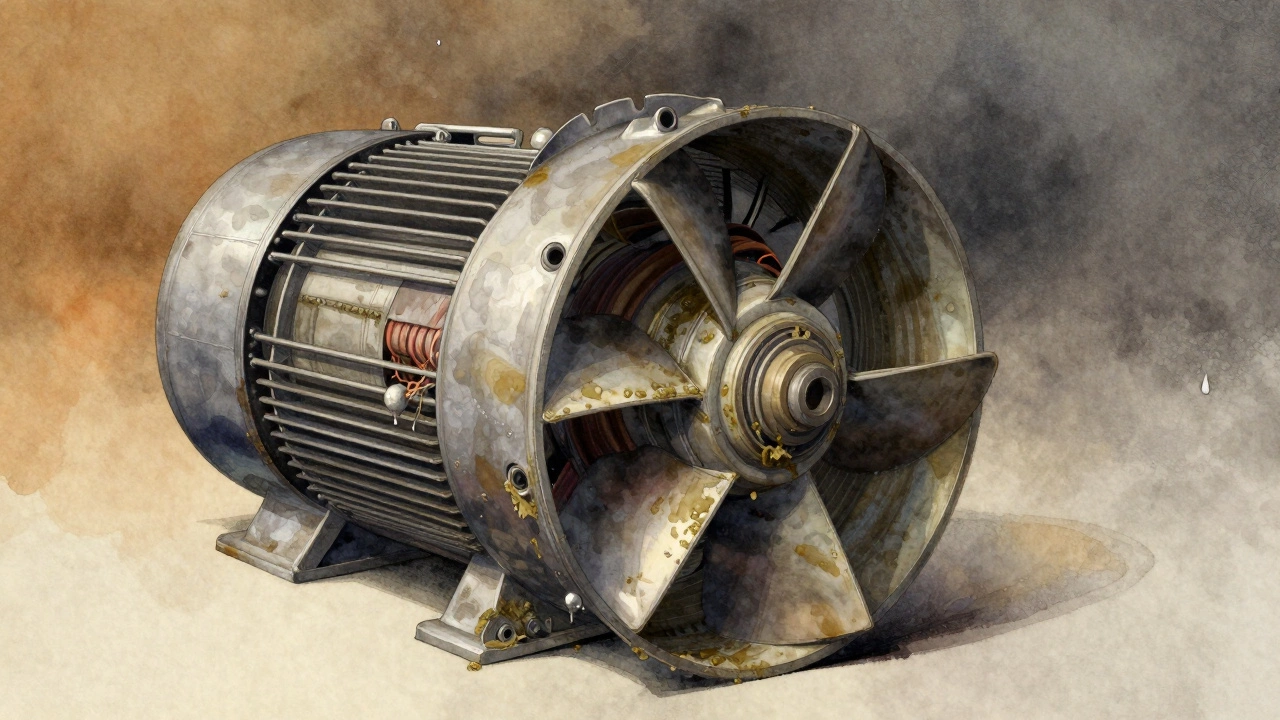
- The motor: This is the heart. Over years of running, the copper windings inside get brittle. The brushes (in older models) wear down. Newer fans use brushless motors, but they still overheat and lose efficiency.
- The bearings: These let the fan blade spin smoothly. Grease dries out. Dust and grease mix into a gritty paste. That’s when you hear that grinding or rattling noise. It’s not the blade hitting the housing - it’s the bearing failing.
- The blade assembly: Grease builds up unevenly on the blades. That throws off the balance. The fan starts vibrating. Over time, the plastic or metal can crack, warp, or break.
Some fans have replaceable motors. Others don’t. If the housing is plastic and the motor is glued in, it’s usually not worth repairing. You’re better off replacing the whole unit.
Signs Your Extractor Fan Is Wearing Out
Here’s what to watch for - these aren’t just annoyances. They’re red flags:
- Slower airflow: Steam lingers after cooking. The fan feels like it’s struggling. Even on high, it doesn’t clear the air like it used to.
- Noise changes: A quiet hum turning into a whine, buzz, or rattle. A new fan is barely audible. A worn one sounds like a dying electric toothbrush.
- Intermittent operation: It turns on, runs for a few minutes, then shuts off. Or it only works on one speed. That’s often a failing capacitor or control board.
- Visible grease buildup inside: If you take off the cover and see thick, hardened grease coating the motor or wiring - that’s not just messy. It’s conductive. It can short out circuits or cause overheating.
- Smoke or burning smell: If you smell plastic burning or ozone, turn it off immediately. This isn’t normal wear. This is a fire risk.
One homeowner in Wellington had a fan that made a loud screeching noise every time it turned on. She ignored it for two years. Then one morning, it sparked and tripped the circuit breaker. The motor had overheated and melted its own insulation. She replaced the whole unit - and installed one with a better grease filter.
Can You Fix a Worn-Out Extractor Fan?
It depends. If it’s under 8 years old and the motor is accessible, you might be able to replace the bearings or motor. Some brands like Zephyr, Falmac, or extractors with modular designs allow this. But most budget models - the kind you find in new builds - are designed to be thrown away, not repaired.
Here’s what’s usually not worth fixing:
- Fans with sealed motors (you can’t access them)
- Plastic housings that crack when you try to open them
- Units over 12 years old
- Models with no available replacement parts
Even if you find a replacement motor, you’ll need to match the voltage, RPM, and mounting points. Most people don’t have the tools or know-how. A professional repair might cost $120-$180. A new fan? $150-$300. But the new one will be quieter, more efficient, and come with a warranty.
How to Make Your Extractor Fan Last Longer
You can’t stop wear - but you can slow it down:
- Clean the filter every month. Wash metal filters in hot soapy water. Replace carbon filters every 3-6 months.
- Wipe down the inside every 6 months. Use a degreaser and a soft cloth. Don’t spray water directly on the motor.
- Run it longer after cooking. Don’t turn it off right after you finish. Let it run for 10-15 minutes to clear out lingering steam and grease.
- Check the duct. If the duct is kinked, crushed, or full of grease, the fan has to work harder. Clean it out every year.
- Upgrade to a better model. Newer fans have better motors, sealed bearings, and auto-shutoff sensors. They last longer and use less power.
One family in Lower Hutt replaced their 15-year-old fan with a new quiet model. They cleaned it twice a year. Six years later, it still works like new. No noise. No smell. Just clean air.
When to Replace - Not Repair
Replace your extractor fan if:
- It’s over 10 years old
- You’re spending more than $150 on repairs
- It’s noisy even after cleaning
- It’s not keeping up with your cooking
- There’s visible damage to the housing or wiring
Don’t wait for it to fail completely. A fan that stops working mid-cook can leave your kitchen smelling like fried fish for days. And if grease builds up in the duct, it becomes a fire hazard. Insurance companies in New Zealand have denied claims because of grease fires from neglected extractor fans.
What to Look for in a New Fan
When you’re ready to replace it, here’s what matters:
- Cfm rating: Match it to your kitchen size. For small kitchens (under 10m²), 150-200 Cfm. For larger or open-plan spaces, go 300+ Cfm.
- Noise level: Look for under 50 decibels. Anything over 60 is too loud.
- Filter type: Metal mesh filters are washable. Carbon filters trap odors. Avoid cheap paper filters.
- Motor type: Brushless DC motors last longer and use less power.
- Warranty: At least 2 years. Brands like Elica, Miele, and extractors with 5+ year warranties are built to last.
Don’t buy the cheapest option. You’ll pay more in repairs, energy bills, and frustration.
Do extractor fans wear out even if they’re not used often?
Yes. Even if you rarely cook, the motor and bearings still degrade over time. Moisture, temperature changes, and dust cause internal corrosion. A fan sitting unused for 15 years might still fail because the grease dried out and the insulation cracked. Age matters more than usage.
Can I clean the motor myself?
No. Never spray water or cleaner directly on the motor. You can gently wipe the outside with a dry cloth or use compressed air to blow out dust. But if grease has gotten inside the motor housing, it’s already too late. That’s a sign the fan is worn out and needs replacement.
Is it cheaper to repair or replace an extractor fan?
For fans under 8 years old with accessible parts, repair might save money. But for most models - especially budget ones - replacement is cheaper. Labor costs to diagnose and replace parts often exceed half the price of a new unit. Plus, a new fan is more efficient, quieter, and comes with a warranty.
Why does my extractor fan turn off by itself?
This usually means the thermal overload protector kicked in. The motor got too hot - often because of blocked airflow, dirty filters, or worn bearings. If it keeps happening, the motor is failing. Resetting it won’t fix the root problem. Replacement is the safest long-term solution.
Do I need a professional to replace my extractor fan?
If you’re replacing it with the same model and the wiring is simple, a handy homeowner can do it. But if you’re upgrading to a different type, changing ducting, or dealing with older wiring, hire an electrician. Improper installation can cause fire hazards or void your home insurance.
I am an expert in the services industry with a focus on appliance repair. My passion lies in understanding how things work and educating others in simple, engaging ways. This enthusiasm fuels my writing, where I delve into topics around appliance maintenance and troubleshooting. I aim to make these subjects clear and accessible to all readers.