If you turned on the tap this morning and got nothing but cold water, you’re not alone. Hot water heaters don’t usually give warning signs before they fail - they just stop. One minute you’re showering comfortably, the next you’re standing under a freezing spray wondering what went wrong. It’s frustrating, especially in Wellington where winter mornings are damp and chilly. But before you panic or call a plumber, here’s what’s actually happening inside your unit.
The Heating Element Died (Electric Models)
If you’ve got an electric water heater - and most homes in New Zealand do - the most common reason for no hot water is a broken heating element. These units have two elements: one near the top, one near the bottom. The top one heats water first, then the bottom kicks in if more is needed. If the top element burns out, you might get a little warm water at first, then nothing. If the bottom one fails, you’ll get cold water even if the top one’s working.
Elements don’t last forever. They’re made of metal sheathed in magnesium, and over time, mineral buildup from hard water coats them like a blanket. That forces the element to work harder, overheat, and eventually snap. Most electric water heaters last 8-12 years. If yours is older than that, it’s not a surprise.
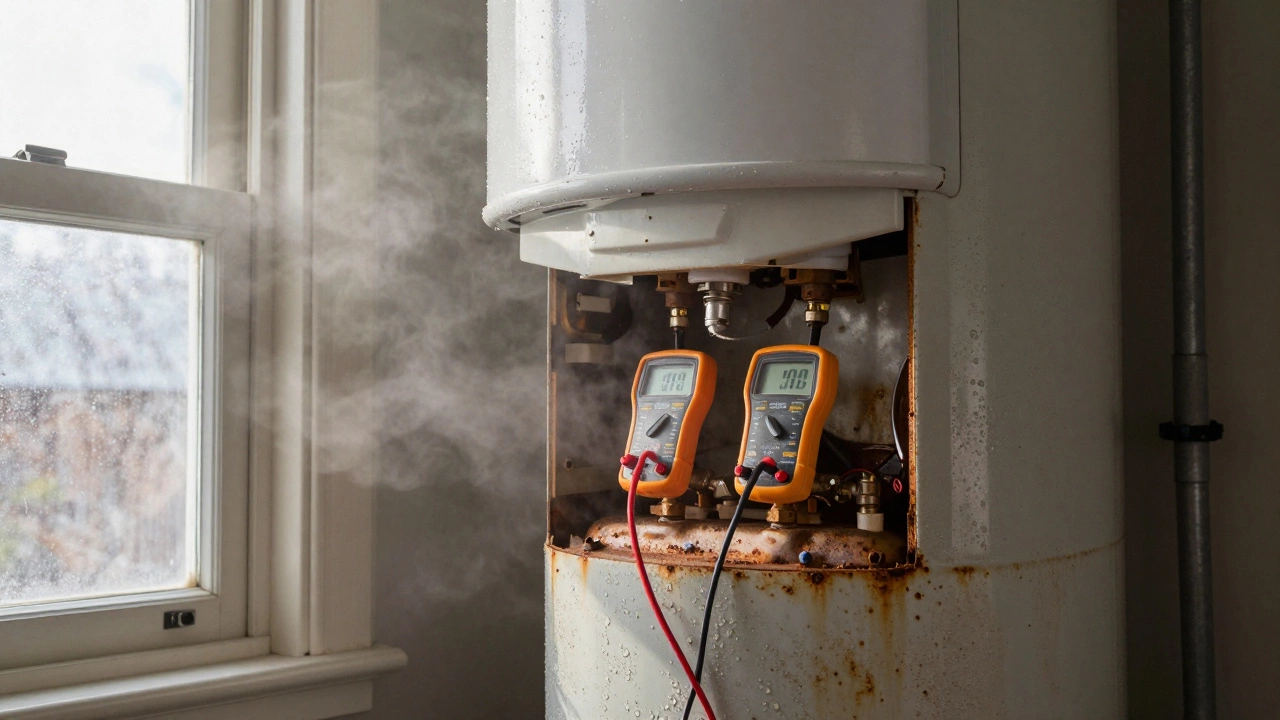
You can test this yourself with a multimeter. Turn off the power at the breaker, drain a few litres from the tank, and remove the access panels. Check for continuity across the element terminals. No reading? It’s dead. Replacing it costs about $80-$150 for parts and labour, depending on your location.
The Thermostat Is Faulty
Thermostats control when the elements turn on and off. If it’s stuck, the water won’t heat - even if the elements are fine. Sometimes the thermostat just needs recalibrating. Other times, it’s completely fried.
Signs of a bad thermostat: the water is lukewarm but never hot, or it’s hot one day and cold the next with no pattern. If you’ve already ruled out the elements, the thermostat is next. Most electric water heaters have two thermostats - upper and lower. They’re connected, so if one fails, the other might not trigger properly.
Replacing a thermostat is cheap and easy if you’re comfortable with basic tools. Just make sure the power is off. New thermostats cost around $30-$60. You can buy them at hardware stores like Bunnings or Mitre 10. But if you’re unsure, don’t mess with it. Water and electricity don’t mix.
The Pilot Light Went Out (Gas Models)
If you’ve got a gas water heater, the problem is often simpler - and easier to fix. The pilot light went out. That’s it. No flame, no heat. Gas heaters rely on a tiny, continuous flame to ignite the main burner. Wind, drafts, or a dirty burner tube can snuff it out.
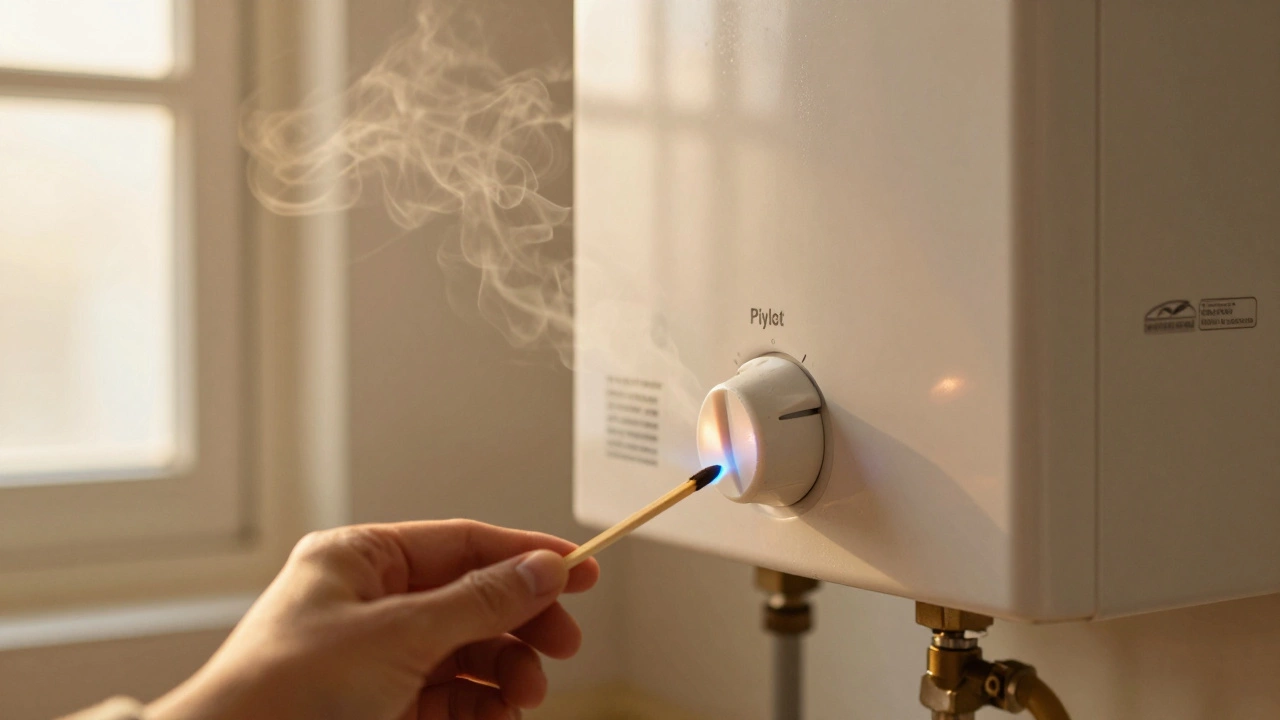
Check the control knob. Is it set to “Pilot”? If it’s on “Off” or “On,” the pilot won’t light. Turn it to “Pilot,” press and hold the button, and use a long match or lighter to ignite the pilot. Keep holding the button for 30-60 seconds after it lights. That lets the thermocouple heat up and signal the gas valve to stay open.
If it won’t stay lit, the thermocouple is likely faulty. It’s a small metal rod next to the pilot flame. If it’s bent, dirty, or worn, it won’t sense the heat and shuts off the gas. Replacing it costs under $40 and takes 15 minutes. Most gas water heaters have clear instructions on the side of the unit.
The Anode Rod Is Gone
This one’s sneaky. You won’t notice it until it’s too late. The anode rod is a sacrificial piece of metal inside the tank. It attracts rust and corrosion so your tank doesn’t have to. Over time, it wears down - usually after 3-5 years. Once it’s gone, the tank starts corroding from the inside.
Signs? Smelly water (like rotten eggs), rust-colored water, or a tank that’s leaking from the bottom. If the anode rod is completely eaten away, the tank is doomed. No repair can save it. You’ll need a replacement.
Check your owner’s manual. Some tanks let you replace the anode rod yourself. Others require a plumber. If your heater is over 8 years old and you’ve never checked the rod, it’s probably gone. Replacing it every 3-5 years can double your tank’s life. It’s a $50 part that saves you $1,200 in replacement costs.
There’s a Leak - Big or Small
If water is pooling under your heater, it’s not a drip. It’s a sign of internal failure. Corrosion, pressure buildup, or a cracked tank can cause leaks. Even a slow drip from the pressure relief valve means something’s wrong.
Pressure relief valves are safety features. They open if pressure gets too high. If it’s leaking constantly, your thermostat might be stuck on, or your water pressure is too high. Install a pressure gauge on your main line. Normal pressure is 40-60 psi. Above 80 psi? You need a pressure-reducing valve.
But if the tank itself is leaking - from the bottom seam, near the pipes, or anywhere besides the valve - it’s over. Water heaters are sealed units. Once the tank is compromised, patching won’t work. You’ll need a new one. Don’t delay. A leaking tank can flood your laundry or garage, causing mold and structural damage.

The Breaker Tripped or the Gas Valve Is Off
Before you assume the worst, check the obvious. Has the circuit breaker tripped? Did someone accidentally turn it off during cleaning? Check your switchboard. Reset the breaker if it’s flipped.
For gas heaters, is the gas valve open? Sometimes during renovations or when moving appliances, the manual shut-off valve gets turned off. Look for a lever on the gas line leading to the heater. It should be parallel to the pipe to be open. If it’s perpendicular, turn it back.
These are quick fixes. Five minutes of checking could save you a $300 service call.
Age Is the Silent Killer
Most water heaters last 8-12 years. After that, everything starts to degrade - elements, thermostats, tanks, valves. If your heater is 10+ years old and it’s suddenly stopped working, it’s not a coincidence. It’s the end of its life.
Don’t waste money on repairs if you’re near the end. A new electric water heater costs $800-$1,500 installed. A gas one runs $1,200-$2,000. But if you wait until it bursts, you could pay $2,000+ in water damage repairs.
Look at your unit. Is there a label with a manufacture date? If it’s from 2014 or earlier, you’re already past the warranty. Start budgeting for replacement. New models are 20-30% more efficient. You’ll save on bills, too.
What to Do Next
Here’s a simple checklist when your hot water stops:
- Check the breaker or gas valve - flip it back on if needed.
- For gas heaters: relight the pilot light.
- Look for leaks under the tank - if there’s water, call a pro.
- Test the elements and thermostat if you’re comfortable with tools.
- Check the age of the unit. If it’s over 8 years old, repair may not be worth it.
- If all else fails, call a licensed plumber. Don’t risk electrocution or gas leaks.
Most of the time, it’s a simple fix. But if your heater is old, leaking, or has no power even after resetting - it’s time to replace. Waiting won’t make it better. It’ll just make the mess bigger.
I am an expert in the services industry with a focus on appliance repair. My passion lies in understanding how things work and educating others in simple, engaging ways. This enthusiasm fuels my writing, where I delve into topics around appliance maintenance and troubleshooting. I aim to make these subjects clear and accessible to all readers.