
Most people think their dishwasher is broken when it stops cleaning dishes well or makes a weird noise. But the truth? Over 60% of dishwasher repairs in New Zealand are caused by one simple issue: dishwasher not draining.
Why Your Dishwasher Won’t Drain
If your dishwasher fills with water and then just sits there-maybe with a faint hum but no spinning spray arms-it’s not a motor problem. It’s almost always a clogged drain path. This isn’t some mysterious failure. It’s food debris, grease buildup, or a kinked hose. You’ve probably seen this: leftover rice, pasta, or coffee grounds slipping past the filter. They don’t vanish. They collect in the drain pump, the check valve, or the connection to your kitchen sink’s garbage disposal.In Wellington homes, hard water makes it worse. Mineral deposits build up over time, narrowing the drain line. Even if the pump is working fine, the water can’t escape fast enough. You’ll notice standing water at the bottom of the tub, or worse-water leaking out the door when you open it.
Before you call a technician, check this: Remove the bottom rack and pull out the filter. It’s usually a cylindrical mesh thing under the spray arm. Rinse it under hot water. Use an old toothbrush to scrub the grooves. Then, look at the drain outlet-the hole where the filter sits. Is it blocked with gunk? A bent spoon or a piece of plastic can jam it. Clear it out. Now run a cycle with just hot water and no dishes. If it drains, you fixed it.
Leaking? It’s Probably Not the Door Seal
People blame the door gasket every time there’s a leak. But in real-world repairs, the door seal is only the culprit in about 15% of cases. More often, the leak comes from a cracked spray arm, a worn-out pump seal, or a loose hose connection.Check the spray arms first. Take them off and hold them up to the light. Look for tiny cracks or holes. If water sprays unevenly or drips from the arm’s base, it’s cracked. Replacement arms cost under $25 and snap right in.
Next, inspect the hoses. The inlet hose (from your sink’s water line) and the drain hose (leading to the disposal or sink trap) can loosen over time. Feel around the connections. If you see moisture or mineral crust, tighten the clamps. Don’t over-tighten-plastic fittings crack easily.
And here’s a trick most guides miss: the air gap. If your dishwasher has one (a small chrome cap on the countertop near the sink), it’s probably clogged. Remove the cap and poke a wire hanger through the tube. Food and soap scum build up there fast. Clean it every 6 months. If you don’t have an air gap, your drain hose might be installed too low-creating a siphon effect that pulls water back into the machine. It should form a high loop under the counter, like a U-shape.
Dishes Still Dirty? It’s Not the Detergent
You’re using the right pods. You’ve tried different brands. But your glasses still have film, and your plates have grease spots. The problem isn’t detergent. It’s water temperature or blocked spray arms.Dishwashers need water at least 120°F (49°C) to dissolve grease and activate detergent properly. If your water heater is set too low-or if someone else in the house ran hot water right before you started the dishwasher-the machine gets lukewarm water. Try running the kitchen tap until the water’s hot, then start the dishwasher. That’s your fix.
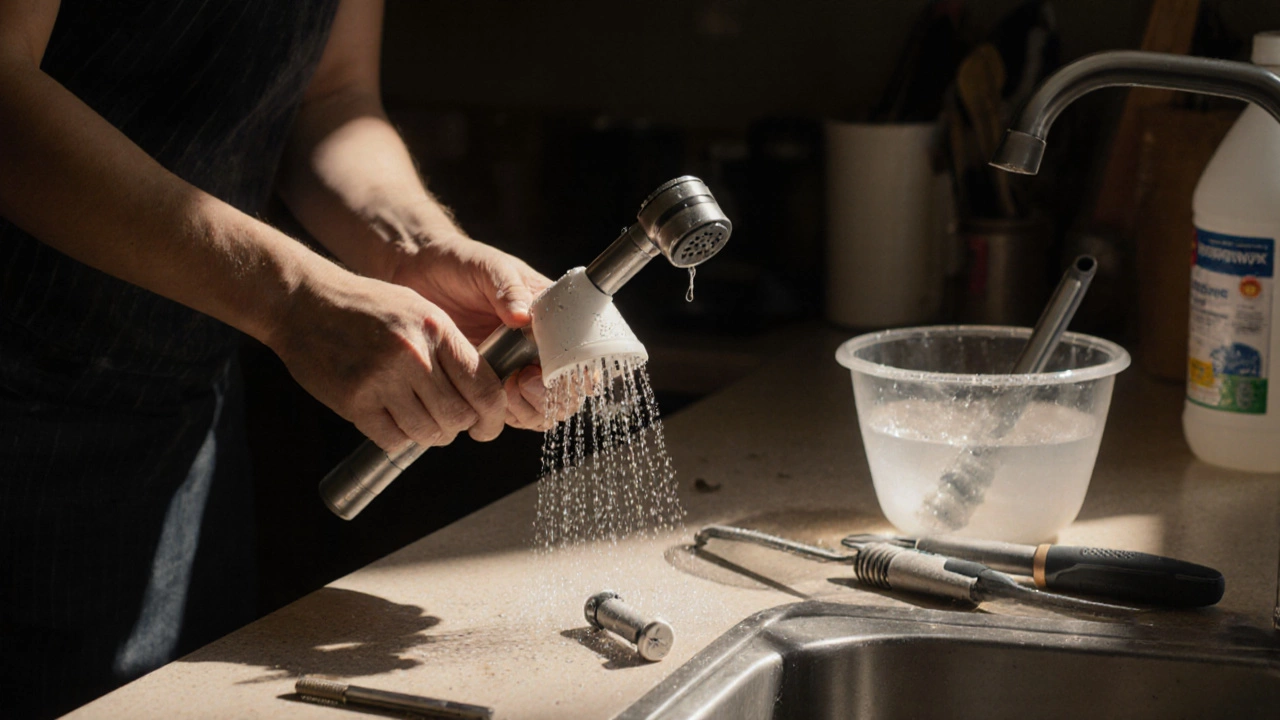
Blocked spray arms are the second most common reason for poor cleaning. If the holes are clogged with mineral deposits, water can’t reach the dishes. Soak the arms in white vinegar for 30 minutes. Use a pin to clear each hole. If the arms spin freely by hand, they’re fine. If they’re stiff or wobble, replace them.
Also check the detergent dispenser. Is it stuck shut? Cracked? A broken latch means the soap never releases. You’ll see powder or gel stuck inside the compartment. Replace the whole unit-it’s usually under $40.
Why the Dishwasher Won’t Start
If the display is blank and the buttons don’t respond, you might think the control board is fried. But in 80% of cases, it’s the door latch. Dishwashers have a safety switch that stops them from running if the door isn’t fully closed. Over time, the latch wears out. The door might look shut, but the switch doesn’t engage.Try this: Open the door and press the latch mechanism with your finger. You should hear a soft click. If it feels loose or doesn’t click, the switch is faulty. You can test it with a multimeter if you’re handy, but the easiest fix? Replace the latch assembly. It takes 15 minutes. No tools needed in most models.
Another hidden cause: the thermal fuse. It’s a small safety device that cuts power if the dishwasher overheats. If it blows, the machine won’t turn on at all. It’s not expensive, but it’s buried behind the lower panel. If you’ve ruled out the latch and the power cord, this might be it. Most technicians will charge $150 to replace it. But if you’re comfortable removing the front panel, you can do it yourself for $12.
When to Call a Pro
There are a few faults you shouldn’t try to fix yourself. If your dishwasher is leaking from the bottom center-especially if it’s dripping onto the floor-it could be a failing pump motor or a cracked tub. These are expensive repairs. A new pump costs $100-$200, and labor adds another $150. If your machine is over 8 years old, it’s often cheaper to replace it.Same goes for electrical issues. If the control panel is flickering, showing error codes you can’t find online, or smells like burning plastic, don’t mess with it. These point to a faulty control board. Replacing it can cost $300-$500. For older models, that’s more than half the price of a new dishwasher.
And if you’ve tried everything-cleaned the filter, checked the hoses, tested the latch, and it still won’t drain or clean-then it’s time. A new dishwasher with a 10-year warranty and energy-saving features costs less than two repair visits.
Prevent Future Problems
The best repair is no repair. Here’s how to keep your dishwasher running for 12+ years:- Scrape plates before loading-no big food chunks.
- Run vinegar through a cycle once a month to dissolve minerals.
- Check and clean the filter every 2 weeks.
- Use a rinse aid-it prevents water spots and helps drainage.
- Don’t overload the racks. Spray arms need space to spin.
- Open the door slightly after a cycle to let steam escape. That stops mold and odors.
Most people treat dishwashers like magic boxes. But they’re mechanical systems. Treat them right, and they’ll last longer than your fridge.
Why is my dishwasher leaking from the bottom?
A leak from the bottom usually means a damaged pump seal, a cracked tub, or a loose drain hose connection. First, check the hoses for cracks or loose clamps. If they’re fine, the pump seal may be worn. This requires disassembling the dishwasher and replacing the pump. If the tub itself is cracked (often near the spray arm mount), it’s usually not worth repairing-especially if the unit is over 8 years old.
Can I use vinegar in my dishwasher?
Yes, vinegar is safe and effective for cleaning. Place a cup of white vinegar on the top rack and run a hot cycle without dishes. It dissolves mineral buildup, removes odors, and helps the drain stay clear. Do this once a month. Don’t mix vinegar with bleach or commercial dishwasher cleaners-it can create toxic fumes.
Why does my dishwasher smell bad?
Bad smells come from food particles trapped in the filter, drain hose, or around the door gasket. Clean the filter weekly. Wipe the rubber seal with a damp cloth and vinegar. Run a monthly vinegar cycle. Also, leave the door slightly open after each use to let moisture escape. Mold and mildew grow in damp, dark places-and dishwashers are perfect for it.
How often should I clean the dishwasher filter?
Clean the filter every two weeks if you use the dishwasher daily. If you run it less often, clean it once a month. The filter is usually at the bottom of the tub, under the spray arm. Remove it, rinse under hot water, and scrub with an old toothbrush. A clogged filter is the #1 cause of poor drainage and dirty dishes.
Is it worth repairing a 10-year-old dishwasher?
Generally, no. Most dishwashers last 8-12 years. If your unit is 10 years old and needs a major repair-like a new pump, control board, or tub-it’s usually cheaper to replace it. New models are 30% more energy-efficient, quieter, and have better cleaning tech. A $600-$800 dishwasher often pays for itself in lower utility bills within 2-3 years.
I am an expert in the services industry with a focus on appliance repair. My passion lies in understanding how things work and educating others in simple, engaging ways. This enthusiasm fuels my writing, where I delve into topics around appliance maintenance and troubleshooting. I aim to make these subjects clear and accessible to all readers.