Water Heater Health Checker
Water Heater Risk Assessment
Answer these 7 questions about your water heater to determine if immediate action is needed.
Your Water Heater Risk Assessment
If your water heater is acting up, don’t wait for a full breakdown. Many homeowners ignore the small signs until they’re standing in a puddle with no hot water. The truth is, water heaters don’t just die suddenly-they scream before they go. And if you know what to listen for, you can avoid a costly flood or a freezing cold shower.
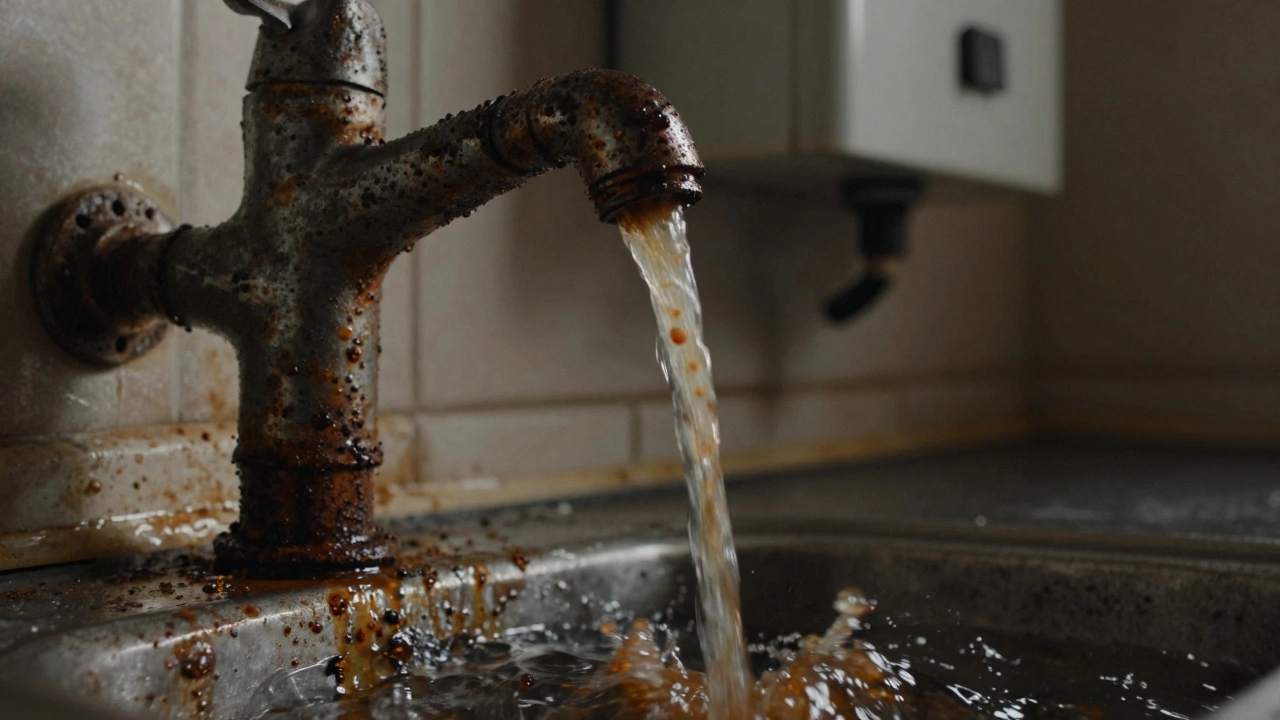
Discolored or Rusty Water
When you turn on the hot tap and the water comes out brown, orange, or muddy, that’s not dirt in your pipes. That’s rust inside your tank. Water heaters have a sacrificial anode rod that protects the steel tank from corrosion. When that rod wears out, the tank starts eating itself. Once you see rust in the water, the tank is already compromised. It won’t get better. In New Zealand’s hard water areas, this happens faster than you think. If your water looks like weak tea, your tank has maybe 6 to 12 months left. Replace it before it bursts.
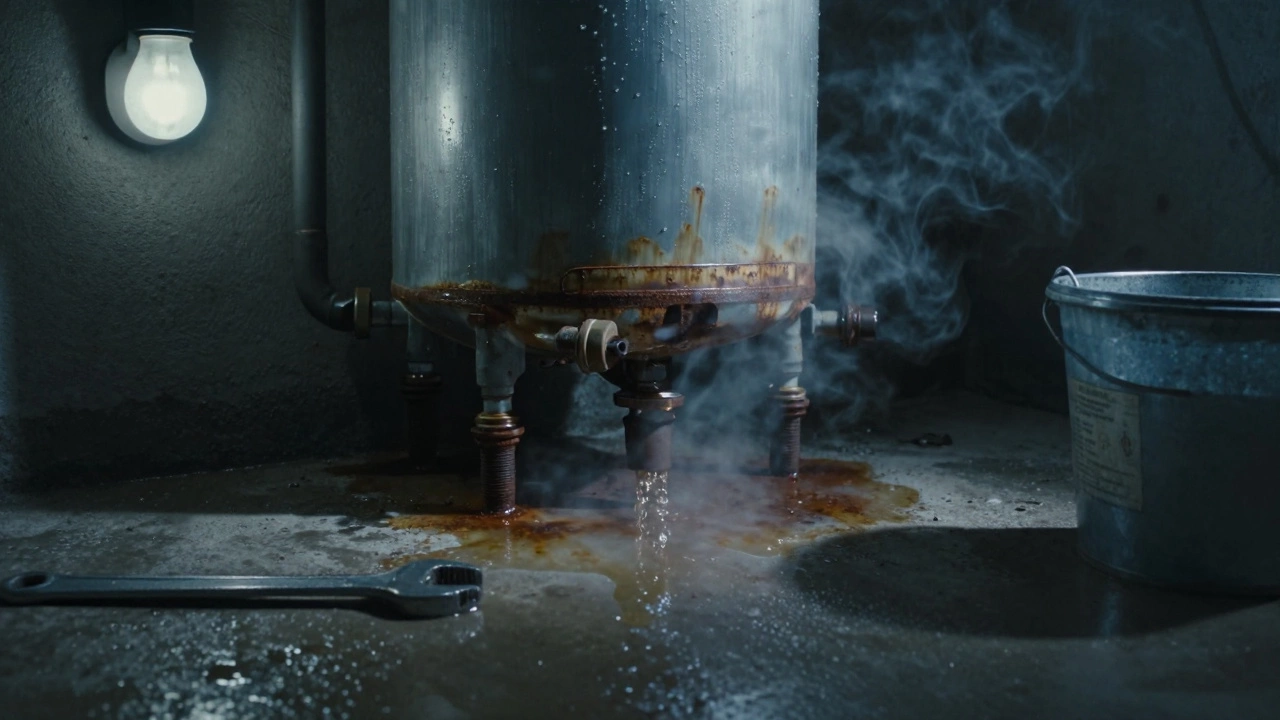
Water Leaking from the Tank
A little drip from the pressure relief valve? That’s normal. Water leaking from the bottom of the tank itself? That’s a death sentence. If you see moisture pooling under the unit, especially if it’s been there for more than a day, the tank has corroded through. No amount of tightening fittings or replacing parts will fix this. The tank is done. Water doesn’t leak from the bottom unless the metal has failed. And once it has, the damage is irreversible. Ignoring this leak means you’re one heavy shower away from a flooded laundry room or basement. Don’t risk it.
Loud or Strange Noises
That popping, rumbling, or banging sound coming from your water heater isn’t just annoying-it’s a warning. It means sediment has built up on the bottom of the tank. As water heats, it gets trapped under layers of mineral buildup. When it boils, it creates steam pockets that explode with force. That’s the noise you hear. Over time, this sediment reduces efficiency, burns out the heating element, and can even crack the tank lining. In Wellington’s hard water zones, sediment builds up faster than in softer water areas. If your water heater sounds like a popcorn maker, it’s time to flush it-or replace it if the sediment is thick and stubborn.
No Hot Water or Inconsistent Temperatures
If your shower starts hot but turns cold after five minutes, or if you’re getting lukewarm water even when the thermostat is turned up, something’s wrong. First, check the circuit breaker-if it’s tripped, reset it. If that doesn’t help, the issue is likely the heating element (in electric models) or the gas burner (in gas models). But if the problem keeps coming back after a reset or a repair, it’s usually a sign the tank is failing. Older units (over 10 years) start losing their ability to hold and transfer heat. If you’ve replaced the element and the problem returns in a few months, the tank is the real culprit. Replacing the whole unit is cheaper than paying for repeated repairs.
Age of the Unit
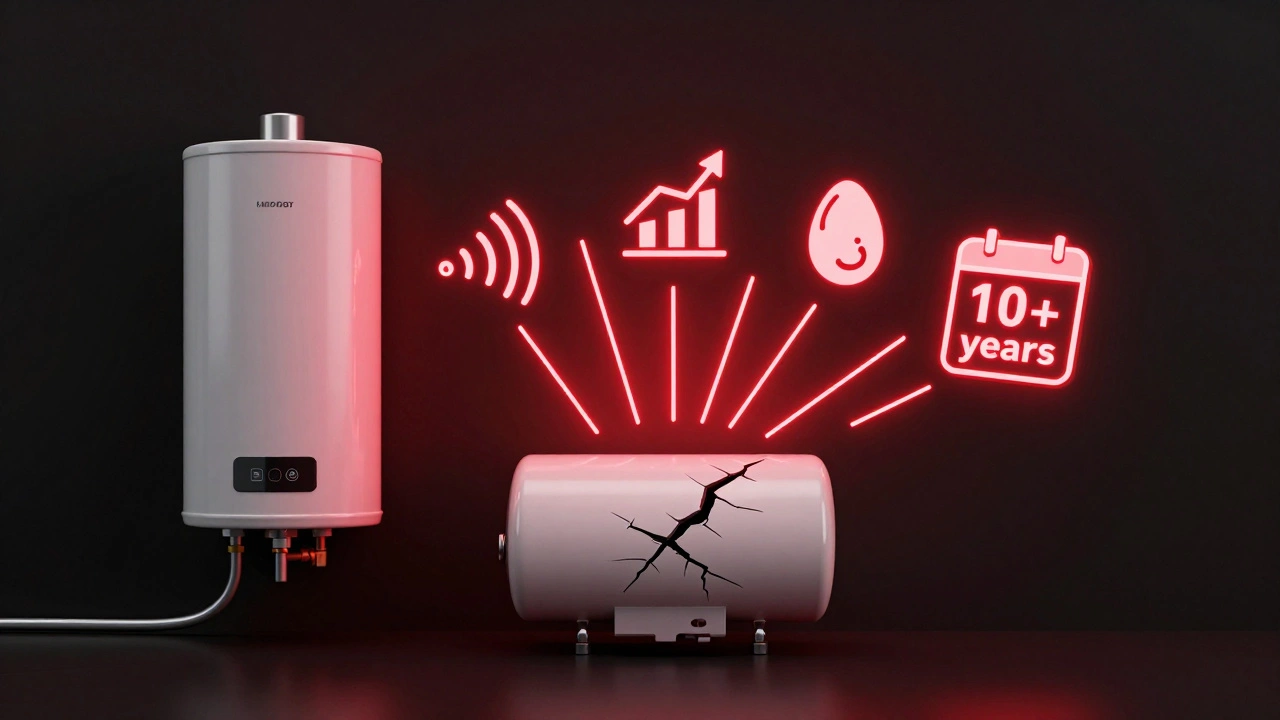
Most water heaters last between 8 and 12 years. If yours is older than 10, even if it’s still working, you’re playing with fire. Manufacturers design them to fail after that point. The tank, pipes, and fittings all degrade with time and constant pressure. In New Zealand, where water pressure can be high and temperatures fluctuate, units wear out faster. If your water heater was installed before 2016, it’s in the danger zone. Don’t wait for it to burst. Replacing it now saves you from emergency calls, water damage, and higher energy bills from an inefficient old unit.
Smell Like Rotten Eggs
That sulfur smell when you turn on the hot water? It’s not your pipes-it’s bacteria. Sulfur-reducing bacteria thrive in warm, stagnant water and feed on the magnesium in the anode rod. The result? Hydrogen sulfide gas. It’s not dangerous in small amounts, but it’s disgusting. You can temporarily fix it by flushing the tank with hydrogen peroxide or replacing the anode rod with an aluminum one. But if the smell keeps coming back, it means the tank is old and the environment inside is perfect for bacteria. That’s a sign the tank’s internal conditions are broken. Replacing the unit is often the only long-term solution.
High Energy Bills with Less Hot Water
If your power or gas bill is climbing but you’re getting less hot water, your heater is working harder to do less. That’s a classic sign of inefficiency. Sediment buildup, worn insulation, or a failing heating element forces the unit to run longer and hotter to reach the same temperature. In 2026, with energy prices still high, this isn’t just inconvenient-it’s expensive. A 12-year-old water heater can use 30% more energy than a new Energy Star-rated model. That’s hundreds of dollars a year wasted. If your bills are rising and your showers are getting shorter, it’s not coincidence. It’s a red flag.
What to Do Next
If you’ve noticed one or more of these signs, don’t delay. Call a licensed plumber. Don’t try to fix a leaking tank yourself. Don’t wait for the next hot water shortage. Replacing a water heater isn’t a luxury-it’s a necessity when these signs appear. New models are more efficient, quieter, and come with 10- to 12-year warranties. Many local plumbers in Wellington offer free quotes and can help you choose the right size and type-whether it’s a traditional tank, heat pump, or instantaneous model.
Prevention Tips
- Flush your tank every 6 to 12 months to remove sediment.
- Check the pressure relief valve once a year-lift the lever to make sure water flows out.
- Set the thermostat to 50°C-hotter settings increase wear and energy use.
- Install a water softener if you live in a hard water area.
- Replace the anode rod every 3 to 5 years to extend tank life.
Water heaters are silent workhorses-until they’re not. The red flags aren’t random. They’re signals. Pay attention to them. Fixing a small problem early saves you thousands in damage, stress, and emergency repairs.
Can a water heater explode?
Yes, but it’s extremely rare. Modern water heaters have pressure relief valves that open if pressure gets too high. Explosions happen only if that valve is blocked or faulty, and the tank is old and corroded. Most cases labeled "explosions" are actually violent ruptures from internal rust and pressure buildup. The best way to prevent this is to replace your heater before it’s over 10 years old and to never ignore leaks or strange noises.
How often should I flush my water heater?
Every 6 to 12 months, depending on your water hardness. In Wellington and other areas with hard water, flushing every 6 months is recommended. Flushing removes sediment that reduces efficiency and causes noise. It’s a simple task-turn off the power or gas, connect a hose to the drain valve, and let it run until the water clears. You can do it yourself, or hire a plumber for $80-$150.
Is it worth repairing an old water heater?
Only if it’s under 8 years old and the issue is a simple part failure-like a broken thermostat or heating element. Beyond that, repairs are temporary. A 10-year-old tank with a new element will likely leak or fail again within a year. The cost of repeated repairs adds up. Replacing it with a new, energy-efficient model saves money long-term and prevents water damage.
What’s the difference between electric and gas water heaters?
Electric heaters are easier to install and safer indoors, but cost more to run. Gas heaters heat water faster and are cheaper to operate, but need proper ventilation and a gas line. Heat pump water heaters are the most efficient-using ambient air to heat water-and are becoming popular in New Zealand due to rising electricity prices. Tankless (instantaneous) models save space and energy but have higher upfront costs.
Should I replace my water heater before it fails?
Yes-if it’s over 8 years old and you’re seeing any red flags. Waiting for failure means you risk flooding your home, losing hot water at the worst time, and paying emergency repair rates. Replacing it proactively lets you choose the right model, schedule the install, and avoid the chaos of a sudden breakdown. Most plumbers recommend replacing water heaters at the 8-10 year mark, even if they’re still working.
I am an expert in the services industry with a focus on appliance repair. My passion lies in understanding how things work and educating others in simple, engaging ways. This enthusiasm fuels my writing, where I delve into topics around appliance maintenance and troubleshooting. I aim to make these subjects clear and accessible to all readers.