Water Heater Maintenance Scheduler
Your Recommended Schedule
Quick Maintenance Checklist
- Annual Flush: Remove sediment buildup from the tank.
- Anode Rod Check: Inspect and replace the sacrificial rod every 3-5 years.
- T.P.&V. Valve Test: Ensure the pressure relief valve isn't stuck.
- Temperature Calibration: Keep settings around 120°F (49°C) to prevent scaling.
- Visual Inspection: Check for corrosion or moisture around the base.
The Hidden Danger of Sediment Buildup
Inside a standard tank, minerals from your water-mostly calcium and magnesium-settle at the bottom. This creates a thick layer of "sludge" known as sediment. When this happens, Sediment is the accumulation of mineral deposits at the bottom of a water heater tank . This sludge acts as an insulator between the burner (or element) and the water.
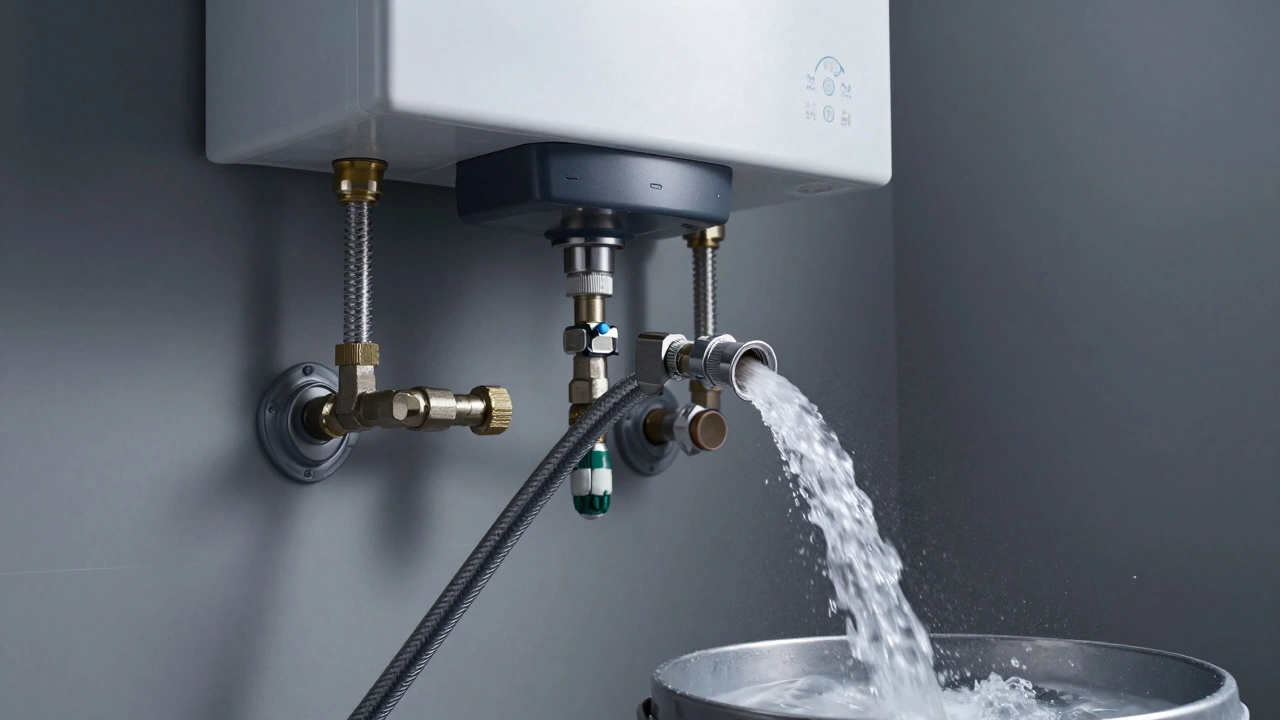
If you hear popping or rumbling noises coming from your tank, that is the sound of steam bubbles fighting through a layer of sediment. This process, called kettleing, forces the metal tank to overheat and expand, which eventually leads to cracks and leaks. To stop this, you need to perform a full drain and flush at least once a year. By hooking up a garden hose to the drain valve, you can push out the grit and keep the heat transfer efficient.
The Unsung Hero: The Anode Rod
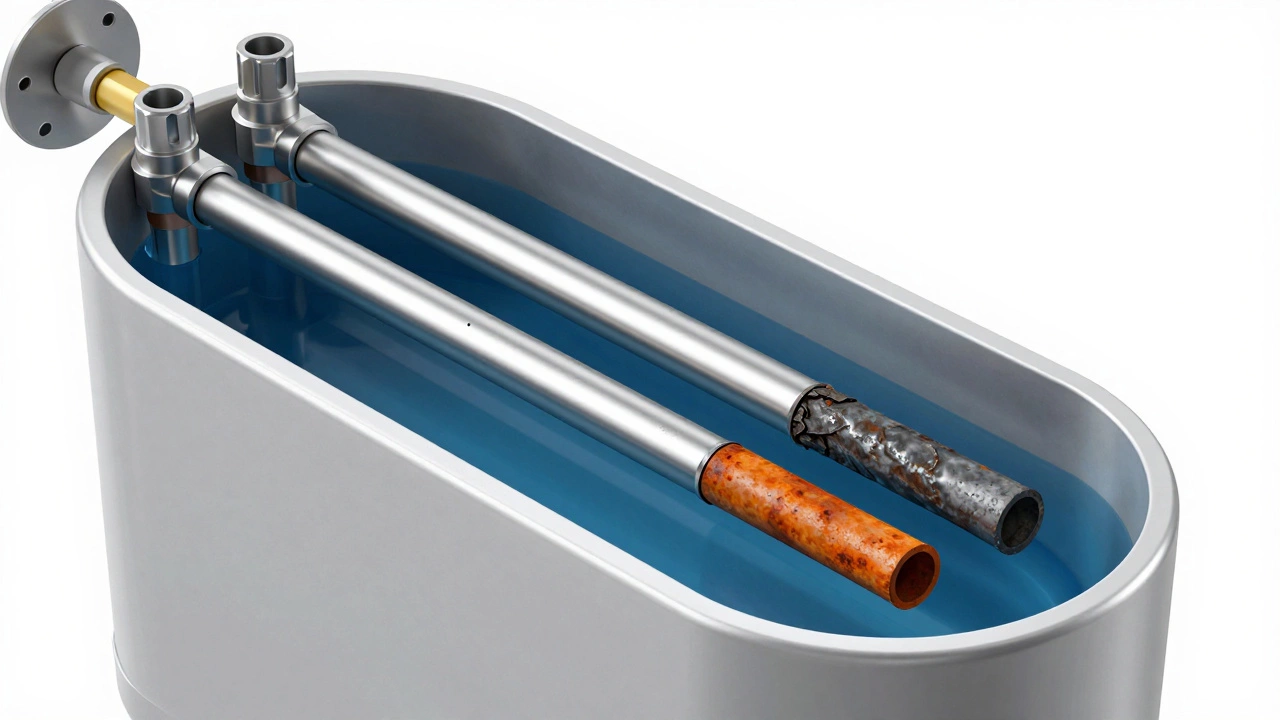
Your tank is made of steel, and water naturally wants to eat through steel. To prevent this, manufacturers install a Anode Rod, which is a sacrificial metal rod, usually made of magnesium or aluminum, designed to corrode so the tank doesn't . Think of it as a lightning rod for rust. The minerals in the water attack the anode rod instead of the walls of your tank.
Once the rod is completely dissolved, the corrosion starts attacking the tank itself. This is a death sentence for a water heater because you cannot patch a rusted-through tank. Most rods last about 3 to 5 years, depending on how "hard" your water is. If you live in an area with high mineral content, you might need to swap it out sooner. A quick check with a screwdriver or a visual inspection of the rod's thickness tells you if it is time for a replacement.
Managing Pressure and Safety Valves
Water expands when it heats up. Without a way to release that pressure, your heater could potentially rupture. That is where the T&P Valve (Temperature and Pressure Relief Valve) comes in. This is a safety device that opens automatically if the internal pressure or temperature exceeds safe limits . You can find it as a small lever-operated valve on the top or side of the tank.
Over time, mineral deposits can seize this valve shut. To test it, briefly lift the lever to let a small amount of water flow out. If the water doesn't flow or if the valve drips constantly after you close it, the valve is faulty. Replacing a $20 valve is a tiny price to pay compared to the risk of a tank failure. Just be careful-the water coming out of that valve is boiling hot.
Specific Care for Tankless Systems
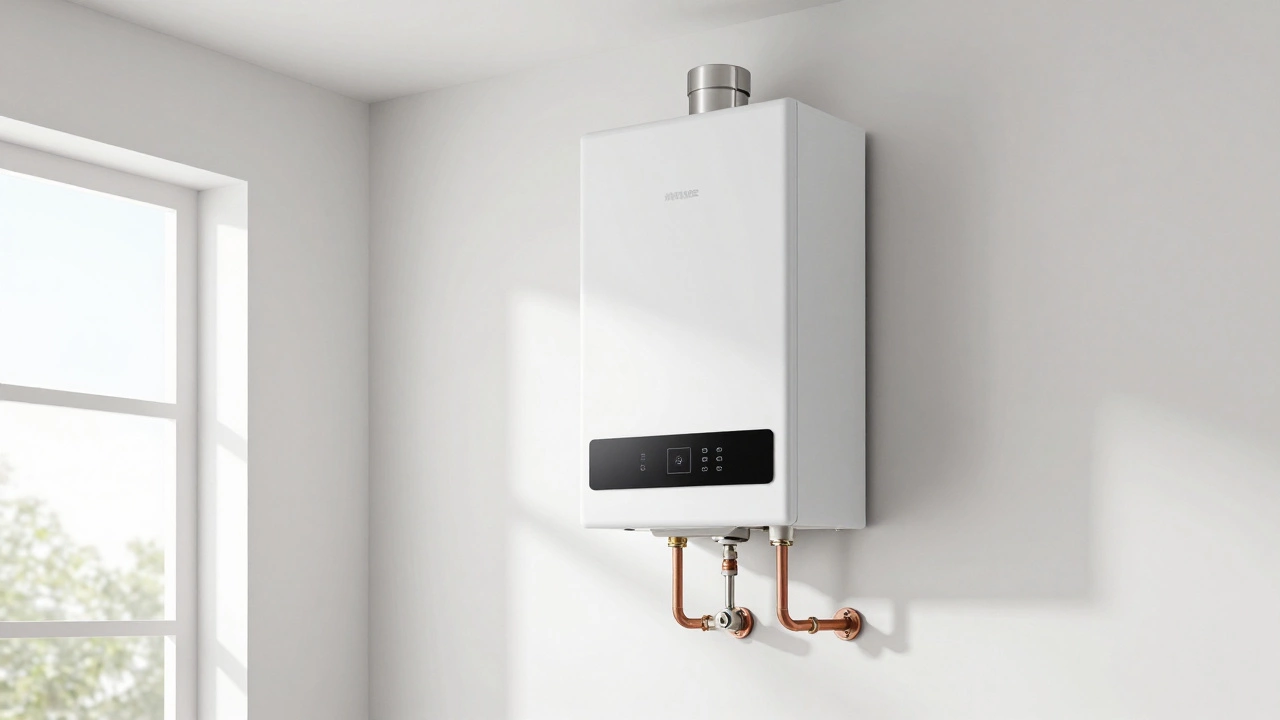
If you have a Tankless Water Heater, which is an on-demand heating system that warms water as it flows through a heat exchanger , your maintenance needs are different. You don't have an anode rod or a giant tank of sediment, but you do have a heat exchanger that can get clogged with scale.
Scale buildup in the narrow copper pipes of a tankless unit restricts water flow and makes the unit work harder, which spikes your energy bill. The solution is a process called descaling. This involves pumping a food-grade acid solution-usually acetic acid or white vinegar-through the unit for several hours. This dissolves the calcium deposits and restores the efficiency of the heat exchanger. Most pros recommend doing this every 12 to 24 months.
| Task | Standard Tank | Tankless System |
|---|---|---|
| Flushing | Annual (Drain and fill) | Annual/Biennial (Acid flush) |
| Corrosion Protection | Anode rod replacement | Not applicable |
| Safety Check | T&P Valve testing | Ventilation/Gas line check |
| Typical Lifespan | 8-12 years | 20+ years |
Optimizing Temperature and Energy
Setting your water heater to 140°F might seem like a good way to ensure steaming hot showers, but it is actually a mistake. High temperatures accelerate the buildup of mineral scale. It is like boiling a pot of water; the more heat you apply, the faster the white crust forms on the sides. Setting your unit to 120°F (49°C) is the "sweet spot." It is hot enough to kill bacteria and provide comfort, but cool enough to slow down corrosion and prevent accidental scalding.
If you have an electric unit, you should also check the Heating Elements, which are resistive coils that convert electricity into heat within the water tank . These elements can develop a crust of minerals that slows down heating. In some cases, it is cheaper to replace the elements every few years than to pay for the extra electricity required to heat water through a layer of rock.
When to Call a Professional
While flushing a tank is a DIY job, some tasks are risky. If you smell gas around a unit, shut it off immediately and call a technician. Similarly, if you see significant rusting at the bottom of the tank, no amount of flushing will save it; you are looking at a replacement. Working with high-voltage electricity in an electric heater or dealing with gas lines requires a certified pro to avoid fires or leaks.
A professional can also perform a combustion analysis on gas units to ensure they aren't leaking carbon monoxide into your home. This is a critical safety step that homeowners simply cannot do with basic tools. Having a pro look at your unit once every two years ensures that the burner is clean and the venting is clear of bird nests or debris.
How often should I flush my water heater?
You should flush your tank at least once a year. If you live in an area with very hard water (high mineral content), flushing every six months is better. This prevents sediment from insulating the bottom of the tank and causing the metal to overheat and crack.
What happens if I don't replace the anode rod?
The anode rod is designed to rust so your tank doesn't. Once the rod is gone, the water begins to eat away at the steel walls of the tank. This leads to pinhole leaks and eventually a full tank failure, meaning you will have to replace the entire unit rather than just a small rod.
Why is my water heater making a knocking sound?
Knocking or popping sounds are usually caused by sediment buildup. Water gets trapped under the sediment layer and boils, creating steam bubbles that "pop" as they break through. This is a clear sign that you need to flush the tank immediately.
Does a tankless water heater need any maintenance?
Yes. While they don't have tanks to rust, they have heat exchangers that collect scale. You need to "descale" the unit by flushing it with a cleaning solution (like white vinegar) every 1-2 years to maintain efficiency and water flow.
What is the ideal temperature for a water heater?
120°F (49°C) is generally recommended. This temperature prevents most mineral buildup and reduces the risk of burns, while still being hot enough for household needs. Setting it higher often leads to faster corrosion and higher energy costs.
Next Steps for Homeowners
If you haven't touched your water heater since it was installed, start today. First, find your user manual to locate the drain valve and the anode rod access point. If you aren't comfortable handling plumbing or electricity, call a local licensed plumber for a "tune-up" service.
For those with very hard water, consider installing a water softener. This removes the calcium and magnesium before they ever reach your heater, effectively eliminating the need for frequent flushing and extending the life of your anode rod. It is a bigger upfront investment, but it protects every pipe and appliance in your home.
I am an expert in the services industry with a focus on appliance repair. My passion lies in understanding how things work and educating others in simple, engaging ways. This enthusiasm fuels my writing, where I delve into topics around appliance maintenance and troubleshooting. I aim to make these subjects clear and accessible to all readers.