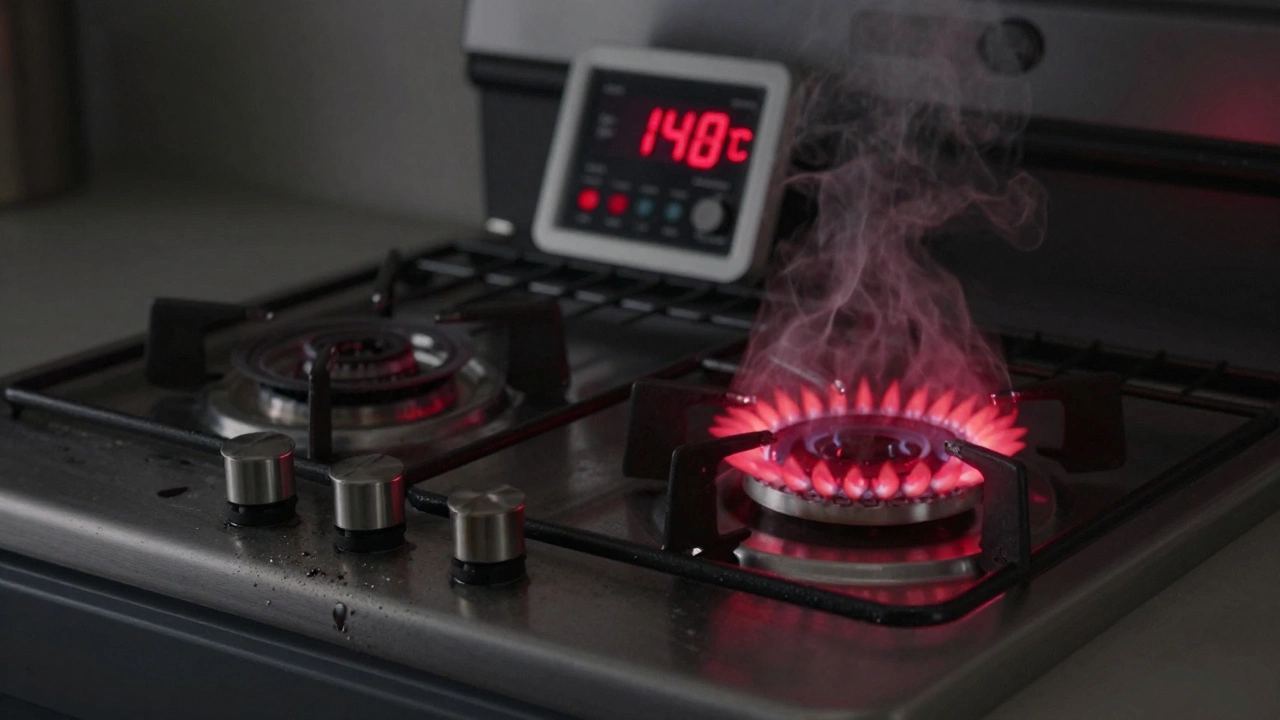
Learn the 7 clear signs your cooker is broken and when to repair vs. replace. From strange smells to uneven heating, this guide helps you make a smart, safe decision.
When your cooker, a household appliance used for baking, roasting, or broiling food. Also known as range or oven, it's one of the most used tools in the kitchen. stops working, it’s not always a sign you need a new one. Many times, it’s a simple fix—like a blown oven element, the heating coil inside the oven that glows red when powered, a faulty thermostat, the device that regulates oven temperature, or a tripped control board, the electronic brain that tells the cooker when to turn on or off. These aren’t rare problems—they happen in nearly every home cooker over time.
Most cookers last 10 to 15 years, but if yours is acting up before then, don’t rush to replace it. A lot of the time, the issue isn’t the whole unit—it’s one part. If the oven doesn’t heat up but the grill still works, that’s usually the main element. If the oven turns on but doesn’t reach the right temperature, the thermostat might be off. And if the display is dead or buttons don’t respond, the control board could be fried. These are the top three reasons people call for cooker repair in South Shields. You can test the element yourself with a multimeter, check if the thermostat is calibrated, or even reset the control board by turning off the power for 10 minutes. No need to pay a service fee just to find out it’s a loose wire.
What’s more, many of these fixes don’t require special tools or skills. You don’t need to be an electrician to replace a heating element—just follow the steps and turn off the power first. Even if you’re not comfortable doing it yourself, knowing what’s wrong saves you time and money when you do call someone. A technician won’t charge you for guessing—they’ll charge you for diagnosing. If you already know it’s likely the element, you’re not paying for a wild goose chase.
Don’t ignore small signs like slow preheating, strange smells, or flickering lights when the oven kicks on. These aren’t just annoyances—they’re early warnings. A cooker that takes 30 minutes to heat up might be struggling because of a weak element or dirty wiring. A burner that sparks? That’s not normal—it’s a safety risk. And if your energy bill suddenly jumps, your cooker could be working harder than it should.
The collection below gives you real, step-by-step fixes for the most common cooker problems you’ll actually face. No fluff. No theory. Just what to check, how to test it, and when to call in a pro. Whether it’s a gas cooker that won’t ignite or an electric one that’s dead on arrival, you’ll find clear advice that matches what’s happening in your kitchen right now.
Learn the 7 clear signs your cooker is broken and when to repair vs. replace. From strange smells to uneven heating, this guide helps you make a smart, safe decision.