Water Heater Repair vs. Replace Calculator
Enter the details of your current situation to see if repairing your unit makes financial sense compared to upgrading.
Enter values to see your recommendation.
--
You wake up to a cold shower. The hot water tank is acting up again. You check the label on your unit and realize it’s been running for two decades. That number-20 years-stops you in your tracks. Is it worth repairing a 20-year-old water heater, or is this the universe telling you it’s time to upgrade?
The short answer is usually no. But life isn’t black and white, especially when money is tight. Before you call a plumber or sign a purchase order for a new unit, we need to look at the hard facts: safety, efficiency, cost, and reliability. Here is how to make the right decision without wasting cash.
The Lifespan Reality Check
Let’s start with the basics. What is the expected life of these machines? Most standard electric or gas storage water heaters are designed to last between eight and twelve years. High-end models might push to fifteen if you’re lucky and maintain them perfectly. Hitting the twenty-year mark is like driving a car with 300,000 miles. It’s not just old; it’s surviving against the odds.
Water Heater Lifespan is the period during which the appliance operates safely and efficiently before components degrade beyond economical repair. When you pass that twelve-year threshold, every additional year becomes a gamble. The metal tank corrodes from the inside out. Sediment builds up like plaque in arteries. The heating elements wear down. At twenty years, you aren’t getting reliable performance; you’re getting intermittent luck.
If your unit has never had its anode rod replaced, the internal steel lining is likely compromised. This doesn’t mean it will explode tomorrow, but it means a leak is statistically imminent. You are renting time with a device that has already paid off its lease.
The Safety Factor: Rust and Leaks
Safety is the biggest reason to stop repairing ancient units. Why? Because water heaters hold massive amounts of heavy, scalding water under pressure. A failure here isn’t just an inconvenience; it’s property damage waiting to happen.
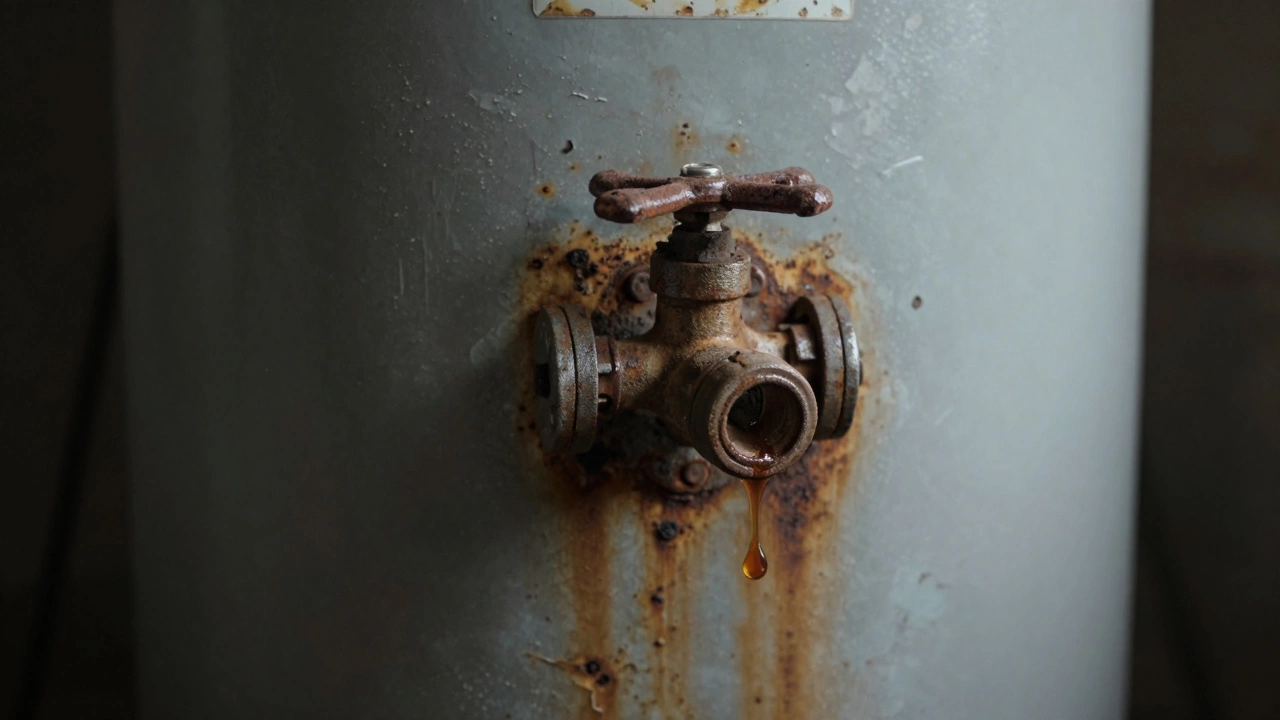
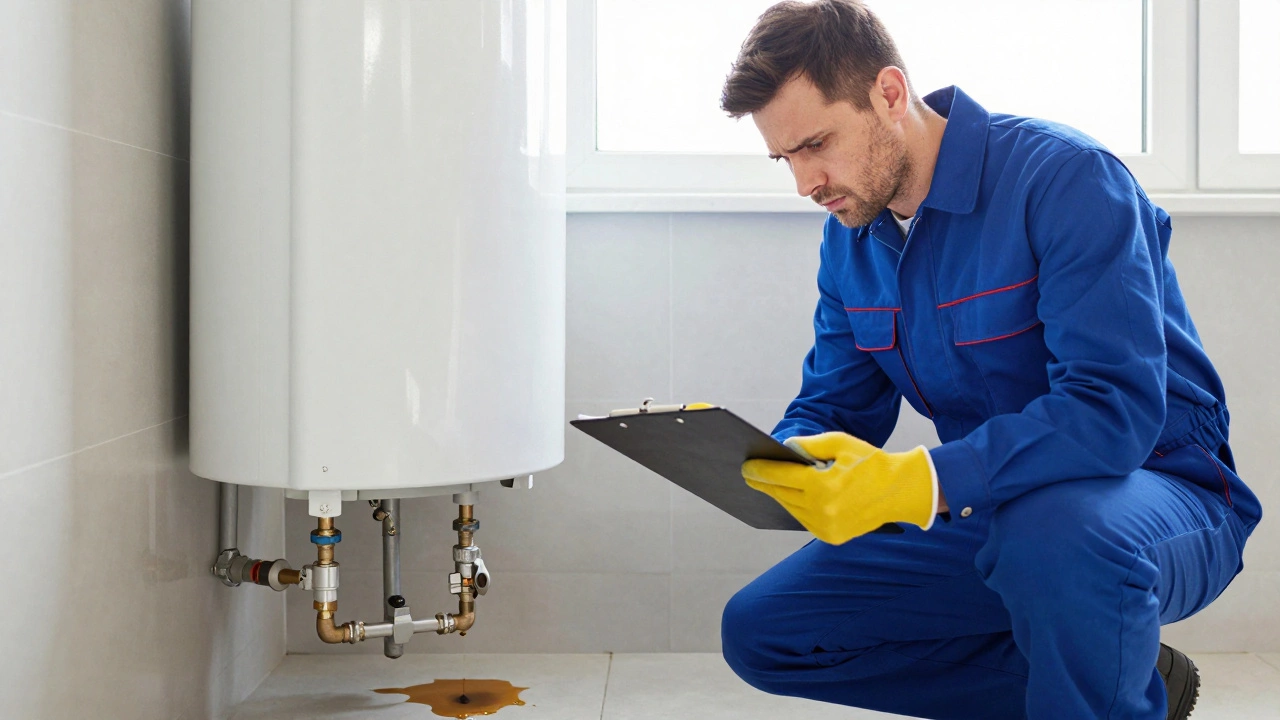
In a twenty-year-old unit, rust is rarely superficial. It penetrates the tank walls. Small pinhole leaks can suddenly become major bursts. Imagine waking up to inches of water flooding your basement or laundry room. The cost of water damage restoration often exceeds $5,000. Compare that to the $1,500-$2,500 cost of a new installation. The math gets scary fast.
Gas models add another layer of risk. Older gas valves and thermocouples can fail, leading to incomplete combustion. This increases the risk of carbon monoxide leakage. If your unit is twenty years old, it predates many modern safety standards. Don’t take chances with invisible gases.
- Check for rust: Look at the drain valve. If the water coming out is brown or reddish, the tank is rotting from the inside.
- Listen for noises: Popping or rumbling sounds indicate heavy sediment buildup, which stresses the tank lining.
- Inspect connections: Loose or corroded pipes increase leak probability.
Efficiency and Energy Bills
Even if the tank hasn’t leaked yet, is it efficient? Probably not. Technology has moved forward significantly over the last two decades. Modern water heaters use better insulation, more efficient heating elements, and smarter controls.
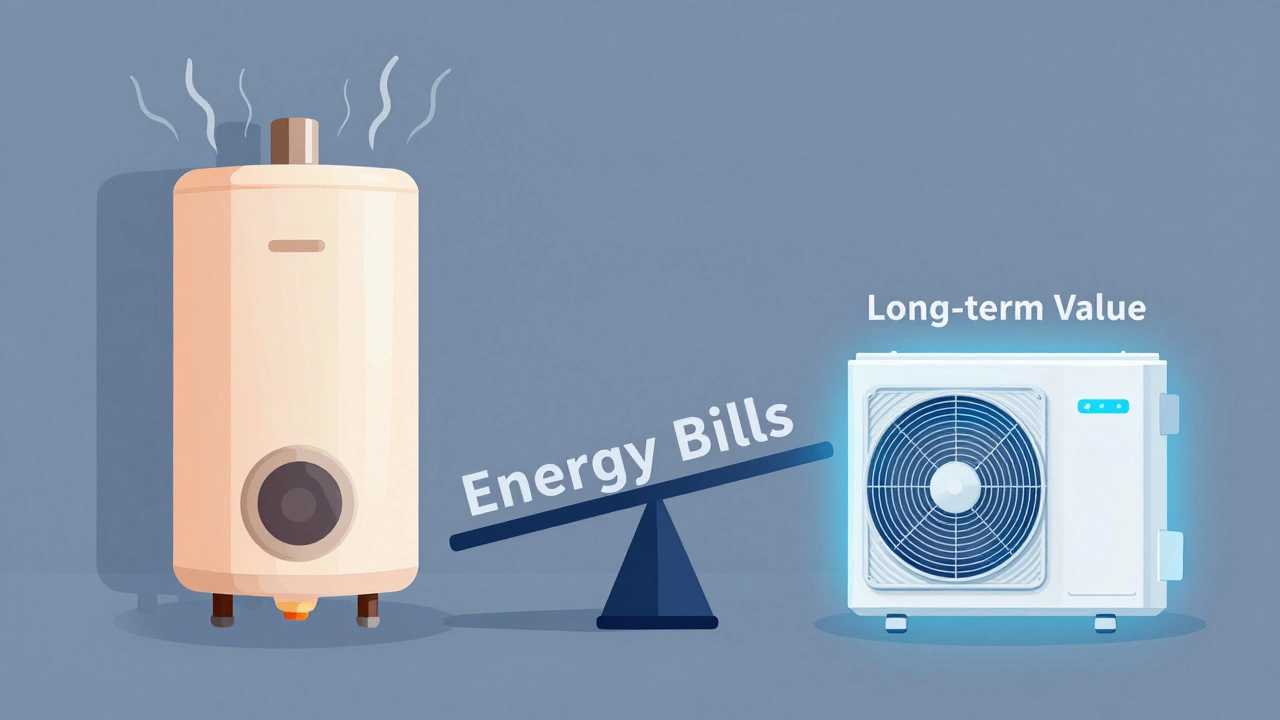
An older electric resistance heater wastes a significant amount of heat through the tank walls. Your electricity bill reflects this inefficiency. In New Zealand, where power costs have risen steadily, keeping an inefficient appliance running is like leaving a window open in winter. You’re paying for heat you don’t use.
Consider switching to a heat pump water heater or a high-efficiency gas model. These systems can cut your energy usage by 40% to 60%. While the upfront cost is higher, the return on investment happens quickly through lower monthly bills. Over five years, those savings can cover the cost of the new unit.
Older units also struggle with recovery time. If you have a family of four, an ancient tank might run out of hot water after two showers. Newer tanks recover faster, meaning you get more hot water per cycle without waiting hours for it to reheat.
Repair Costs vs. Replacement Value
Let’s talk numbers. Suppose your local plumber quotes you $400 to replace a heating element or thermostat. That seems reasonable compared to buying a new unit. But what happens six months later? Another part fails. Now you’ve spent $800 on repairs. The tank still has zero remaining useful life.
This is known as "throwing good money after bad." Each repair extends the life of the unit by months, not years. Meanwhile, parts for discontinued models become harder to find and more expensive. You might be paying premium prices for obsolete components.
| Item | Estimated Cost (NZD) | Long-term Value |
|---|---|---|
| Single Repair (Element/Thermostat) | $300 - $600 | Low (Temporary fix) |
| Multiple Repairs (Over 2 Years) | $800 - $1,500+ | Negative (Sunk cost) |
| New Standard Electric Unit | $1,200 - $1,800 (Installed) | High (10+ Year Warranty) |
| New Heat Pump Unit | $2,500 - $3,500 (Installed) | Very High (Energy Savings) |
Note that prices vary by region and installer. Always get three quotes. However, the trend remains consistent: repeated repairs on aging units rarely pay off.
When Might Repair Make Sense?
Are there exceptions? Yes, but they are narrow. You might consider repairing a twenty-year-old unit only if:
- Budget is strictly limited: You simply cannot afford a replacement right now. In this case, treat the repair as a temporary bridge. Plan to replace the unit within six months.
- The problem is minor and external: If the issue is a faulty pressure relief valve or a leaking pipe connection (not the tank itself), fixing it is cheap and safe. These parts don’t affect the tank’s internal integrity.
- You are selling the house soon: Sometimes, a quick fix keeps the system operational until closing day. Just disclose the age of the unit to potential buyers.
If none of these apply, repair is likely a mistake. You’re delaying the inevitable while risking a catastrophic failure.
Choosing the Right Replacement
If you decide to replace, what should you look for? First, match the capacity to your household needs. A single person might do fine with a 150-liter tank, while a family of five needs 300 liters or more. Oversizing wastes energy; undersizing causes cold showers.
Second, consider the fuel source. If you have natural gas, a gas water heater is generally cheaper to run than electric. If you rely on grid electricity, look into heat pump technology. These units pull heat from the air to warm water, using far less electricity than traditional resistance heaters.
Third, check the warranty. Most manufacturers offer 6 to 10-year warranties on tanks. Longer warranties often indicate better build quality. Look for brands with strong local support in New Zealand, ensuring parts and service are available when needed.
Finally, ask about installation incentives. Some local councils or energy providers offer rebates for upgrading to high-efficiency models. This can offset the initial cost significantly.
Signs You Should Replace Immediately
Don’t wait for a total breakdown. Watch for these red flags:
- Visible rust on the tank exterior: Indicates severe corrosion.
- Water pooling around the base: Even a small puddle suggests a slow leak.
- Inconsistent water temperature: Fluctuations signal failing thermostats or heavy sediment.
- Foul odor in hot water: Often caused by bacterial growth or corroding anode rods.
- Noise during operation: Loud popping or banging indicates overheating sediment.
If you see two or more of these signs, skip the repair quote. Call a professional for a replacement assessment.
Can I extend the life of my 20-year-old water heater?
Not really. Once a tank reaches 20 years, the internal structure is compromised. Maintenance like flushing sediment helps younger units, but it won’t reverse decades of corrosion. Replacing the anode rod might buy a few months, but it’s not a long-term solution.
How much does it cost to replace a water heater in New Zealand?
Expect to pay between $1,200 and $2,500 NZD for a standard electric or gas unit, including removal of the old one and installation. Heat pump models cost more, typically $2,500 to $3,500, but save money on energy bills over time.
Is it dangerous to keep using a 20-year-old water heater?
It carries increased risks. The main dangers are tank rupture causing water damage and, for gas models, potential carbon monoxide leaks from failing components. Regular inspections are crucial, but replacement is safer.
Should I repair or replace if the water heater leaks?
If the leak comes from the tank itself, replace immediately. Tank leaks cannot be repaired permanently. If the leak is from a pipe connection or valve, repair is possible, but given the age, plan for replacement soon.
What type of water heater is best for a large family?
A large-capacity storage tank (300L+) or a continuous flow (instantaneous) system works well. Continuous flow units provide endless hot water but require higher gas or electrical input. Ensure your home’s infrastructure supports the chosen system.
I am an expert in the services industry with a focus on appliance repair. My passion lies in understanding how things work and educating others in simple, engaging ways. This enthusiasm fuels my writing, where I delve into topics around appliance maintenance and troubleshooting. I aim to make these subjects clear and accessible to all readers.