Oven Element Diagnostic Tool
Check if your oven element is broken by answering these key questions.
If your oven isn’t heating up, or it’s taking forever to cook food, the heating element might be the culprit. It’s one of the most common reasons ovens fail - and usually, it’s an easy fix. You don’t need to be a technician to check it. Most people can spot a broken element with just a quick visual and a little bit of observation.
Look for visible damage
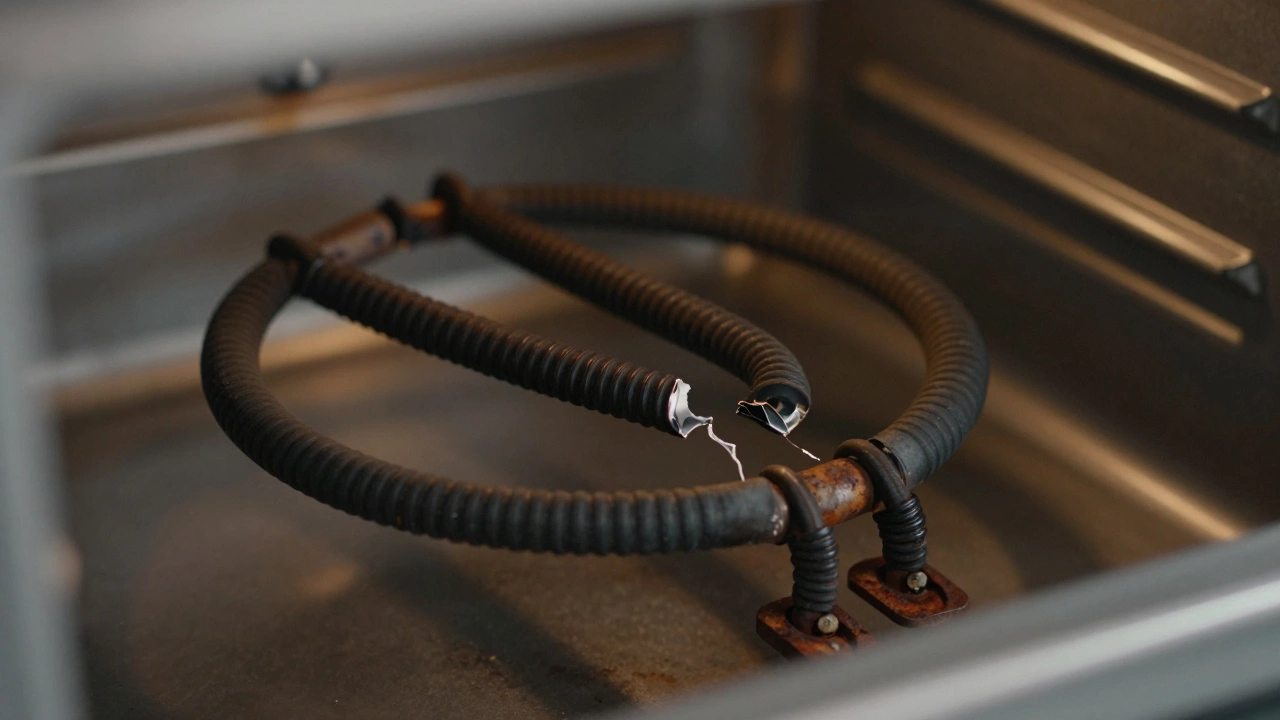
Start by turning off the oven and letting it cool completely. Open the door and look inside. The heating element is usually at the top and bottom of the oven cavity. The bottom one does most of the work for baking, while the top one is for broiling.If the element looks discolored - like it’s turned black or brown in patches - that’s a red flag. It should be a shiny, even metal color. If you see cracks, bulges, or sections that are separated from the rest of the coil, it’s definitely broken. I’ve seen elements that looked like they’d been hit with a hammer: one part glowing red-hot while another part stayed cold. That’s not normal. That’s a dead element.
Check if it glows when you turn the oven on
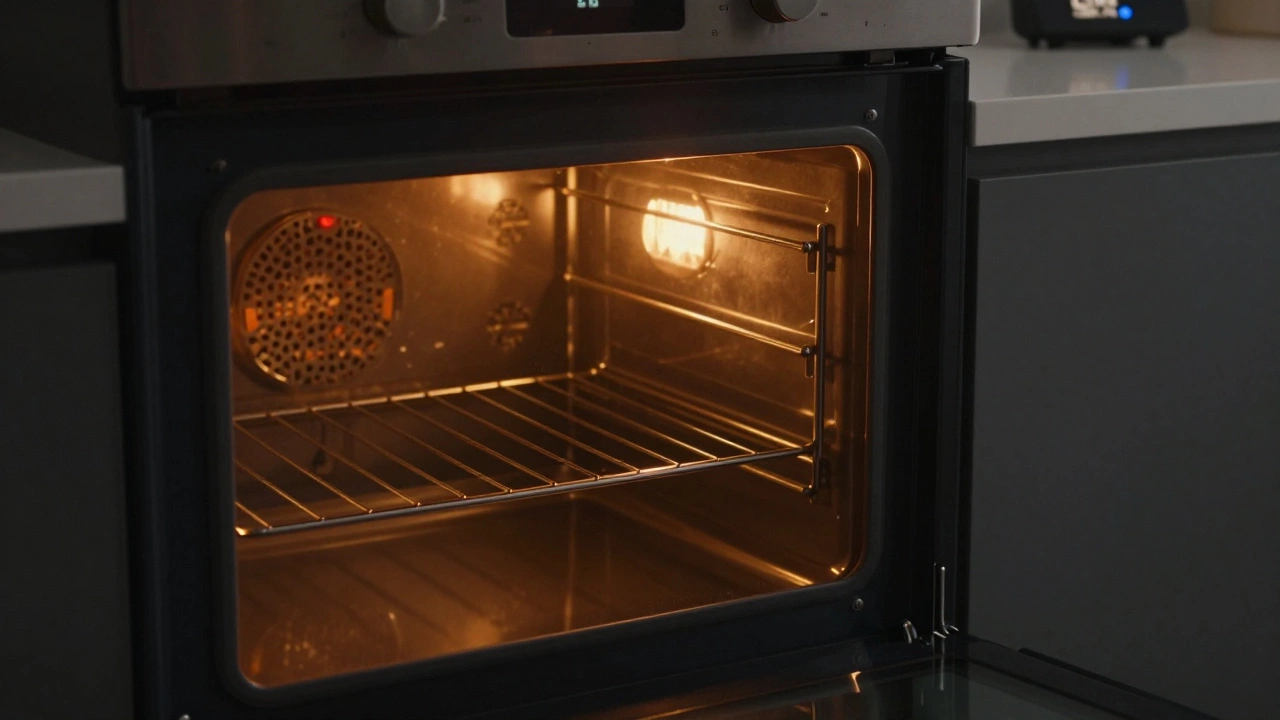
Once the oven is cool, turn it on to 180°C and watch the element. Set a timer for five minutes. A working element will glow a bright orange-red all the way along its length. If only part of it glows, or if it doesn’t glow at all, it’s not working properly.Some people think if the light inside the oven comes on, the element must be fine. That’s not true. The light and the heating element are on completely different circuits. The light turning on tells you nothing about the element.
Also, don’t rely on the oven’s display or beep to tell you it’s heating. The thermostat might think it’s hot, but if the element is broken, it’s just lying. I’ve had customers call in because their oven said it was preheated - but their cookies came out raw. The element had snapped inside the insulation and wasn’t conducting electricity anymore.
Smell something burning?
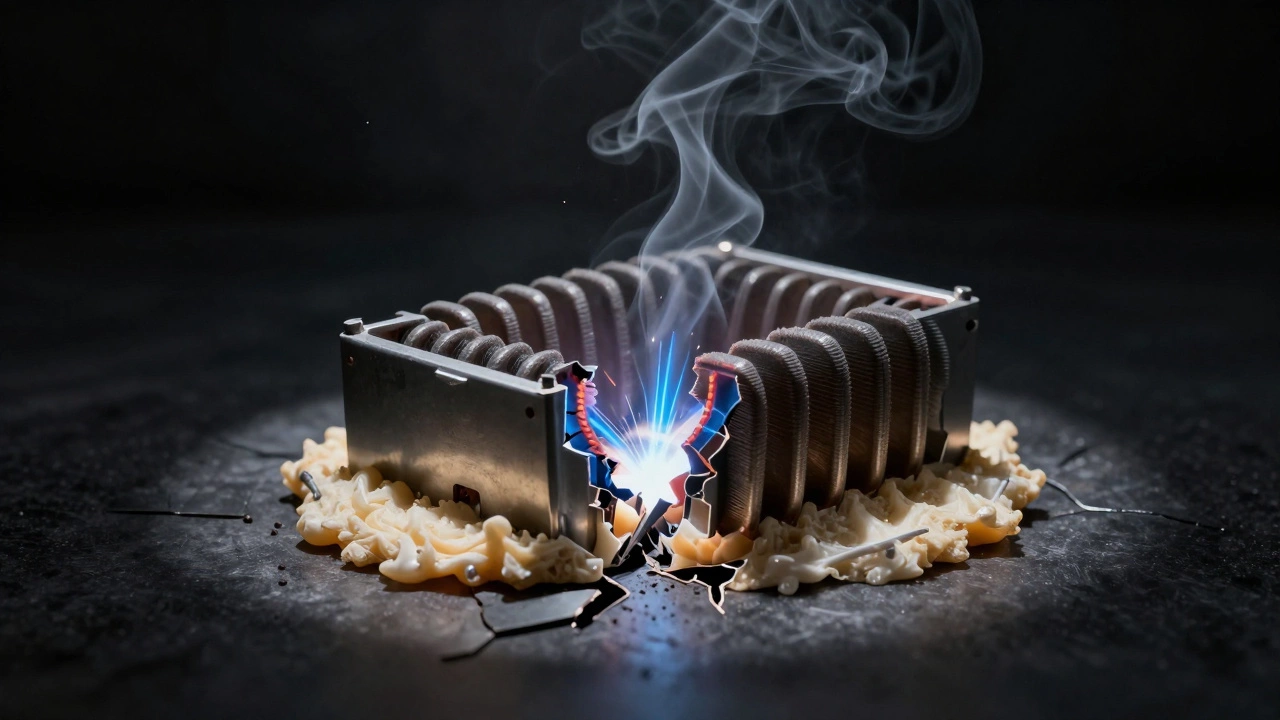
A burning smell coming from the oven is another clue. It doesn’t always mean the element is broken - sometimes it’s just dust burning off after the first use of the season. But if you’ve used the oven recently and you start smelling something like burnt plastic or metal, that’s not normal. It usually means the insulation around the element is melting, or the element is arcing internally.One time, a woman in Hataitai called me because her oven smelled like something was on fire. She turned it off right away. When I checked, the bottom element had cracked and was touching the oven’s metal casing. It wasn’t glowing, but it was leaking electricity into the frame. That’s dangerous. You don’t want to risk a shock or a fire.
Test it with a multimeter
If you’re comfortable using a multimeter, this is the most accurate way to confirm the problem. First, unplug the oven or turn off the circuit breaker. Then remove the element by unscrewing the mounting screws at the back of the oven cavity. You’ll see two metal terminals sticking out.Set your multimeter to the lowest ohms (Ω) setting. Touch one probe to each terminal. A good element will show a resistance reading between 20 and 120 ohms, depending on the model. If it reads zero, the element is shorted. If it reads “OL” (open loop), it’s broken and not conducting electricity at all.
Some people try to test it by plugging the oven back in and touching the terminals with the multimeter while it’s powered. Don’t do that. You’re risking a serious shock. Always disconnect power before testing.
Other signs your element might be failing
- Your food takes twice as long to bake as it used to, even when you set the temperature correctly. - The oven heats unevenly - one side of the tray burns while the other stays raw. - The oven turns on but never reaches the set temperature. - You hear a popping or buzzing sound when you turn the oven on. - The oven light works, but nothing inside gets hot.These symptoms can also point to a faulty thermostat or temperature sensor, but if the element is visibly damaged or doesn’t glow, that’s your first stop. Replacing a thermostat is more expensive and harder to diagnose. A broken element is obvious and cheap to fix.
What causes oven elements to break?
Elements don’t just die randomly. They wear out over time. Most last 5 to 10 years, depending on how often you use the oven. High heat, frequent use, and moisture are the main killers.In Wellington, where the air is damp and salty near the coast, corrosion is a big problem. Water gets into the element’s connections, rust builds up, and the metal weakens. That’s why many ovens here fail faster than in drier areas. Also, if you’ve ever sprayed oven cleaner directly on the element - don’t. The chemicals eat through the metal coating and cause premature failure.
Spills that aren’t cleaned up can also drip down and cause hot spots. Over time, that leads to cracks. And if you slam the oven door too often, the vibration can loosen connections inside the element. It’s not a myth - it happens more than you think.
What to do if your element is broken
If you’ve confirmed the element is broken, don’t try to glue it, tape it, or keep using it. It’s a safety hazard. You could get an electric shock, or worse, start a fire.Buy a replacement element that matches your oven model. You can find the model number on a sticker inside the oven door or on the back. Don’t guess. Using the wrong part can damage your oven or void your warranty.
Replacing it yourself is doable for most people. It usually takes 20 to 30 minutes. You’ll need a screwdriver and maybe a pair of pliers. Disconnect the power, remove the old element, unplug the wires, plug in the new one, screw it back in, and test it. No special tools needed.
If you’re not comfortable doing it yourself, call a local appliance repair technician. In Wellington, most charge between $80 and $150 for the part and labor. It’s cheaper than buying a new oven.
How to prevent future problems
- Clean spills right away. Don’t let grease or sugar sit for days. - Never spray cleaner directly on the element. Use a damp cloth instead. - Avoid slamming the oven door. - Run the self-clean function only when necessary - it puts extreme heat on the element. - Check the element every six months if you use your oven daily.Simple habits like these can double the life of your element. I’ve seen ovens in Hutt Valley that are 15 years old with the original elements - because their owners kept them clean and didn’t abuse them.
Can I still use my oven if the element is broken?
No. If the heating element is broken, the oven won’t heat properly, and it could be dangerous. A damaged element might arc, spark, or leak electricity into the oven’s metal frame. Even if it seems to work sometimes, it’s not safe to keep using it. Replace it before cooking again.
Why does my oven heat unevenly?
Uneven heating is often caused by a failing heating element. If one part of the coil is broken or corroded, it won’t produce the same amount of heat as the rest. This causes hot spots and cold spots. It could also be a faulty fan in convection ovens, but if the element looks damaged or doesn’t glow evenly, that’s the first thing to check.
How long do oven elements usually last?
Most oven elements last between 5 and 10 years. In damp, coastal areas like Wellington, they may fail sooner due to corrosion. Frequent use, high temperatures, and cleaning with harsh chemicals can shorten their lifespan.
Can a broken element cause a fire?
Yes. A cracked or damaged element can arc, spark, or overheat nearby insulation. If the element touches the oven’s metal casing or wiring, it can create a short circuit that leads to a fire. If you smell burning or see sparks, turn off the oven immediately and unplug it.
Is it cheaper to fix the element or buy a new oven?
Replacing the element usually costs between $80 and $150, including parts and labor. A new oven starts at $500 and can go up to $2,000. Unless your oven is over 12 years old or has other major issues, fixing the element is almost always the better choice.
I am an expert in the services industry with a focus on appliance repair. My passion lies in understanding how things work and educating others in simple, engaging ways. This enthusiasm fuels my writing, where I delve into topics around appliance maintenance and troubleshooting. I aim to make these subjects clear and accessible to all readers.