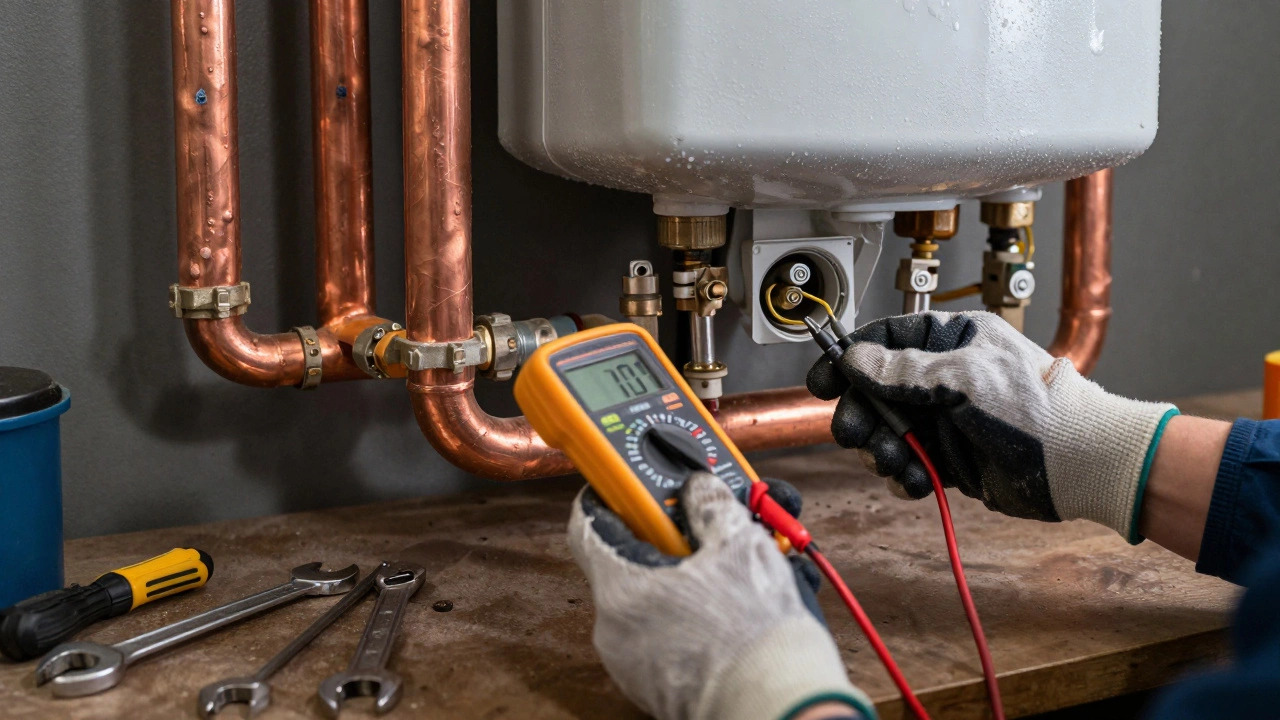
If your hot water suddenly turns cold or only lasts for a few minutes, it’s not always a sign that your water heater is dying. More often than not, one of the two heating elements inside has gone bad. Electric water heaters rely on these elements to heat the water, and when they fail, you’re left with lukewarm showers or no hot water at all. The good news? You don’t need to replace the whole unit. Testing and replacing a faulty element is something most homeowners can do with basic tools and a little patience.
Understand how electric water heater elements work
Most residential electric water heaters have two heating elements: an upper and a lower one. The upper element heats the top portion of the tank first. Once that water reaches the set temperature, the thermostat switches power to the lower element to heat the rest. This system keeps energy use efficient and ensures you get consistent hot water.
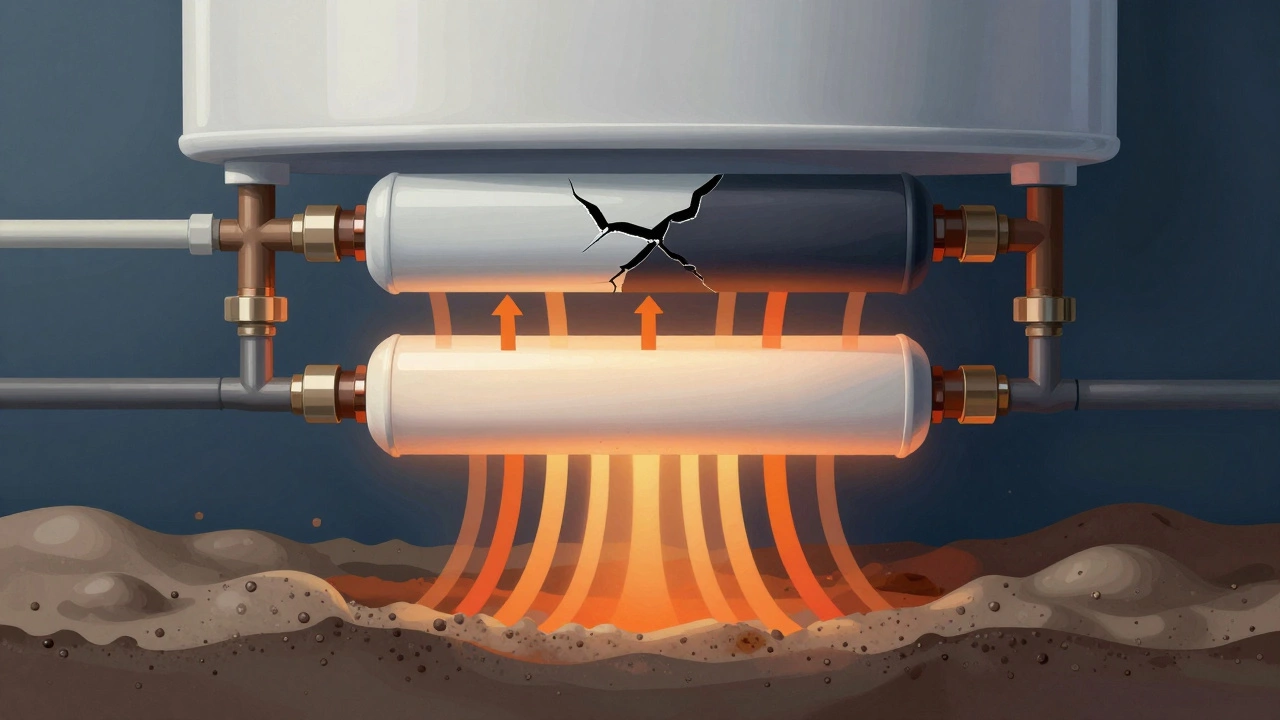
Each element is a metal rod sealed inside a copper or stainless steel sheath, filled with magnesium oxide insulation. Over time, mineral buildup from hard water, corrosion, or electrical surges can cause the element to break internally. When that happens, electricity stops flowing through it - meaning no heat gets produced.
One element failing doesn’t mean the whole tank is useless. In fact, about 60% of water heater failures in New Zealand homes are caused by a single bad element, not full unit failure.
Signs your water heater element is bad
You don’t need a multimeter to suspect a bad element. Here are the most common signs:
- No hot water - You turn on the tap and only cold water comes out. This usually means both elements are dead, or the upper one has failed.
- Limited hot water - You get a few minutes of warm water, then it turns cold. This is the classic symptom of a bad lower element. The upper element heats the top, but the bottom stays cold.
- Water takes forever to heat up - If your heater runs for an hour and still doesn’t feel hot, one element might be working weakly or not at all.
- Tripped circuit breaker - A shorted element can cause the breaker to flip repeatedly. If resetting it doesn’t fix the problem, the element is likely the culprit.
- Bubbling or popping sounds - Heavy mineral buildup on a failing element can cause noise as water boils around it.
These symptoms don’t always mean the element is dead - sometimes it’s a faulty thermostat or a tripped high-limit switch. But if you’ve ruled out those, the element is your next stop.
Turn off power and water before testing
Safety comes first. Before you touch anything, you need to shut off both power and water to the heater.
- Go to your home’s electrical panel and turn off the circuit breaker that powers the water heater. Double-check it’s off by turning on a faucet - if no hot water flows, you’re good.
- Close the cold water inlet valve at the top of the tank. This stops new water from entering while you work.
- Open a hot water tap somewhere in the house to relieve pressure in the tank. This prevents water from spraying out when you remove the element.
If you have a gas water heater, this guide doesn’t apply - gas units use a different system. But if you’re reading this, you likely have an electric model.
Test the element with a multimeter
You’ll need a basic digital multimeter - the kind you can buy for under $30 at any hardware store. Set it to measure resistance (ohms, Ω).
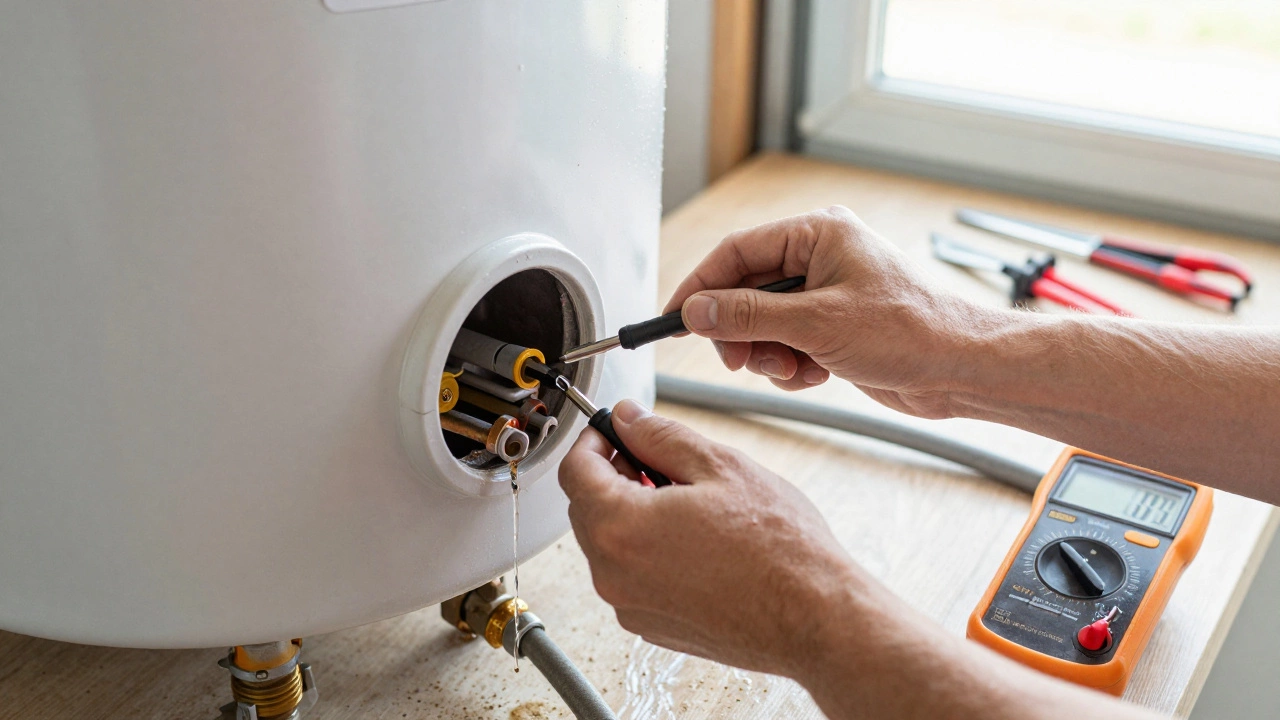
Remove the access panels on the side of the tank. You’ll see two elements, each with two metal terminals. Disconnect the wires from the terminals (take a photo first so you know how to reconnect them).
Touch one multimeter probe to each terminal on the element. If the reading is between 10 and 25 ohms, the element is fine. If it reads infinite resistance (OL or 1 on the display), the element is dead.
Now test for grounding: Put one probe on a terminal and the other on the metal casing of the element. If you get any reading at all - even a small number - the element is shorted to ground and must be replaced. A healthy element should show no connection to the casing.
Test both the upper and lower elements. Even if one passes, the other might be the issue. Don’t assume the top one is the problem - in most cases, it’s the lower one that fails first because it’s in constant contact with sediment.
Replace the bad element
If your test shows a bad element, you’ll need to replace it. Buy a replacement that matches the voltage (usually 240V), wattage (typically 3,500 or 4,500 watts), and length (usually 10 or 12 inches). Check the old element’s label or your heater’s manual.
Drain the tank partially - at least 50% - to lower the water level below the element. Use a garden hose connected to the drain valve at the bottom. Let it run into a bucket or floor drain.
Unscrew the old element using a socket wrench. Be careful - sediment may fall out. Clean the hole with a wire brush before installing the new one. Apply plumber’s tape to the threads, then screw in the new element snugly but don’t overtighten.
Reconnect the wires exactly as they were. Replace the access panels. Turn the water back on and let the tank refill. Open a hot water tap until water flows steadily - this removes air from the system.
Once the tank is full, turn the breaker back on. Wait an hour, then test the water. You should have hot water again.
Prevent future failures
Water heater elements don’t just die randomly. They wear out because of neglect. Here’s how to make yours last longer:
- Flush the tank annually - Sediment buildup coats the element and causes it to overheat. Draining a few gallons once a year removes this buildup.
- Install a water softener - Hard water is the #1 killer of heating elements. If you live in an area with hard water (like parts of Wellington), a softener can double your element’s lifespan.
- Set the temperature to 120°F (49°C) - Higher temperatures speed up corrosion and mineral buildup. Lower settings reduce strain.
- Check the anode rod every 2 years - This sacrificial rod protects the tank from rust. If it’s eaten away, replace it. A bad anode rod means your elements will corrode faster.
Most electric water heater elements last 8 to 12 years. With proper care, you can stretch that to 15. Skipping maintenance is like ignoring oil changes in your car - eventually, something breaks.
When to call a professional
You can replace an element yourself - but don’t force it if you’re unsure. Call a licensed plumber if:
- The element is stuck and won’t budge - forcing it can crack the tank.
- Water leaks from the tank after replacement - this means the tank itself is corroded.
- You’re not comfortable working with electricity - even with the breaker off, mistakes can be dangerous.
- Your heater is over 10 years old - replacing one element might buy you time, but a full replacement may be more cost-effective.
Many plumbers offer diagnostic services for under $100. If you’re not sure whether the element is the issue, it’s worth the cost to avoid guessing wrong.
What else could be wrong?
Before you replace the element, rule out these common issues:
- Thermostat failure - A bad thermostat won’t send power to the element. If both elements test fine, the thermostat might be the problem.
- High-limit switch tripped - This safety device cuts power if the water overheats. It can reset with a small button on the thermostat.
- Loose wiring - Corroded or loose connections can interrupt power. Check for burn marks or frayed wires.
- Power supply issue - A tripped breaker or faulty wiring in the wall can cut power to the heater.
If you’ve tested the element, checked the thermostat, and confirmed power is reaching the unit - and you still have no hot water - then it’s time to consider a new water heater.
Can a bad water heater element cause high electricity bills?
Yes. A failing element can cause the heater to run longer to compensate for reduced heating power. If one element is weak or covered in sediment, the other has to work overtime, using more energy. This can increase your bill by 20-30% over time. Testing and replacing bad elements is one of the cheapest ways to cut energy waste.
How long does it take to replace a water heater element?
For someone with basic DIY skills, replacing one element takes about 1 to 1.5 hours. Most of that time is spent draining the tank and waiting for water to refill. The actual element swap only takes 15-20 minutes. If you’re replacing both elements, add another 30 minutes.
Is it worth replacing just one element if the heater is old?
If your water heater is less than 8 years old, yes - replacing one element is a smart, low-cost fix. If it’s 10 years or older, consider replacing the whole unit. Older tanks are more prone to leaks, corrosion, and efficiency loss. A new model could save you 30% on energy bills and avoid sudden breakdowns.
Do I need to drain the entire tank to replace an element?
No. You only need to drain enough to lower the water level below the element - usually about 50% of the tank. A garden hose connected to the drain valve does the job. Just make sure the water isn’t dripping out when you remove the element.
Can I test the element without a multimeter?
Not reliably. Visual inspection won’t tell you if the element is broken internally. Some people try turning the power back on and listening for a hum - but that’s not accurate. A multimeter is the only way to test resistance and grounding properly. They’re inexpensive and worth having for future repairs.
I am an expert in the services industry with a focus on appliance repair. My passion lies in understanding how things work and educating others in simple, engaging ways. This enthusiasm fuels my writing, where I delve into topics around appliance maintenance and troubleshooting. I aim to make these subjects clear and accessible to all readers.