Extractor Fan Lifespan Calculator
How Long Will Your Fan Last?
Estimate your extractor fan's remaining lifespan based on your cooking habits and maintenance
Most people don’t think about their kitchen extractor fan until it stops working-or worse, starts making a noise that sounds like a dying bird. If you’ve been wondering how long these quiet workhorses actually last, the answer isn’t simple. It depends on how often you cook, what kind of fan you have, and whether you’ve ever cleaned it. On average, a kitchen extractor fan lasts between 10 and 15 years. But some fail after five. Others keep going for two decades. Here’s what really affects their lifespan and how to tell when it’s time to replace yours.
What Determines How Long Your Extractor Fan Lasts?
The motor is the heart of the extractor fan. Most units use a simple AC motor, similar to those in ceiling fans or washing machines. These motors are built to run for thousands of hours. But they don’t last forever, especially when they’re clogged with grease.
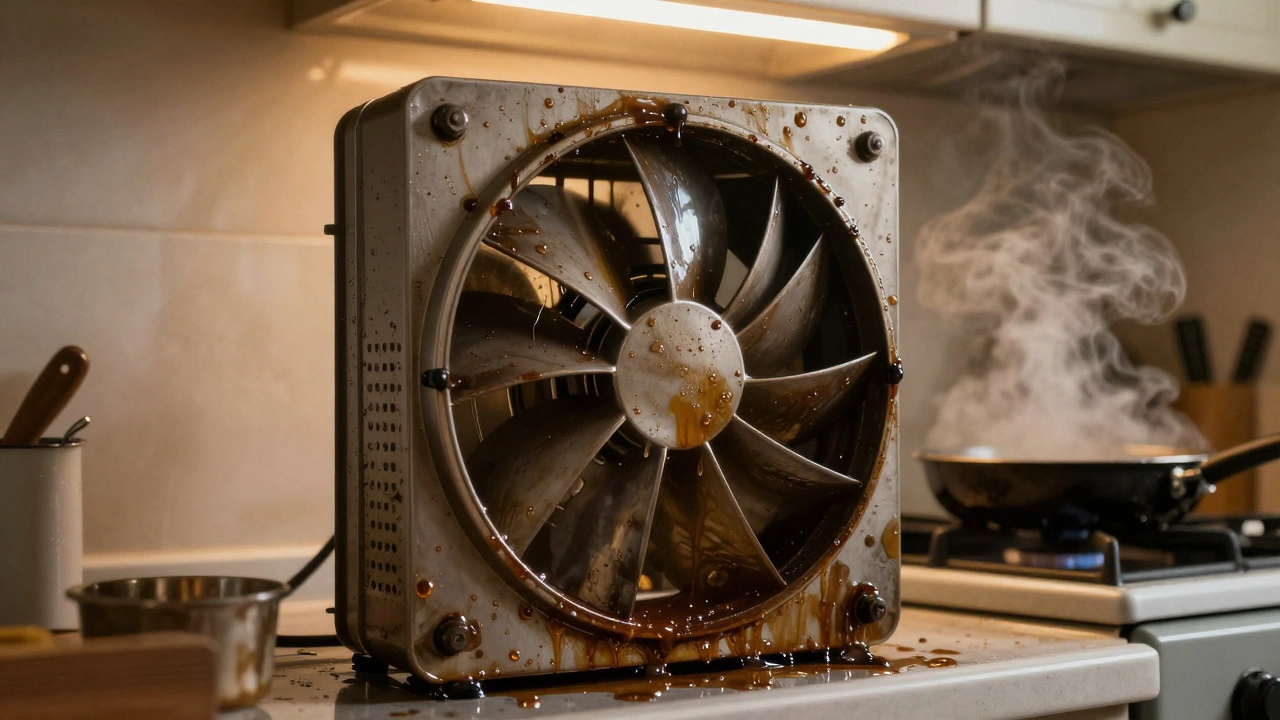
Grease is the #1 killer of extractor fans. Every time you fry eggs, sear steak, or boil pasta, tiny oil particles rise into the air and stick to the fan blades, motor housing, and filters. Over time, this buildup forces the motor to work harder. That extra strain wears out bearings, overheats windings, and eventually kills the motor. A fan in a home where someone cooks three meals a day will wear out faster than one in a light-use kitchen.
Build quality matters too. Cheap fans sold in discount stores often use plastic bearings and thin-gauge wiring. These components crack, warp, or melt under heat and stress. Higher-end models from brands like Bora, Zephyr, or Extracto use metal bearings, copper windings, and sealed motors. They cost more upfront but can easily outlast budget models by five to seven years.
Installation also plays a role. If the ductwork is kinked, too long, or blocked by insulation, the fan has to push air through more resistance. That puts extra load on the motor. Poorly sealed ducts also let moisture escape into the ceiling cavity, leading to mold and corrosion that can damage wiring and housing.
Signs Your Extractor Fan Is Done
You don’t need to wait for it to die completely to know it’s failing. Watch for these five red flags:
- It’s louder than ever. A sudden increase in noise-especially grinding, rattling, or buzzing-is usually a sign of worn bearings or a loose motor mount. If cleaning the blades doesn’t fix it, the motor is likely on its way out.
- It doesn’t pull air anymore. Hold a piece of tissue paper near the vent while the fan is on. If it doesn’t stick or flutter, the fan isn’t moving enough air. This could be due to a weak motor, clogged duct, or broken impeller.
- It turns on but won’t turn off. If the switch stops working and the fan runs nonstop, the control board or relay is faulty. Repairing this is rarely worth it unless the fan is under five years old.
- You smell smoke or burning. A faint plastic smell means insulation on the motor wires is overheating. Turn it off immediately. This is a fire risk.
- Moisture or grease leaks from the housing. If you see oily residue dripping from the bottom or water stains on the ceiling above the fan, the seals have failed. This usually means the unit is too old to repair safely.
Some people try to fix these issues by replacing the motor. But unless you’re handy with wiring and have access to the exact replacement part, it’s rarely cost-effective. A new motor can cost $80-$150, and labor adds another $100-$200. That’s close to the price of a new fan.
How to Make Your Extractor Fan Last Longer
There’s one simple habit that can double the life of your extractor fan: clean it regularly.
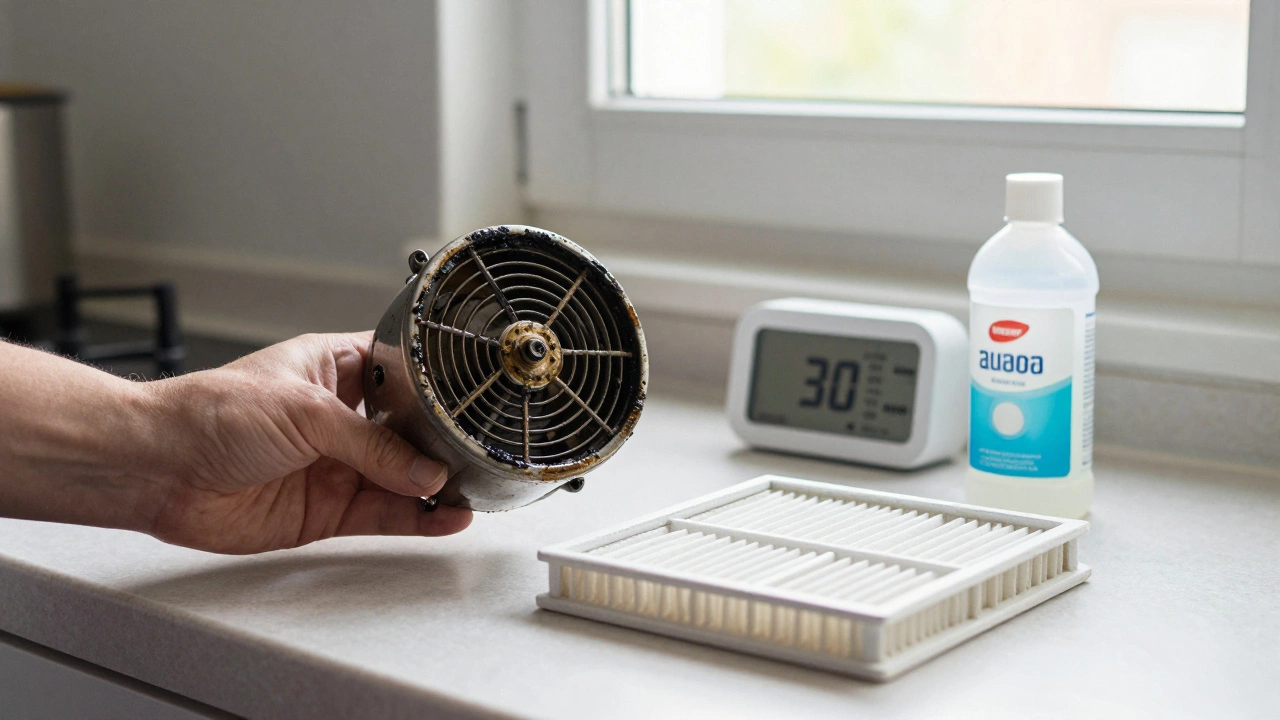
Remove the grease filter at least once a month. Wash it in hot, soapy water. For stubborn grease, soak it in a mix of baking soda and vinegar for 30 minutes. Rinse and dry completely before putting it back. Don’t just wipe it-scrub it. Grease doesn’t vanish with a quick wipe.
Every six months, turn off the power and vacuum the inside of the fan housing. Use a soft brush attachment to gently remove dust and grease from the blades and motor housing. Don’t use water inside the housing-just dry cleaning.
Check the duct vent outside your home. If it’s blocked by leaves, bird nests, or snow, airflow drops and the fan works harder. Clear it out once a season.
If you cook a lot-especially fried or greasy foods-consider upgrading to a fan with a metal grease filter and a higher CFM rating (at least 150 CFM for a standard kitchen). These are built to handle more abuse.
When to Replace Instead of Repair
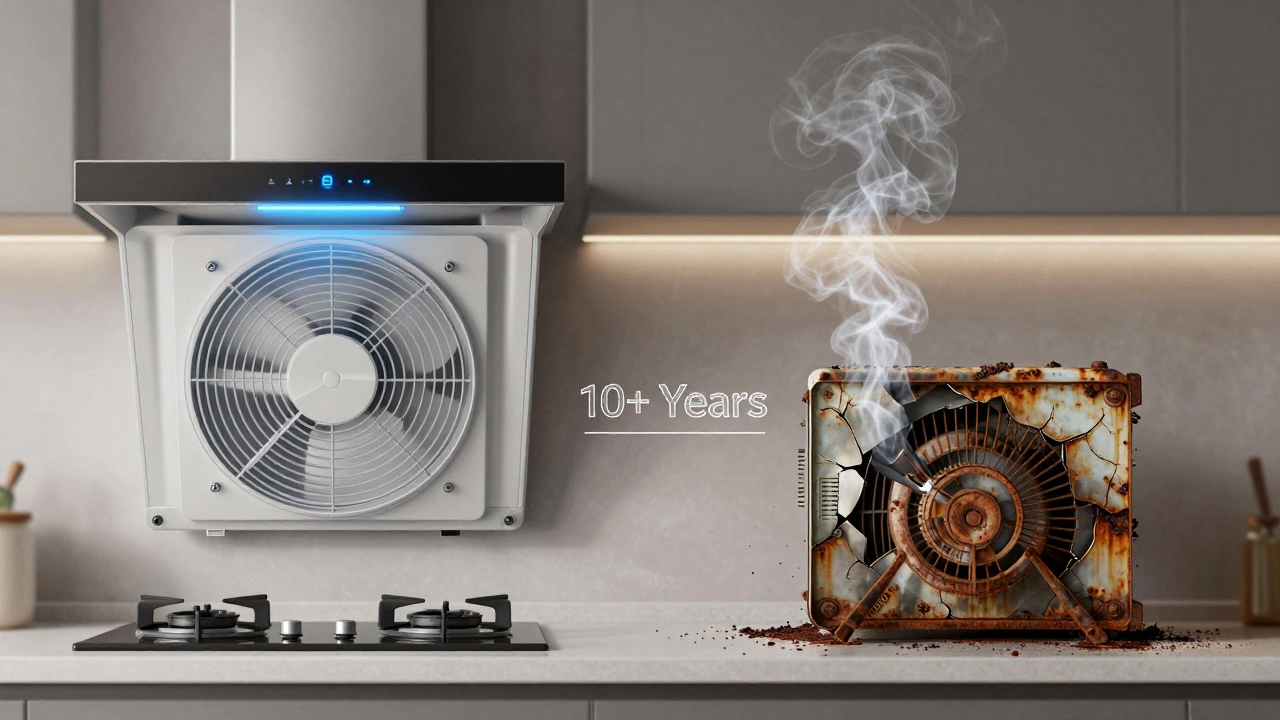
Here’s a quick rule: if your fan is over 10 years old and needs more than a simple filter change or switch replacement, it’s time to replace it.
Modern extractor fans are quieter, more efficient, and smarter. Many now come with:
- Automatic humidity sensors that turn on when steam rises
- LED lighting that replaces your overhead kitchen bulb
- Remote controls or app integration
- Recyclable materials and energy ratings (A+ or better)
Even basic models today cost between $150 and $300. High-end ones with downdraft or recirculating systems can hit $800+. But the difference in performance and noise level is obvious. A new fan won’t just last longer-it’ll make your kitchen more pleasant to use.
Don’t wait until your fan dies in the middle of a dinner party. If you’ve had the same unit since 2015 and it’s starting to act up, start looking at replacements now. Installation takes a few hours. You can schedule it during a weekend and avoid cooking without ventilation for days.
What Happens If You Don’t Replace a Failing Fan?
Ignoring a bad extractor fan isn’t just inconvenient-it’s risky.
Grease buildup inside the ductwork can ignite. There are documented cases of kitchen fires starting inside extractor fan ducts because accumulated grease reached its flash point. Insurance companies often deny claims if they find the fan was neglected.
Moisture buildup causes mold. In New Zealand’s damp climate, poor ventilation leads to condensation on walls, ceilings, and windows. Mold grows fast in dark, humid spaces behind kitchen cabinets. It’s not just ugly-it can trigger allergies and respiratory issues.
And then there’s the smell. A failing fan doesn’t remove cooking odors. It just pushes them around the house. Your curtains, clothes, and furniture start absorbing grease and smoke. Cleaning those afterward is expensive and often incomplete.
Replace your fan before it becomes a health hazard or a fire risk. It’s cheaper, safer, and smarter.
How to Choose a Replacement
Not all extractor fans are created equal. Here’s what to look for:
- CFM rating: For a standard kitchen (under 10m²), aim for at least 150 CFM. For larger kitchens or open-plan layouts, go for 250+ CFM.
- Noise level: Look for units rated under 50 dB. Anything above 60 dB is distracting.
- Filter type: Metal mesh filters are washable and last longer than disposable paper ones.
- Installation type: Wall-mounted is most common. Ceiling-mounted or downdraft models are better for island cooktops.
- Energy rating: Choose A+ or higher. Modern fans use up to 60% less power than older models.
Brands like Elica, Falmec, and Vent-A-Hood are known for durability. Avoid no-name brands from online marketplaces-they often cut corners on motor quality and safety certifications.
Always get a fan with a warranty of at least two years. If the manufacturer won’t stand behind it, neither should you.
I am an expert in the services industry with a focus on appliance repair. My passion lies in understanding how things work and educating others in simple, engaging ways. This enthusiasm fuels my writing, where I delve into topics around appliance maintenance and troubleshooting. I aim to make these subjects clear and accessible to all readers.