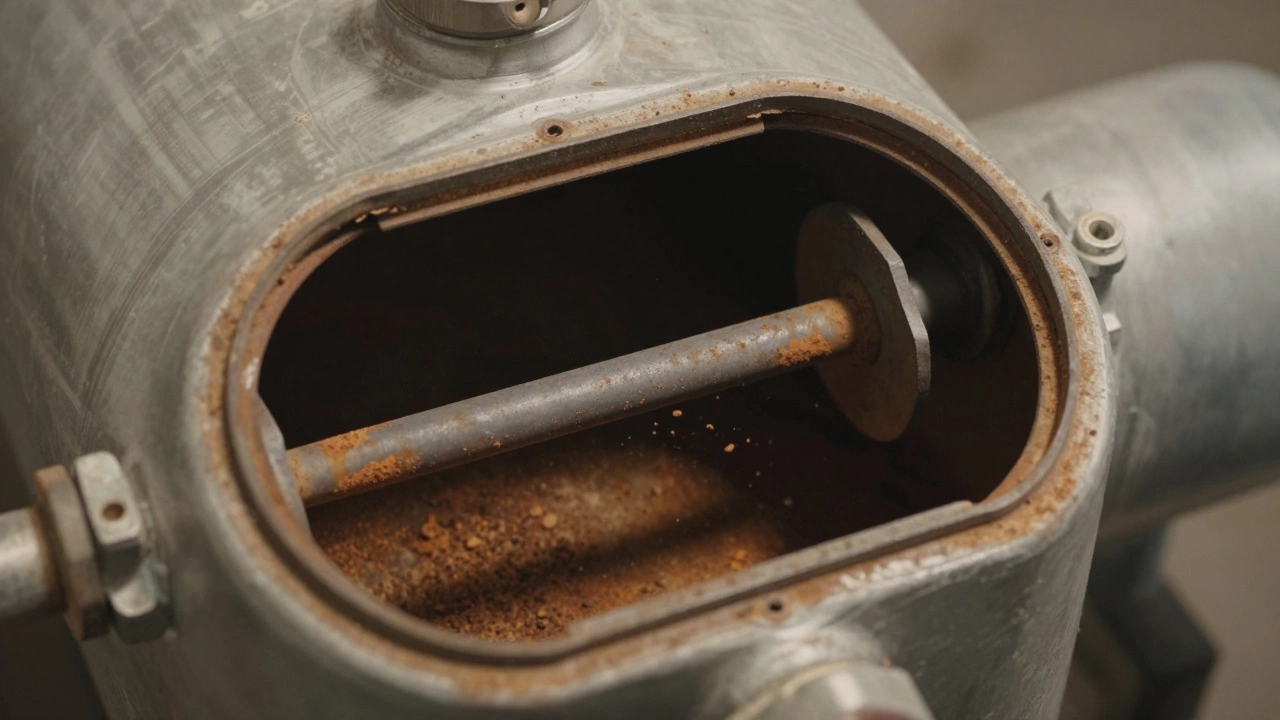
Most water heater failures are caused by a few common parts wearing out-like the anode rod, heating elements, or pressure valve. Learn what breaks most often and how to prevent costly replacements.
When your water heater, a household appliance that heats and stores water for showers, sinks, and laundry. Also known as a hot water tank, it’s one of the most taken-for-granted systems in your home—until it stops working. Most water heaters last 8 to 12 years, but when they fail, it’s rarely because the whole unit dies at once. It’s usually one part giving out first—and if you know which ones, you can catch the problem before you’re left with cold showers and a flooded basement.
The anode rod, a sacrificial metal rod inside the tank that attracts corrosive elements to protect the tank lining is the first line of defense. Over time, it wears down and disappears. If you haven’t checked it in a few years, your tank could be eating itself from the inside. Then there’s the heating element, the electric coil that heats the water in electric models. When it burns out, you get lukewarm water—or none at all. Gas water heaters rely on a thermostat, the control that tells the heater when to turn on and off, and if it’s faulty, the water might not heat properly—or it might keep heating until it overheats.
Leaks are the most obvious sign something’s wrong, but they don’t always mean the tank is shot. A loose pipe connection, a cracked pressure valve, or a corroded drain valve can all leak—and all are cheaper to fix than replacing the whole unit. The pressure relief valve, a safety device that releases excess pressure to prevent explosions is one part you should never ignore. If it’s dripping, it’s trying to tell you something’s off inside.
And then there’s sediment. Hard water leaves mineral buildup at the bottom of the tank. That sludge doesn’t just make your heater work harder—it literally cooks the bottom of the tank over time, creating weak spots that crack and leak. Flushing your tank once a year cuts this risk in half. You don’t need a pro to do it—just a hose and 30 minutes.
Most people wait until the water goes cold before they act. But by then, it’s often too late. The best time to replace a water heater isn’t when it breaks—it’s when you see the early signs: rusty water, strange noises like popping or rumbling, or water pooling around the base. These aren’t just inconveniences. They’re warning signs from the parts that are already failing.
In the posts below, you’ll find real-world guides on what to check when your heater acts up, how to spot a failing part before it floods your home, and whether it’s smarter to fix it or walk away. No fluff. No sales pitches. Just what actually goes wrong—and what you can do about it.
Most water heater failures are caused by a few common parts wearing out-like the anode rod, heating elements, or pressure valve. Learn what breaks most often and how to prevent costly replacements.