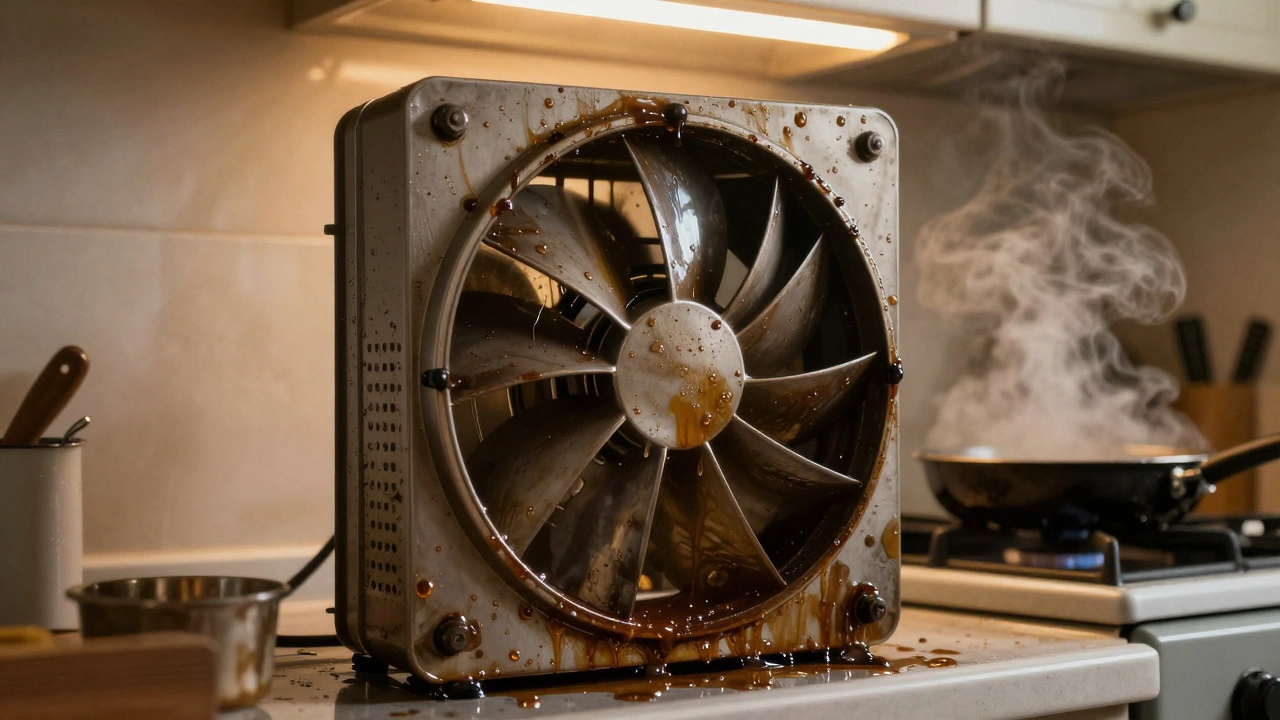
Kitchen extractor fans typically last 10 to 15 years, but grease buildup and poor maintenance can cut that in half. Learn the signs it's time to replace yours and how to pick a better one.
When you think about kitchen appliances, your extractor fan, a device that pulls smoke, steam, and odors out of your kitchen through a duct or filter system. Also known as a range hood, it’s one of the most ignored but essential parts of your cooking space. Most people don’t give it a second thought—until it stops working, makes noise like a jet engine, or just doesn’t pull air anymore. That’s when you realize how much you rely on it. The average extractor fan lasts between 10 and 15 years with normal use. But that number can drop fast if you never clean the filters, ignore grease buildup, or run it nonstop during heavy cooking sessions.
What really kills an extractor fan isn’t age—it’s neglect. Grease clogs the motor, dust jams the blades, and blocked ducts force the system to work harder than it should. Over time, that stress wears out the motor, the capacitor, or even the wiring. If you’ve got a fan that’s 8 years old and it’s suddenly louder, slower, or smells like fried bacon even when you’re not cooking, it’s not just dirty—it’s failing. You might think replacing the motor is the fix, but if the housing is rusted or the duct is crushed behind the wall, repair often costs more than a new unit. And here’s the thing: a new extractor fan isn’t just about function. Modern ones are quieter, more energy-efficient, and come with smart features like auto-sensing humidity or LED lighting. If your fan’s over 12 years old, replacement usually makes more sense than repair.
It’s not just about the fan itself. The vent duct, the pipe or channel that carries air from the fan to the outside of your home matters just as much. A long, bent, or poorly installed duct reduces airflow dramatically. That means your fan has to spin faster, use more power, and wear out sooner. And if your duct ends in the attic instead of outside? You’re not removing moisture—you’re feeding mold. Then there’s the filter, the removable mesh or charcoal layer that traps grease and odors before air recirculates. Washable metal filters need cleaning every month. Charcoal filters in recirculating models need replacing every 3 to 6 months. Skip this, and you’re basically running your fan through a grease bath.
South Shields homes see a lot of heavy cooking—fish, stews, fried food—and that puts extra strain on extractor fans. You don’t need to replace yours every few years, but you do need to stay on top of maintenance. Clean the filters. Check the duct for blockages. Listen for unusual sounds. If your fan’s struggling, don’t wait for it to die completely. A quick clean or a motor check can extend its life by years. And if it’s older than 12? Start looking at replacements now. The best time to upgrade is before it breaks—especially when you can find a model that fits your kitchen layout and budget without a full remodel.
Below, you’ll find real fixes, real advice, and real stories from people who’ve been there—whether they cleaned their fan and got five more years out of it, or replaced it after a $300 repair that wasn’t worth it. No fluff. Just what works.
Kitchen extractor fans typically last 10 to 15 years, but grease buildup and poor maintenance can cut that in half. Learn the signs it's time to replace yours and how to pick a better one.