
You walk into the kitchen and hear it-the faint buzz of your fridge slowing down. Then silence. The light still turns on, but the cold air? Gone. You check the temperature: 12°C. Your milk’s about to turn. Now you’re stuck: fix it or replace it? A seven-year-old fridge isn’t ancient, but it’s not new either. Is spending $300 to $600 on a repair worth it when you can buy a new one for $800?
How long should a fridge actually last?
Most refrigerators are built to last 10 to 15 years. That’s the standard lifespan manufacturers design for, and it’s backed by data from Consumer NZ and the U.S. Department of Energy. A seven-year-old fridge is only halfway through its life. That doesn’t mean it’s broken-it means it’s still in its prime. Many fridges from 2019 are still running fine today, especially if they’ve been cleaned regularly and weren’t overloaded or jammed against a wall.
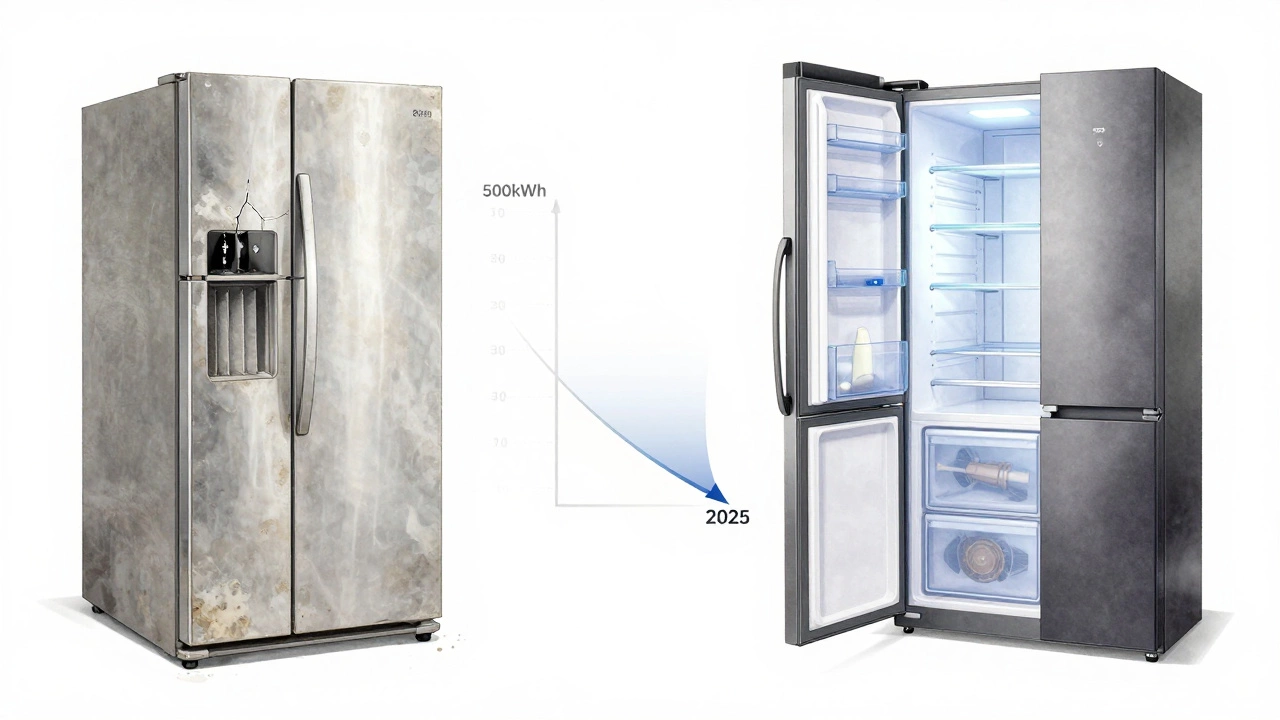
But here’s the catch: older models don’t have the efficiency of today’s units. A 2019 fridge might use 500 kWh per year. A new Energy Star-rated model uses around 300 kWh. That’s a 40% drop. Over five years, that saves you $250-$400 on electricity in New Zealand, depending on your power plan. So if your fridge is already guzzling power, repair might just be delaying the inevitable.
What’s broken? Not all repairs are equal
Not every fridge problem costs the same to fix. Some issues are simple. Others are red flags.
- Thermostat or condenser fan motor: These cost $150-$300 to replace. Easy fix. Common on fridges 5-8 years old. Worth fixing.
- Compressor failure: This is the heart of the fridge. Replacing it costs $400-$700. That’s 50-80% of the price of a new fridge. If the compressor’s gone, you’re paying to keep an old machine alive.
- Leaking refrigerant: Finding and sealing a leak costs $250-$500. But if it’s leaking again in six months? You’ll be back here. Refrigerant is expensive, and older systems use R134a, which is being phased out.
- Door seal: A worn gasket costs $40-$80 to replace. Easy. Do this first. It fixes 30% of cooling issues.
If your fridge needs a new compressor or a major refrigerant recharge, walk away. You’re not fixing it-you’re renting it.
Energy costs and hidden bills
Let’s say you fix your fridge for $500. You’re good for another two years. But what’s it costing you in power? A 2019 fridge uses about 1.5 kWh per day. A new 2025 model uses 0.9 kWh. That’s 0.6 kWh saved per day. Multiply that by 365 days: 219 kWh saved per year. At 30 cents per kWh (average in Wellington), that’s $66 saved annually. Over two years? $132.
So your $500 repair gives you $132 in power savings. You’re still out $368. Now add in the risk: if the compressor dies next winter, you’ll be buying a new fridge anyway-plus you’ll have paid $500 to keep the old one running. That’s not smart. That’s throwing money down a cold, dark hole.
What about warranties and parts?
Most manufacturers only offer a 1-year warranty on fridges. After that, parts become harder to find. Brands like LG, Samsung, and Fisher & Paykel still support 7-year-old models-but only if you’re lucky. The compressor model your fridge uses might have been discontinued. A technician might have to order a part from Australia or China. That adds $100-$200 in wait time and shipping.
And here’s the real kicker: newer fridges come with smart diagnostics, better humidity control, and quieter compressors. A 2025 fridge doesn’t just save power-it saves you stress. No more guessing why your veggies are wilting. No more hearing the fridge groan at 2 a.m.
When to walk away
Here’s a simple rule: if the repair costs more than 50% of a new fridge’s price, don’t do it. A $800 fridge? Don’t spend more than $400. A $1,200 premium model? Then $600 is your limit. Most repairs on 7-year-old fridges hit $450-$650. That’s over the line.
Also, if your fridge has:
- Ice maker or water dispenser that’s broken
- Visible rust on the coils or back panel
- Been moved or tilted recently
- Been sitting in a hot garage or under direct sunlight
Then it’s already been through stress. Fixing it now is like putting a bandage on a cracked engine block.
What to do instead
Instead of repairing, consider this:
- Check if your power company offers a rebate for replacing old fridges. In Wellington, Powerco and Vector have programs that give up to $200 off new Energy Star units.
- Look for refurbished fridges from certified sellers. You’ll get a 1-year warranty, and they’re 30-40% cheaper than new.
- Don’t buy the biggest fridge you can afford. A 350L fridge is enough for most households. Bigger means more power use.
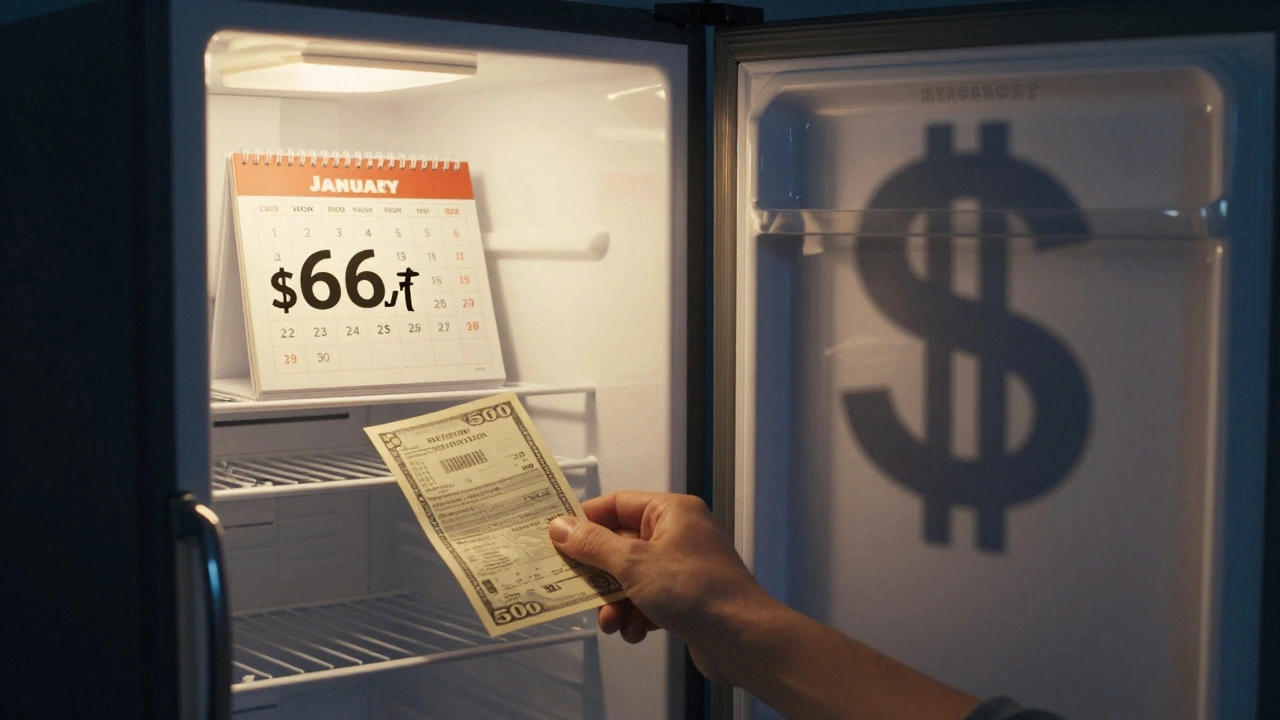
- Wait for sales. January is the best month in New Zealand-right after Christmas, stores clear out last year’s models.
For example, a 370L Fisher & Paykel fridge with inverter compressor and smart cooling is on sale for $999 right now. That’s $200 less than last year. And it uses 28% less power than your 7-year-old model. You’ll break even on the cost difference in under two years.
Final call: Fix or replace?
Here’s your quick decision tree:
- Is the repair under $300? → Fix it.
- Is the repair $300-$450 and the fridge is otherwise quiet and efficient? → Maybe fix it, but plan to replace it in 1-2 years.
- Is the repair over $450? → Replace it.
- Is the fridge making strange noises, leaking, or warming up? → Replace it now.
If your fridge is 7 years old and needs a major fix, replacement is almost always the smarter move. You’re not just buying a new appliance-you’re buying lower bills, better reliability, and peace of mind. The money you save on power alone will pay for the new fridge faster than you think.
What to look for in a new fridge
When you’re ready to replace it, here’s what actually matters:
- Size: 350-400L for 1-3 people. 500L+ only if you stock for weeks.
- Energy rating: Look for 5 stars or Energy Star. Avoid anything below 3 stars.
- Compressor type: Inverter compressors are quieter and use 30% less power.
- Warranty: Minimum 2 years. 5 years is better.
- Features: You don’t need Wi-Fi or a touchscreen. Just good seals, even cooling, and a quiet motor.
Brands like Fisher & Paykel, LG, and Samsung have reliable models under $1,200 that meet these criteria. Avoid no-name brands from discount stores. They look cheap, run hot, and die early.
Is it cheaper to repair a 7-year-old fridge or buy a new one?
It’s usually cheaper to buy a new one. Repairs over $450 on a 7-year-old fridge rarely make financial sense. New fridges use 30-40% less power, so you’ll save money on electricity within 1-2 years. Plus, you get a warranty, better cooling, and no risk of another breakdown.
Can I still get parts for a 7-year-old fridge?
Yes, for major brands like Fisher & Paykel, LG, and Samsung. But parts for older models are harder to find and may need to be imported. This adds cost and delay. If the part isn’t in stock locally, you’re looking at 2-3 weeks wait time.
What’s the most common reason a 7-year-old fridge stops cooling?
The most common cause is a failing condenser fan motor or dirty coils. Cleaning the coils and replacing the fan motor fixes this in 70% of cases. Less common but more serious is compressor failure or refrigerant leaks.
Do newer fridges really save that much power?
Yes. A 2019 fridge uses about 500 kWh per year. A 2025 Energy Star model uses 300-350 kWh. That’s 150-200 kWh saved annually. At 30 cents per kWh in Wellington, that’s $45-$60 saved every year. You’ll recover the cost of a new fridge in 2-3 years just from power savings.
Should I replace my fridge if it’s still working but noisy?
If it’s just louder than before, it might be dust on the coils or a worn fan. Clean it first. But if the noise is a grinding, rattling, or buzzing sound that’s getting worse, it’s likely the compressor. That’s a sign to replace it. A noisy fridge is a stressed fridge-and it won’t last much longer.
Next steps if you’re replacing your fridge
Here’s what to do next:
- Measure your space. Note width, depth, and height. Leave 5 cm clearance on all sides.
- Check your power outlet. New fridges need a dedicated 10-amp circuit. Older homes might need an electrician.
- Look for rebates. Check Powerco, Vector, or Energywise NZ for cash-back offers.
- Buy during January sales. Prices drop 20-30% after Christmas.
- Ask about free removal. Most stores will haul away your old fridge for free if you buy new.
Don’t let your fridge die quietly. Replace it now, and your wallet-and your food-will thank you later.
I am an expert in the services industry with a focus on appliance repair. My passion lies in understanding how things work and educating others in simple, engaging ways. This enthusiasm fuels my writing, where I delve into topics around appliance maintenance and troubleshooting. I aim to make these subjects clear and accessible to all readers.