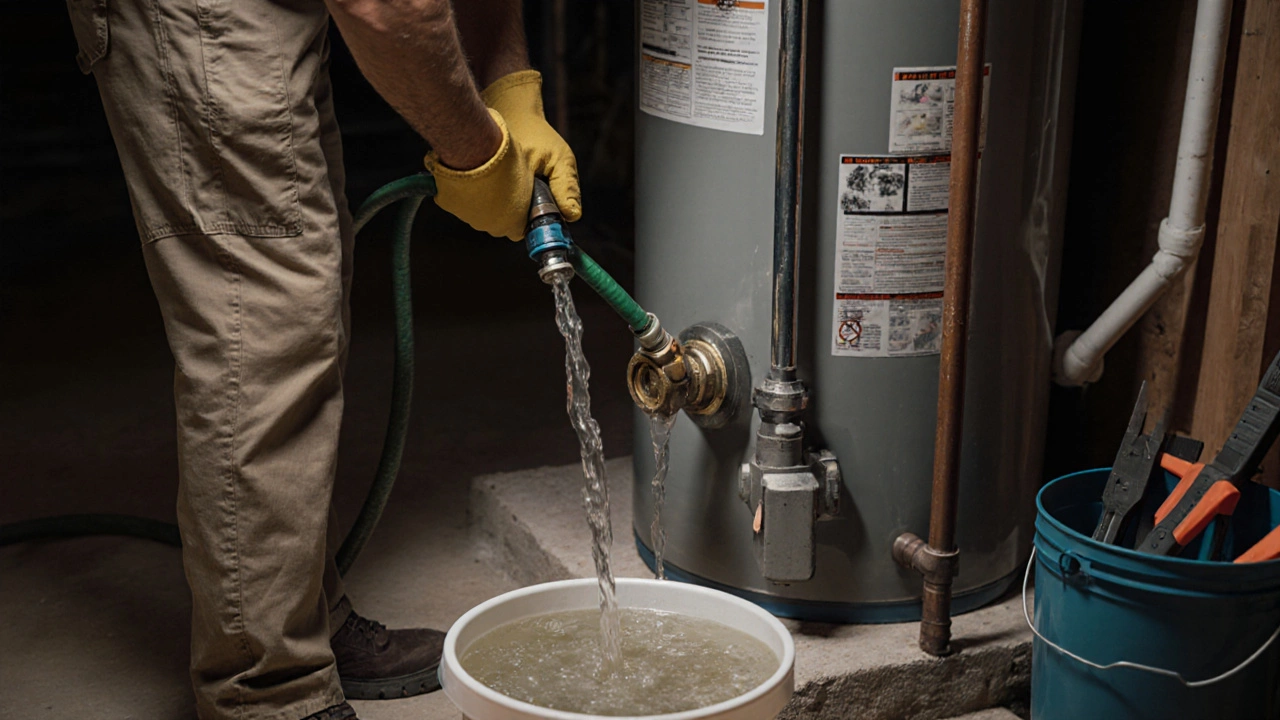
Flush your water heater once a year to prevent sediment buildup, lower energy bills, and avoid costly leaks. Learn how to do it yourself and when to call a pro.
When you turn on the tap and get lukewarm water instead of hot, the problem might not be your faucet—it’s your water heater, a tank-based appliance that stores and heats water for showers, dishes, and laundry. Also known as a tank water heater, it’s one of the most ignored appliances in the house, until it stops working. Most people don’t think about it until there’s no hot water, but the real killer isn’t age—it’s sediment.
Over time, minerals in the water settle at the bottom of the tank. That’s not just dirt—it’s sand-like sludge that builds up year after year. This layer acts like insulation, forcing the heating element to work harder, burning more energy, and wearing out faster. It also causes strange noises, like popping or rumbling, and can lead to leaks when the metal underneath starts corroding. Water heater flushing, the simple process of draining the tank to remove this buildup, is the single most effective way to prevent all of this. It doesn’t take long, it doesn’t cost much, and it can add years to your heater’s life.
Most experts say you should flush your water heater at least once a year. If you live in an area with hard water, twice a year is better. You don’t need a plumber—just a bucket, a garden hose, and 30 minutes. Skipping it might save you time now, but it’ll cost you hundreds later in repair bills or a full replacement. Water heater maintenance, including flushing, pressure valve checks, and thermostat testing, is the difference between a heater that lasts 15 years and one that dies at 8. And if you’re wondering why your hot water runs out faster than before, or why your energy bill keeps creeping up, flushing could be the fix you didn’t know you needed.
The posts below cover everything from the signs your heater is failing, to how to flush it yourself, to when it’s time to walk away and replace it. You’ll find real-world advice from people who’ve been there—no theory, no fluff, just what works in South Shields homes. Whether you’re dealing with rusty water, no hot showers, or just want to avoid a surprise breakdown, this collection gives you the clear steps to take before it’s too late.
Flush your water heater once a year to prevent sediment buildup, lower energy bills, and avoid costly leaks. Learn how to do it yourself and when to call a pro.