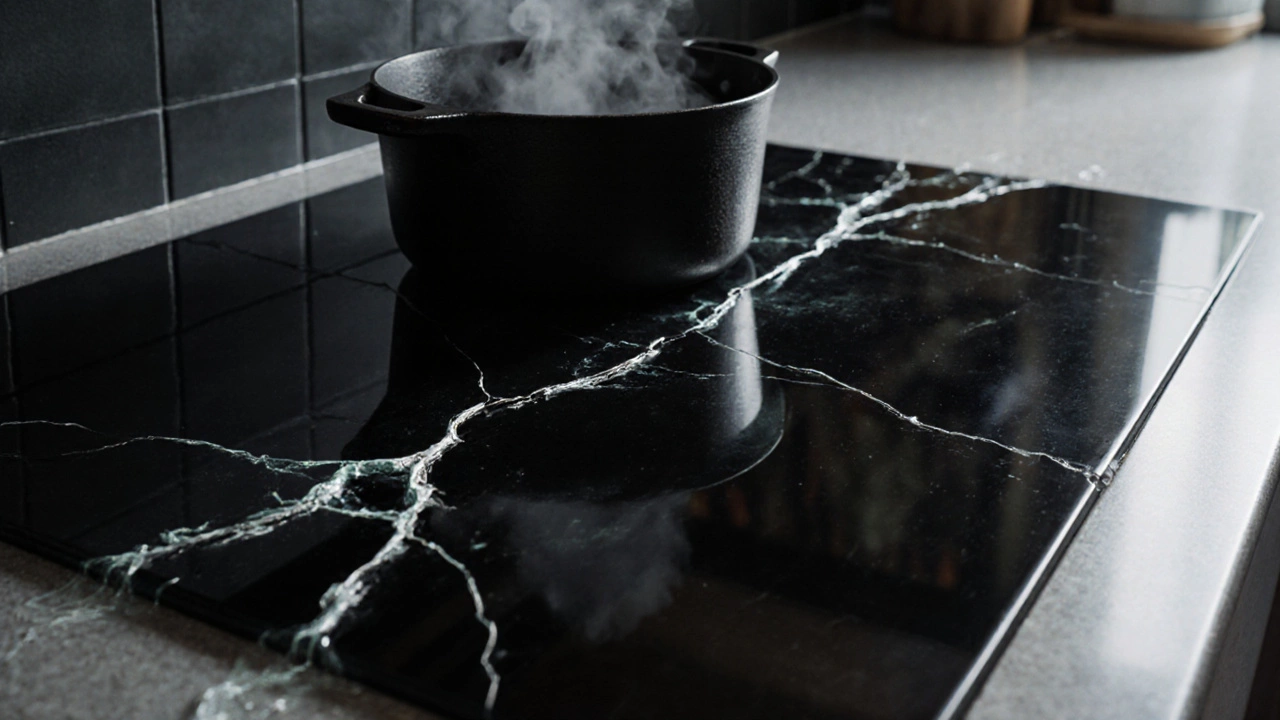
You can't safely repair a cracked glass hob-here's why DIY fixes fail, when replacement is your only option, and how to prevent cracks before they happen.
When your hob damage, a malfunction or physical break in the cooking surface of a gas or electric stove. Also known as a cooker top, it’s one of the most used—and most abused—parts of your kitchen. A cracked ceramic surface, a burner that won’t light, or a control knob that spins uselessly aren’t just annoyances—they’re safety risks. Many people try to ignore hob damage until the whole thing stops working, but catching it early can save you hundreds in replacement costs.
Most gas hobs, cooking surfaces that use natural gas or propane to ignite burners fail because of food spills that harden into grease, blocking gas jets. Over time, that buildup causes uneven flames or no ignition at all. Electric hobs, on the other hand, often break from thermal shock—like dropping a cold pot on a hot surface—or from worn-out heating elements. A cracked glass hob might look like a minor scratch, but it can let moisture in and cause electrical shorts. And if your hob’s control panel flickers or shows error codes, it’s not just the knob—it’s the oven control board, the electronic brain that manages power to burners and oven elements failing. These aren’t isolated issues. In South Shields, we’ve seen the same patterns: cracked hobs from heavy pots, gas leaks from blocked burners, and faulty switches from moisture exposure.
You might think a cracked hob is just a cosmetic problem, but it’s not. Water gets in, rust forms, and the heat distribution goes wrong—leading to uneven cooking or even fire hazards. Replacing a single burner on a gas hob costs less than £50, but if you wait too long, you could end up replacing the whole unit for £500+. The same goes for electric hobs: a simple element swap fixes the issue 70% of the time. But if the problem’s deeper—like a damaged circuit or a broken thermostat—you’re better off getting it checked by someone who’s seen it before. We’ve fixed hobs where people tried DIY fixes with glue, tape, or even foil. None of it lasts. And it’s not worth the risk.
What you’ll find below are real repair stories from South Shields homes—how a cracked hob was saved with a £30 part, why a gas hob wouldn’t light after a deep clean, and when replacing the whole unit was the only smart choice. No fluff. No guesswork. Just what actually works.
You can't safely repair a cracked glass hob-here's why DIY fixes fail, when replacement is your only option, and how to prevent cracks before they happen.