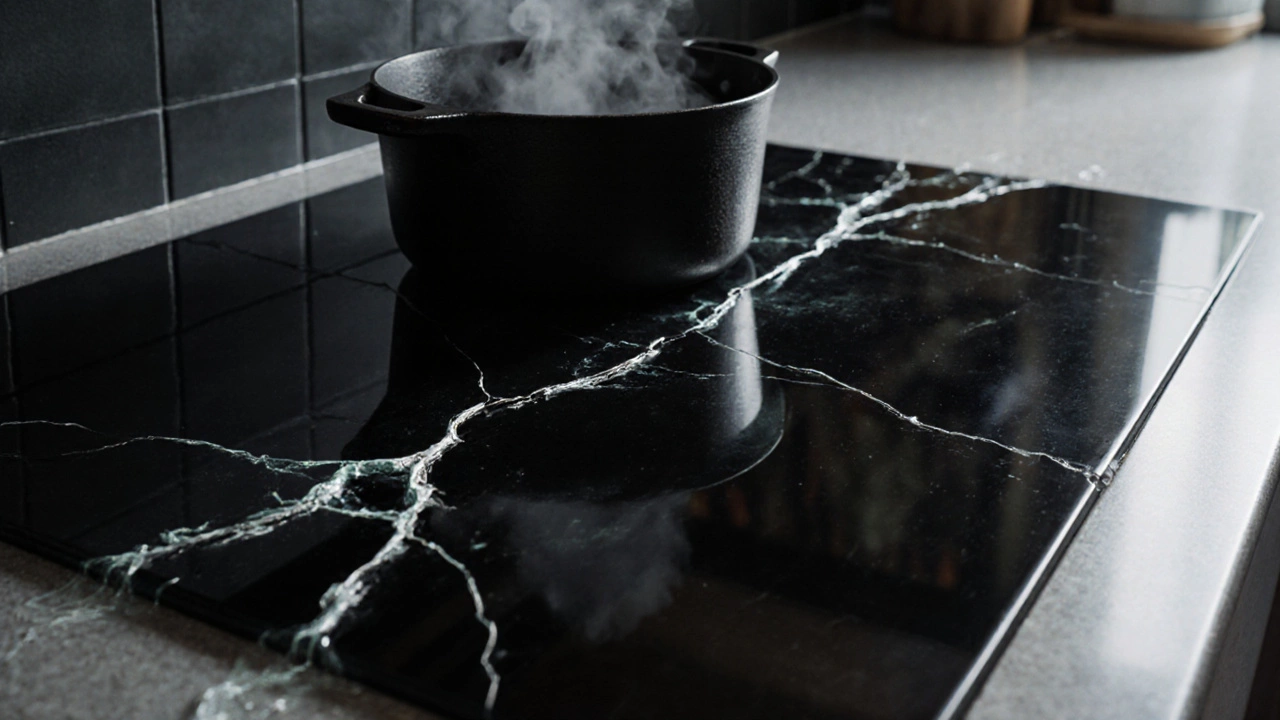
You can't safely repair a cracked glass hob-here's why DIY fixes fail, when replacement is your only option, and how to prevent cracks before they happen.
When your glass hob, a smooth, flat cooking surface made of tempered glass or ceramic glass used in modern kitchens. Also known as ceramic hob, it provides even heat and easy cleaning—but it’s also fragile. A single dropped pot, overheated pan, or accidental impact can leave you with a crack, chip, or a hob that won’t turn on. Unlike old coil elements, you can’t just swap out a broken part. Glass hobs need careful diagnosis, and in many cases, professional repair is the only safe option.
Most glass hob problems fall into three categories: physical damage, electrical failure, or control panel issues. A cracked glass surface, a visible break or spider-web fracture that compromises safety and heat distribution is rarely fixable with glue or filler—heat expands the crack, and it can shatter unexpectedly. Then there’s the induction hob not working, when the surface looks fine but doesn’t heat, often due to a faulty coil, control board, or power supply issue. These aren’t always obvious. Sometimes the display lights up, but no zone heats. Other times, the whole unit goes dark. And if you’ve tried resetting it, checking the circuit breaker, and cleaning the surface, you’re probably dealing with an internal component failure.
Many people assume a broken glass hob means a full replacement. But that’s not always true. If the damage is limited to the control board or a single heating element, repair can save you hundreds. A new glass hob unit can cost £500 or more. A professional repair—especially one done locally in South Shields—often costs under £150. It’s not just about money. It’s about waste. Throwing out a perfectly good appliance because of a cracked surface goes against common sense. And yes, we’ve seen hobs with cracked glass still working fine for months after repair—until someone tries to clean it with a razor blade or drops a cast iron pan on it again.
What makes glass hob repair tricky is that it’s not just about the glass. The heating elements underneath, the sensors, the wiring, and the control board all have to work together. A technician needs to test each part without causing more damage. That’s why DIY fixes rarely work. You can’t just pop off the top like a microwave door. And if you try, you risk electrocuting yourself or frying the whole system. Local experts in South Shields know which brands—Bosch, Indesit, Zanussi, Hotpoint—have common failure points. They know where to source compatible parts, and they’ve seen the same issues repeat across dozens of homes in the area.
If your hob has a small scratch, don’t panic. It’s mostly cosmetic. But if you see a line that runs deeper than the surface, or if the glass feels loose, stop using it. Heat builds pressure, and glass can fail suddenly. Same goes for intermittent power. If the hob turns on sometimes but not others, or if one zone works and the others don’t, that’s a sign the control board is failing. It’s not a matter of "maybe it’ll fix itself." It’s a matter of safety and efficiency.
Below, you’ll find real repair guides and cost breakdowns from local technicians who’ve fixed these exact problems. No fluff. No guesswork. Just what works in South Shields homes—whether it’s a 5-year-old induction hob or a 15-year-old ceramic model. You’ll learn when to repair, when to replace, and how to avoid the same mistake twice.
You can't safely repair a cracked glass hob-here's why DIY fixes fail, when replacement is your only option, and how to prevent cracks before they happen.