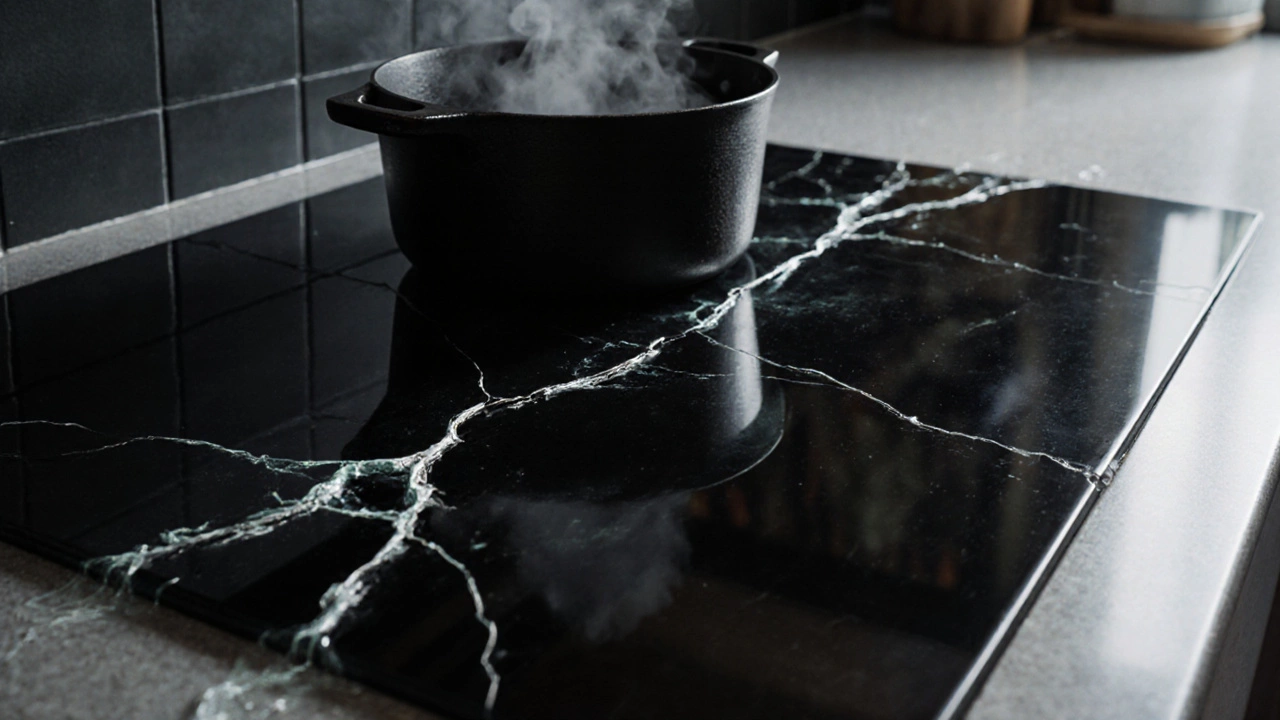
You can't safely repair a cracked glass hob-here's why DIY fixes fail, when replacement is your only option, and how to prevent cracks before they happen.
When your ceramic hob, a smooth, glass-like cooking surface commonly found on modern electric ranges stops heating properly or develops a crack, it’s not always time to buy a new one. Many people assume a damaged ceramic hob means a full kitchen upgrade—but that’s not true. Most issues, from uneven heating to non-responsive zones, can be fixed with the right parts and know-how. Also known as a glass cooktop, this type of surface is popular because it’s easy to clean, but it’s also fragile. A dropped pan, a heavy pot dragged across it, or even a thermal shock from a cold spill on a hot surface can cause damage. The good news? You don’t need to replace the entire unit. Often, just the heating element, the control board, or the glass surface itself can be swapped out for a fraction of the cost.
What makes ceramic hob repair tricky is that it’s not always obvious what’s broken. If one burner won’t turn on, it could be the element, the wiring, or the control panel. A crack might look serious, but if it’s only on the surface and the internal components are intact, you can replace just the glass top. Many homeowners try to fix it themselves with online videos, but without the right tools—like a multimeter to test continuity or a proper adhesive for glass bonding—you risk making it worse. In South Shields, local technicians see this all the time: people waiting too long to act, then ending up paying more because the problem spread to the control board or the wiring harness. The key is catching it early. Signs you need repair include slow heating, flickering display, error codes like E1 or E5, or a burner that heats unevenly. If you’ve noticed any of these, it’s not just an annoyance—it’s a warning.
Most ceramic hobs last 10 to 15 years with proper care. But if yours is older and showing signs of wear, repair is often smarter than replacement. Replacing just the broken part keeps your existing controls, cabinet space, and installation intact. You avoid the mess, the rewiring, and the hassle of matching a new unit to your kitchen layout. And since many parts are universal across brands like Indesit, Hotpoint, Bosch, and Siemens, finding a match isn’t hard. In fact, a lot of the posts below show exactly how to diagnose these issues step by step—from testing the element with a simple meter to removing the glass top safely. You’ll find real fixes that work, not just theory. Whether you’re dealing with a hairline crack, a dead zone, or a flickering display, the solutions are practical, affordable, and within reach—if you know where to look.
You can't safely repair a cracked glass hob-here's why DIY fixes fail, when replacement is your only option, and how to prevent cracks before they happen.